


Trusted by enterprises across the globe

Designed for all your training needs

Flexible On-Demand Group Learning
Flexible, corporate learning for groups, accessible anytime, anywhere.

Instructor-Led Live, Online Training
Real-time, interactive classes taught by SME via web conferencing.

Independent Self-Paced Learning
Individual learning at your own speed, with access to digital materials.

Customized On-Site Training
Customized, face-to-face training sessions delivered at your location.
Curriculum Designed by Experts
 DOWNLOAD CURRICULUM
API 579-1/ASME FFS-1 Fitness-For-Service Corporate Training by Multisoft Virtual Academy is designed for engineers and industry professionals responsible for equipment integrity and reliability. This course provides a comprehensive understanding of the Fitness-For-Service (FFS) methodology used to evaluate the structural integrity of pressure vessels, piping, and storage tanks. Participants will learn to identify damage mechanisms, perform assessment procedures, and make informed decisions regarding repair, replacement, or continued operation of equipment. Delivered by industry experts, the training combines theoretical concepts with practical case studies, enabling organizations to improve safety, reduce operational risks, and ensure compliance with global engineering and maintenance standards.
API 579-1/ASME FFS-1 Fitness-For-Service training teaches professionals how to evaluate the structural integrity and remaining life of pressure equipment containing flaws or damage. Based on internationally recognized standards, the training covers assessment methods for corrosion, cracks, and other defects. It enables engineers and inspectors to determine whether equipment can safely continue operating or requires repair or replacement. This training improves safety, reliability, and compliance in industries such as oil and gas, petrochemical, and power generation.
- Overview of Fitness-For-Service Philosophy
- Purpose and Benefits of FFS Assessments
- Scope and Limitations of API 579-1 / ASME FFS-1
- Difference Between FFS and Design-by-Rule
- Typical Equipment Covered (Pressure Vessels, Piping, Tanks)
- When and Why FFS Assessments Are Required?
DOWNLOAD CURRICULUM
- Structure of the API 579-1 / ASME FFS-1 Standard
- Overview of Parts 1 to 14
- Assessment Levels – Level 1, Level 2, and Level 3
- Inputs Required for an FFS Assessment
- Inspection Data and Damage Characterization
- Documentation and Reporting Requirements
DOWNLOAD CURRICULUM
- Understanding Brittle Fracture Mechanisms
- Material Toughness and Temperature Effects
- Minimum Safe Operating Temperature (MSOT)
- Level 1 Brittle Fracture Assessment Procedure
- Level 2 Brittle Fracture Assessment Overview
- Practical Examples and Case Discussions
DOWNLOAD CURRICULUM
- Causes of General Metal Loss (Corrosion, Erosion)
- Inspection Methods for Thickness Measurement
- Remaining Strength Factor (RSF) Concept
- Level 1 General Metal Loss Assessment
- Level 2 General Metal Loss Assessment
- Acceptance Criteria and Remaining Life Estimation
DOWNLOAD CURRICULUM
- Identification of Localized Corrosion
- Difference Between General and Local Metal Loss
- Data Requirements for Local Metal Loss
- Level 1 Assessment Procedure
- Level 2 Assessment Procedure
- Case Studies and Engineering Examples
DOWNLOAD CURRICULUM
- Characteristics of Pitting Corrosion
- Measurement and Pit Density Evaluation
- Pit Depth and Diameter Considerations
- Level 1 Pitting Assessment
- Level 2 Pitting Assessment
- Practical Applications and Examples
DOWNLOAD CURRICULUM
- Types of Crack-Like Flaws
- Introduction to Fracture Mechanics Concepts
- Stress Intensity Factor (K) Fundamentals
- Level 1 Crack-Like Flaw Assessment
- Level 2 Crack-Like Flaw Assessment
- Engineering Examples and Problem Solving
DOWNLOAD CURRICULUM
- Overview of Hydrogen Damage Mechanisms
- Hydrogen Blistering
- Hydrogen-Induced Cracking (HIC)
- Stress-Oriented Hydrogen-Induced Cracking (SOHIC)
- Inspection and Damage Identification
- Acceptance Criteria and Assessment Guidance
DOWNLOAD CURRICULUM
- Types of Weld Misalignment
- Shell Distortions and Out-of-Roundness
- Causes and Impact on Structural Integrity
- Inspection and Measurement Techniques
- Assessment Methodology per API 579-1
- Practical Evaluation Examples
DOWNLOAD CURRICULUM
- Fundamentals of Creep Damage
- Materials Susceptible to Creep
- Operating Conditions Influencing Creep
- Creep Damage Identification
- Remaining Life Estimation
- Assessment Examples
DOWNLOAD CURRICULUM
- Effects of Fire Exposure on Materials
- Identification of Fire Damage
- Metallurgical Changes Due to Fire
- Inspection and Data Collection
- Fitness-For-Service Evaluation Approach
- Case Discussions
DOWNLOAD CURRICULUM
- Types of Mechanical Damage
- Dent Severity and Shape Considerations
- Gouges and Dent-Gouge Combinations
- Inspection Requirements
- Assessment and Acceptance Criteria
- Engineering Examples
DOWNLOAD CURRICULUM
- Causes of Material Laminations
- Detection Methods
- Classification of Laminations
- Structural Impact Evaluation
- Assessment Procedures
DOWNLOAD CURRICULUM
- End-to-End FFS Assessment Workflow
- Multi-Damage Scenario Evaluations
- Selection of Appropriate Assessment Levels
- Interpretation of Results
- Decision-Making: Repair, Monitor, or Replace
- Course Wrap-Up and Key Takeaways
DOWNLOAD CURRICULUM
Free Career Counselling
We are happy to help you 24/7Multisoft Corporate Training Features
Outcome centric learning solutions to meet changing skill-demand of your organization
Wide variety of trainings to suit business skill demands

360° learning solution with lifetime access to e-learning materials

Choose topics, schedule and even a subject matter expert

Skilled professionals with relevant industry experience

Customized trainings to understand specific project requirements

Check performance progress and identify areas for development
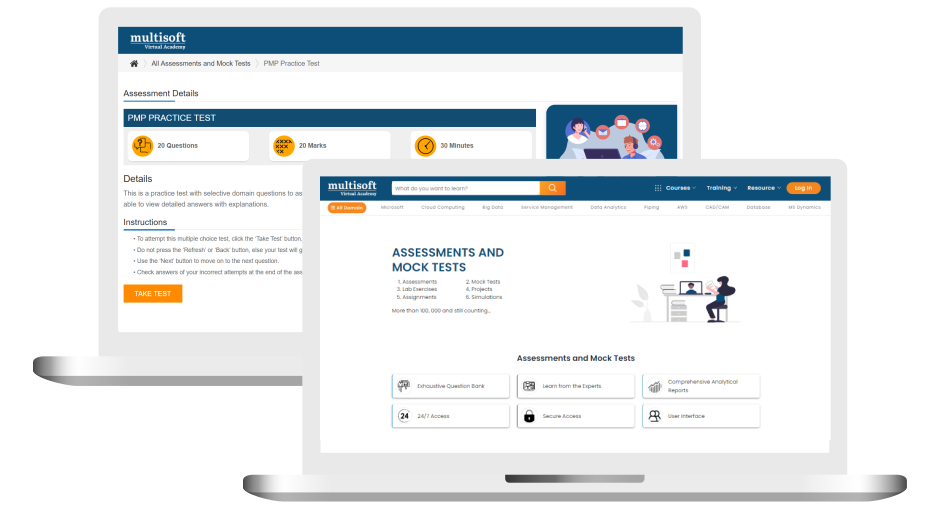
Free API 579-1/ASME FFS-1 Fitness-For-Service Corporate Training Assessment
Right from the beginning of learning journey to the end and beyond, we offer continuous assessment feature to evaluate progress and performance of the workforce.
Try it Now
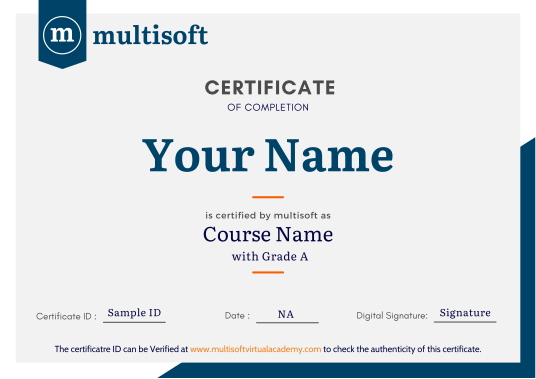
API 579-1/ASME FFS-1 Fitness-For-Service Corporate Training Certification
 Zoom-in

A Role Based Approach To Digital Skilling
A roadmap for readying key roles in your organization for business in the digital age.
 Download Whitepaper

 Download Curriculum
 Join our Live Instructor-Led online classes delivered by industry experts
 Let's Get Started
