


Trusted by enterprises across the globe

Designed for all your training needs

Flexible On-Demand Group Learning
Flexible, corporate learning for groups, accessible anytime, anywhere.

Instructor-Led Live, Online Training
Real-time, interactive classes taught by SME via web conferencing.

Independent Self-Paced Learning
Individual learning at your own speed, with access to digital materials.

Customized On-Site Training
Customized, face-to-face training sessions delivered at your location.
Curriculum Designed by Experts
 DOWNLOAD CURRICULUM
The SAP Datasphere Modeling Corporate Training by Multisoft Virtual Academy is designed to provide corporate teams with advanced skills in data modeling and management. Participants will learn to build, maintain, and optimize SAP Datasphere models to facilitate seamless data integration and analysis. This course combines theoretical concepts with practical exercises, enabling professionals to make informed business decisions. Suitable for data analysts, IT teams, and business users, the program enhances team productivity and organizational data expertise.
SAP Datasphere Modeling Training is a professional program that teaches how to design, manage, and optimize semantic data models using SAP Datasphere. The training focuses on integrating data from multiple SAP and non-SAP sources while preserving business context and governance. Learners gain hands-on experience with spaces, graphical and SQL views, analytical models, data flows, security, and performance optimization to deliver trusted, scalable analytics for modern cloud-based enterprises.
- Overview of SAP Datasphere and its role in modern analytics
- Evolution from SAP Data Warehouse Cloud to SAP Datasphere
- Key concepts: Business Data Fabric, semantics, and governance
- SAP Datasphere architecture and components
- Use cases and business benefits
DOWNLOAD CURRICULUM
- SAP Datasphere tenant overview
- User interface and key tools
- Working with spaces and tenants
- Connections and system landscape
- Monitoring and administration basics
DOWNLOAD CURRICULUM
- Understanding spaces and their purpose
- Creating and managing spaces
- Space-level data isolation and governance
- Assigning users, roles, and privileges
- Best practices for space design
DOWNLOAD CURRICULUM
- Connecting SAP and non-SAP data sources
- Import vs live data connections
- Data replication and remote tables
- Data access and source system management
- Introduction to data provisioning strategies
DOWNLOAD CURRICULUM
- Modeling concepts in SAP Datasphere
- Fact and dimension modeling approach
- Star schema and analytical modeling basics
- Business context preservation
- Reusable modeling strategies
DOWNLOAD CURRICULUM
- Creating graphical views
- Joins, unions, and projections
- Calculated columns and transformations
- Filters and aggregations
- Best practices for graphical modeling
DOWNLOAD CURRICULUM
- Introduction to SQL-based modeling
- Creating SQL views in SAP Datasphere
- Writing optimized SQL queries
- Using parameters and variables
- Comparing graphical views vs SQL views
DOWNLOAD CURRICULUM
- Defining business semantics
- Measures, attributes, and hierarchies
- Time-dependent data handling
- Currency and unit conversions
- Semantic consistency across models
DOWNLOAD CURRICULUM
- Creating analytical datasets
- Building analytical models for reporting
- Enabling models for analytics consumption
- Performance considerations for analytical models
- Model reuse across analytics tools
DOWNLOAD CURRICULUM
- Introduction to data flows
- Designing ETL/ELT logic
- Transformations and data cleansing
- Scheduling and monitoring data flows
- Error handling and data quality basics
DOWNLOAD CURRICULUM
- Role-based access control
- Object-level and space-level security
- Analytical privileges and data access control
- Managing users and permissions
- Best practices for secure modeling
DOWNLOAD CURRICULUM
- Modeling for high performance
- Data volume and partitioning strategies
- Optimization techniques for views and models
- Monitoring performance issues
- Governance and lifecycle management
DOWNLOAD CURRICULUM
- Connecting SAP Datasphere to SAC
- Live vs import connection scenarios
- Consuming models in SAC stories
- Best practices for end-user analytics
- End-to-end analytics flow
DOWNLOAD CURRICULUM
Free Career Counselling
We are happy to help you 24/7Multisoft Corporate Training Features
Outcome centric learning solutions to meet changing skill-demand of your organization
Wide variety of trainings to suit business skill demands

360° learning solution with lifetime access to e-learning materials

Choose topics, schedule and even a subject matter expert

Skilled professionals with relevant industry experience

Customized trainings to understand specific project requirements

Check performance progress and identify areas for development
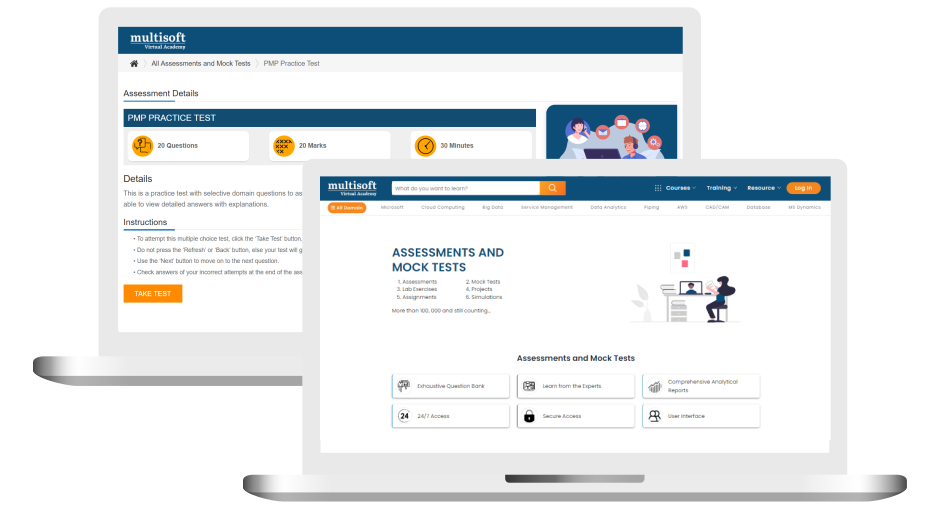
Free SAP Datasphere Modeling Corporate Training Assessment
Right from the beginning of learning journey to the end and beyond, we offer continuous assessment feature to evaluate progress and performance of the workforce.
Try it Now
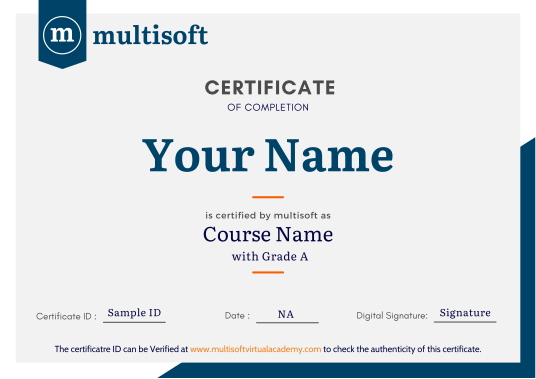
SAP Datasphere Modeling Corporate Training Certification
 Zoom-in
Related Courses


A Role Based Approach To Digital Skilling
A roadmap for readying key roles in your organization for business in the digital age.
 Download Whitepaper

 Download Curriculum
 Join our Live Instructor-Led online classes delivered by industry experts
 Let's Get Started
