



Master Big Data Analytics with SAS
With rapid advancement in technology there has been an explosion in the amount of data collected by businesses of all kinds in recent years which is redefining the dynamics of global industry in a big way. To put things in perspective, it is important to understand that traditionally businesses used to collect data and analyze it to understand business processes better and improve their products and services accordingly. However, today the means of communication, interaction, exchanging information, financial transactions and operational systems have diversified so much that there is barely any limit to the amount of data placed at the disposal of businesses.
 This availability of massive data can be immensely useful to businesses if they can understand what it means. However, traditional database and software techniques to store and analyze the data are not equipped well enough to deal with such unprecedented amounts of data. To store and analyze this new form of data an urgent need for novel technologies was felt which we would discuss later but before that it would be crucial to understand what makes this data so unique and sets it apart from traditional forms of data.
What is Big Data?
Simply put, the sheer volume, velocity and variety of data being collected exceeds the capacity of traditional data storage and processing systems. This is why the term Big Data was used to describe it. A few fitting examples of this would be millions of transactions taking place in multi-billion global fast food chains every hour of the day, millions of social media interactions taking place every day and billions of mobile phones being used across the world every day to make calls, send messages, pictures, internet browsing and for interacting with online global community in a number of ways.
This availability of massive data can be immensely useful to businesses if they can understand what it means. However, traditional database and software techniques to store and analyze the data are not equipped well enough to deal with such unprecedented amounts of data. To store and analyze this new form of data an urgent need for novel technologies was felt which we would discuss later but before that it would be crucial to understand what makes this data so unique and sets it apart from traditional forms of data.
What is Big Data?
Simply put, the sheer volume, velocity and variety of data being collected exceeds the capacity of traditional data storage and processing systems. This is why the term Big Data was used to describe it. A few fitting examples of this would be millions of transactions taking place in multi-billion global fast food chains every hour of the day, millions of social media interactions taking place every day and billions of mobile phones being used across the world every day to make calls, send messages, pictures, internet browsing and for interacting with online global community in a number of ways.
 Another aspect which differentiates Big Data is that it includes massive amounts of both structured and unstructured data and for latter type of data, traditional methods certainly do not offer much in terms of analytical capabilities. Interpreting this data and gaining useful insights from it is a huge task in and of itself requiring use of advanced data management and analysis tools and techniques for the purpose.
Making Sense of Big Data:
Statistical Analysis System (SAS®) is an integrated software system that boasts of advanced data management, statistical analysis, data mining and other capabilities which are a prerequisite for handling Big Data. SAS® is widely employed by companies to convert data into meaningful information through predictive analytics and help with business planning, forecasting and decision-making as well. It facilitates the efficient storage of large amounts of data, and the torrential speed at which data is arriving does not pose an obstacle in terms of processing.
Data could be in diverse formats ranging from structured to relatively unstructured forms and SAS® knows how to get it sorted. Additionally, it is equipped to handle the aspects of variability and complexity of this data. Variability refers to inconsistent data flows which do not follow any specific pattern and can display periodic peaks which make it exceptionally difficult to handle data efficiently. Complexity refers to virtually countless number of sources from where data is arriving, which makes establishing hierarchies and correlations that much more difficult.
What Makes Big Data Analysis So Significant?
It would be relevant to question why spend so much effort on analyzing Big Data and the answer lies in the value Big Data Analytics helps to create. It may help with:
Another aspect which differentiates Big Data is that it includes massive amounts of both structured and unstructured data and for latter type of data, traditional methods certainly do not offer much in terms of analytical capabilities. Interpreting this data and gaining useful insights from it is a huge task in and of itself requiring use of advanced data management and analysis tools and techniques for the purpose.
Making Sense of Big Data:
Statistical Analysis System (SAS®) is an integrated software system that boasts of advanced data management, statistical analysis, data mining and other capabilities which are a prerequisite for handling Big Data. SAS® is widely employed by companies to convert data into meaningful information through predictive analytics and help with business planning, forecasting and decision-making as well. It facilitates the efficient storage of large amounts of data, and the torrential speed at which data is arriving does not pose an obstacle in terms of processing.
Data could be in diverse formats ranging from structured to relatively unstructured forms and SAS® knows how to get it sorted. Additionally, it is equipped to handle the aspects of variability and complexity of this data. Variability refers to inconsistent data flows which do not follow any specific pattern and can display periodic peaks which make it exceptionally difficult to handle data efficiently. Complexity refers to virtually countless number of sources from where data is arriving, which makes establishing hierarchies and correlations that much more difficult.
What Makes Big Data Analysis So Significant?
It would be relevant to question why spend so much effort on analyzing Big Data and the answer lies in the value Big Data Analytics helps to create. It may help with:
This availability of massive data can be immensely useful to businesses if they can understand what it means. However, traditional database and software techniques to store and analyze the data are not equipped well enough to deal with such unprecedented amounts of data. To store and analyze this new form of data an urgent need for novel technologies was felt which we would discuss later but before that it would be crucial to understand what makes this data so unique and sets it apart from traditional forms of data.
What is Big Data?
Simply put, the sheer volume, velocity and variety of data being collected exceeds the capacity of traditional data storage and processing systems. This is why the term Big Data was used to describe it. A few fitting examples of this would be millions of transactions taking place in multi-billion global fast food chains every hour of the day, millions of social media interactions taking place every day and billions of mobile phones being used across the world every day to make calls, send messages, pictures, internet browsing and for interacting with online global community in a number of ways.
Another aspect which differentiates Big Data is that it includes massive amounts of both structured and unstructured data and for latter type of data, traditional methods certainly do not offer much in terms of analytical capabilities. Interpreting this data and gaining useful insights from it is a huge task in and of itself requiring use of advanced data management and analysis tools and techniques for the purpose.
Making Sense of Big Data:
Statistical Analysis System (SAS®) is an integrated software system that boasts of advanced data management, statistical analysis, data mining and other capabilities which are a prerequisite for handling Big Data. SAS® is widely employed by companies to convert data into meaningful information through predictive analytics and help with business planning, forecasting and decision-making as well. It facilitates the efficient storage of large amounts of data, and the torrential speed at which data is arriving does not pose an obstacle in terms of processing.
Data could be in diverse formats ranging from structured to relatively unstructured forms and SAS® knows how to get it sorted. Additionally, it is equipped to handle the aspects of variability and complexity of this data. Variability refers to inconsistent data flows which do not follow any specific pattern and can display periodic peaks which make it exceptionally difficult to handle data efficiently. Complexity refers to virtually countless number of sources from where data is arriving, which makes establishing hierarchies and correlations that much more difficult.
What Makes Big Data Analysis So Significant?
It would be relevant to question why spend so much effort on analyzing Big Data and the answer lies in the value Big Data Analytics helps to create. It may help with:
- Identifying issues with business processes without losing much time
- Detecting possible fraudulent activities which could prevent possible losses
- Making advanced risk assessment for specific processes
- Understanding subtleties of consumer behavior
- Make processes more cost-effective through better understanding of real-world functionality
- Save time on critical processes through useful data insights



 PRINCE2® provides guidance to the Project Managers about organizing and controlling entire project and delivering it within the specified time limits. It suggests the best tried and tested practices from various industries and backgrounds.
7 Principles of PRINCE2®
PRINCE2® is famously known as a process-based approach that primarily keeps an eye on an organization’s overall project line. This indicates that the projects are keenly viewed before they are sent to next stage.
PRINCE2® provides guidance to the Project Managers about organizing and controlling entire project and delivering it within the specified time limits. It suggests the best tried and tested practices from various industries and backgrounds.
7 Principles of PRINCE2®
PRINCE2® is famously known as a process-based approach that primarily keeps an eye on an organization’s overall project line. This indicates that the projects are keenly viewed before they are sent to next stage. 

 Keeping the customers happy is an important task and CRM (Customer Relationship Management) is the tool that helps in accomplishment of this task. Happy Customers are an asset for every business as they increase the possibilities of profit and help a business to establish as a brand.
CRM
Customer Relationship Management plays a vital role in maintaining and creating a bonding with the customers to build a paramount between customers and the organizations; thus, acting as an inspiration for both. CRM tracks and analyzes every interaction with the customers that helps to meet their end requirements. It also identifies substantial needs of customers so that organizations can improve in terms of deliverables. It works on few strategies, technologies, and practices that identify the customer lifecycle and ultimately increases the sales and marketing efficiency.
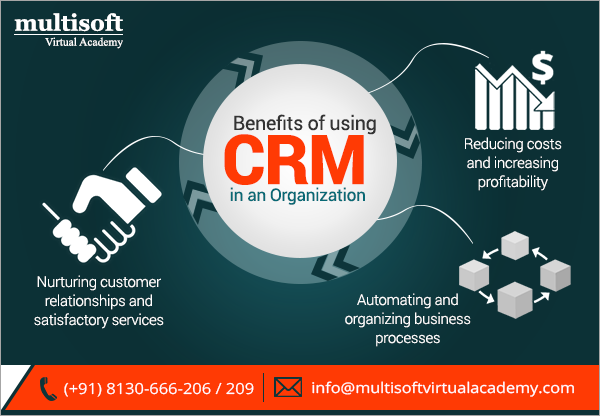
Benefits of using CRM in an Organization:
>> Helps to reduce costs and increase profitability
>> Automate and Organize business processes
>> Helps to nurture customer relationships and provide satisfactory services as end product
Microsoft® Dynamics CRM:
Keeping the customers happy is an important task and CRM (Customer Relationship Management) is the tool that helps in accomplishment of this task. Happy Customers are an asset for every business as they increase the possibilities of profit and help a business to establish as a brand.
CRM
Customer Relationship Management plays a vital role in maintaining and creating a bonding with the customers to build a paramount between customers and the organizations; thus, acting as an inspiration for both. CRM tracks and analyzes every interaction with the customers that helps to meet their end requirements. It also identifies substantial needs of customers so that organizations can improve in terms of deliverables. It works on few strategies, technologies, and practices that identify the customer lifecycle and ultimately increases the sales and marketing efficiency.
Benefits of using CRM in an Organization:
>> Helps to reduce costs and increase profitability
>> Automate and Organize business processes
>> Helps to nurture customer relationships and provide satisfactory services as end product
Microsoft® Dynamics CRM:

 Ethical Hacking:
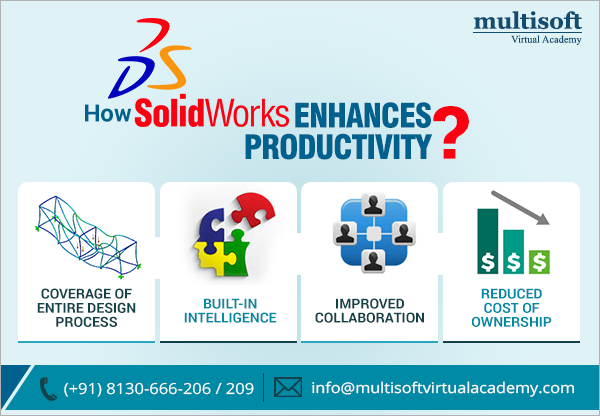
 SolidWorks affects the productivity of work and provides a rich environment that aids the work to get completed faster. Below mentioned are the factors that improve productivity:
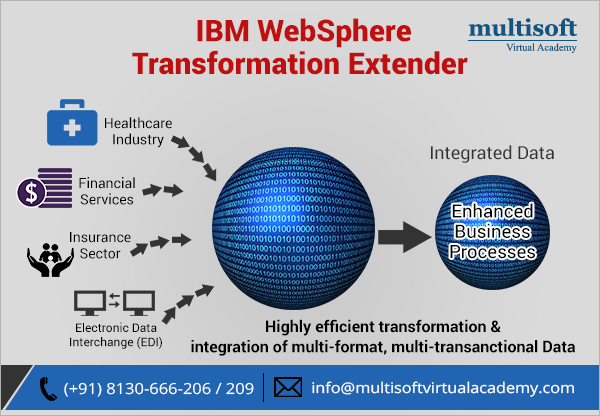
 An organization from almost any industry would usually generate large volumes of data from a range of operations it may undertake including customer operations and business partner transactions among other things. WTX helps organizations integrate their data from any number of their operations but depending on the industry different types of data may be generated which would give rise to the need for customized solutions for the same. Keeping this in view,
 How ERP Software Exactly Helps?
One of the distinct advantages offered by ERP software is that it allows businesses to look for Key Performance Indicators (KPIs) in real-time to gain useful insights in terms of enterprise-level performance. There are a variety of ERP solutions available in the market that cater to differing needs of organizations and any organization may have to find a suitable product to meet their needs. Keeping in mind sheer diversity of businesses and their requirements, most ERP software allow for customizations as well. The software also facilitates synchronized reporting and automates several back-office operations, resulting in increased overall efficiency.
Oracle, one of the global technology leaders, offers an array of
How ERP Software Exactly Helps?
One of the distinct advantages offered by ERP software is that it allows businesses to look for Key Performance Indicators (KPIs) in real-time to gain useful insights in terms of enterprise-level performance. There are a variety of ERP solutions available in the market that cater to differing needs of organizations and any organization may have to find a suitable product to meet their needs. Keeping in mind sheer diversity of businesses and their requirements, most ERP software allow for customizations as well. The software also facilitates synchronized reporting and automates several back-office operations, resulting in increased overall efficiency.
Oracle, one of the global technology leaders, offers an array of 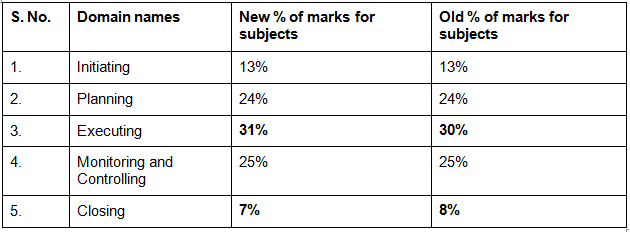
 If a person holds a PMP certificate, there are chances of earning 17% (as per
  You can see the changes mentioned above mainly in two domains - Executing and Closing. The percentage of Executing domain has been hiked by 1%, and that of the Closing process shall be less by 1%.
Change of Content in Domains, Tasks, Knowledge and Skills:
Below is a summary of the tasks that have been added to the 5 process groups:
You can see the changes mentioned above mainly in two domains - Executing and Closing. The percentage of Executing domain has been hiked by 1%, and that of the Closing process shall be less by 1%.
Change of Content in Domains, Tasks, Knowledge and Skills:
Below is a summary of the tasks that have been added to the 5 process groups:
 With addition of new tasks, the aspirants of PMP certification will now have to study a bit more under each process group. The tasks have been added in almost all the domains, except the Closing domain.
So, get registered and prepare for your
With addition of new tasks, the aspirants of PMP certification will now have to study a bit more under each process group. The tasks have been added in almost all the domains, except the Closing domain.
So, get registered and prepare for your 
 What is Software Testing?
The actual process of software testing includes two primary aspects, static testing and dynamic testing. Static testing involves reviewing the source code without executing it and performing static analysis as a part of verification process. Dynamic testing involves executing the code and running tests to ensure there are no bugs in the product. This forms a part of validation process. However, for efficient software testing, professionals assigned with the task must plan test activities, select test conditions and design test scenarios suited to a specific product in advance.
Who are Software Testers?
Software Testers play a critical role in developing any software or application by fixing any possible defects and ensuring quality of the end-product. However, software testing is a challenging field where a professional needs to understand product requirements to develop feasible test solutions and implement them within the current development framework without losing any time. With a view to bring greater uniformity in the approach adopted by software testers working under different conditions and to standardize the entire process of software testing, International
What is Software Testing?
The actual process of software testing includes two primary aspects, static testing and dynamic testing. Static testing involves reviewing the source code without executing it and performing static analysis as a part of verification process. Dynamic testing involves executing the code and running tests to ensure there are no bugs in the product. This forms a part of validation process. However, for efficient software testing, professionals assigned with the task must plan test activities, select test conditions and design test scenarios suited to a specific product in advance.
Who are Software Testers?
Software Testers play a critical role in developing any software or application by fixing any possible defects and ensuring quality of the end-product. However, software testing is a challenging field where a professional needs to understand product requirements to develop feasible test solutions and implement them within the current development framework without losing any time. With a view to bring greater uniformity in the approach adopted by software testers working under different conditions and to standardize the entire process of software testing, International 




 Project Management Institute (PMI®) is a premier body, setting up industry standards for project management professionals around the world. PMI lays down the framework for defining processes and best practices to be followed by Project Managers in any industry. The basis for PMI’s project management framework's the Project Management Body of Knowledge (PMBOK®). It is the bible for aspiring and existing Project Managers, and is also the key to preparing for PMP certification exam.
What is Project Management?
Project management is a complex task, which requires bringing together a number of skills to ensure successful completion of a project.
What PMBOK is All About?
Professionals looking to earn PMP certification must know all about PMBOK. In all, 5 versions of PMBOK have been released by PMI so far. PMBOK 5th Edition is the latest one, which will also be the base of our further discussion. PMBOK defines five major processes and ten knowledge areas that encompass almost every aspect of project management as a specialized field.
Let’s take a look at the 5 major processes first:
Initiating: It is about processes that help to shape a new project, including any official approvals which may be needed to begin work on a new project.
Planning: It involves defining the objectives and scope of the project and charting out a workable plan of action to achieve such goals.
Executing: Execution includes processes which lead to accomplishing the work undertaken in the project as per its specific requirements.
Monitoring and Controlling: It is concerned with any mechanisms and processes employed for keeping track of ongoing progress and regulating the work processes as per requirements.
Closing: This includes processes which lead to formal closure of any and all activities and aspects of the project.
These core processes can and do form part of each of the knowledge areas as well.
Understanding Knowledge Areas:
Integration Management:
This involves creating perfect coordination between different processes involved in the project, to which end a detailed plan of action may also be developed.
Scope Management:
This involves creating Work Breakdown Structure (WBS) for detailing and managing what exactly is intended to be achieved through this project what lies outside its scope.
Time Management:
This part of management is concerned with time constraints and creation a work schedule to ensure completion of project stages and processes on time.
Cost Management:
It concerns estimation, budgeting, funding and managing of costs to ensure that the project requirements are met within the approved budget.
Quality Management:
It is a very critical area of
Project Management Institute (PMI®) is a premier body, setting up industry standards for project management professionals around the world. PMI lays down the framework for defining processes and best practices to be followed by Project Managers in any industry. The basis for PMI’s project management framework's the Project Management Body of Knowledge (PMBOK®). It is the bible for aspiring and existing Project Managers, and is also the key to preparing for PMP certification exam.
What is Project Management?
Project management is a complex task, which requires bringing together a number of skills to ensure successful completion of a project.
What PMBOK is All About?
Professionals looking to earn PMP certification must know all about PMBOK. In all, 5 versions of PMBOK have been released by PMI so far. PMBOK 5th Edition is the latest one, which will also be the base of our further discussion. PMBOK defines five major processes and ten knowledge areas that encompass almost every aspect of project management as a specialized field.
Let’s take a look at the 5 major processes first:
Initiating: It is about processes that help to shape a new project, including any official approvals which may be needed to begin work on a new project.
Planning: It involves defining the objectives and scope of the project and charting out a workable plan of action to achieve such goals.
Executing: Execution includes processes which lead to accomplishing the work undertaken in the project as per its specific requirements.
Monitoring and Controlling: It is concerned with any mechanisms and processes employed for keeping track of ongoing progress and regulating the work processes as per requirements.
Closing: This includes processes which lead to formal closure of any and all activities and aspects of the project.
These core processes can and do form part of each of the knowledge areas as well.
Understanding Knowledge Areas:
Integration Management:
This involves creating perfect coordination between different processes involved in the project, to which end a detailed plan of action may also be developed.
Scope Management:
This involves creating Work Breakdown Structure (WBS) for detailing and managing what exactly is intended to be achieved through this project what lies outside its scope.
Time Management:
This part of management is concerned with time constraints and creation a work schedule to ensure completion of project stages and processes on time.
Cost Management:
It concerns estimation, budgeting, funding and managing of costs to ensure that the project requirements are met within the approved budget.
Quality Management:
It is a very critical area of 
 Contrary to the popular misconception that the IT companies only require Hadoop professionals, a growing number of enterprises have started identifying the importance of big data technologies like Hive, Pig, HBase, MapReduce, Zookeeper, and Hcatalog. Consequently, there has been tremendous increase in the number of Hadoop developer and Hadoop administration jobs with healthy paying premiums.
 With the increasing number of organizations tapping the technology to store and make use of the exponential data bank such as social media content, browser cookies, weblogs, click stream data to gain deeper insights about the preferences of their customer- Hadoop jobs are sure to populate the job sites. But the general question is that where are these Big Data jobs. Here is a glimpse at the popular options which a Hadoop enthusiast can take up:
Hadoop Developer:
Ideally the candidates need to have fair knowledge about the coding and programming side of the story.
With the increasing number of organizations tapping the technology to store and make use of the exponential data bank such as social media content, browser cookies, weblogs, click stream data to gain deeper insights about the preferences of their customer- Hadoop jobs are sure to populate the job sites. But the general question is that where are these Big Data jobs. Here is a glimpse at the popular options which a Hadoop enthusiast can take up:
Hadoop Developer:
Ideally the candidates need to have fair knowledge about the coding and programming side of the story. 
 Learning is the key to keep oneself updated and always be in demand. Continual professional development is crucial as it ensures that the candidate remains competent in the profession and also safeguards from any unforeseen situations at work. With present day’s complex business environment, learning is just not a nice thing to do but has now become essential process to learn new skills and enhance their marketability. No one of us who wants to excel in their career and want to advance would remain stagnant in their career. We have to keep enhancing our skills in critical thinking, creativity and innovation, analytics, people and leadership and networking, among other knowledge and skills.
When it comes to
Learning is the key to keep oneself updated and always be in demand. Continual professional development is crucial as it ensures that the candidate remains competent in the profession and also safeguards from any unforeseen situations at work. With present day’s complex business environment, learning is just not a nice thing to do but has now become essential process to learn new skills and enhance their marketability. No one of us who wants to excel in their career and want to advance would remain stagnant in their career. We have to keep enhancing our skills in critical thinking, creativity and innovation, analytics, people and leadership and networking, among other knowledge and skills.
When it comes to 
 Web-based technicalities and methodology has significantly transformed the learning and teaching environment. While proponents of online learning suggest that online platform can potentially be effective in eliminating the barriers; thereby, providing flexibility, increased convenience, customized learning over the traditional face-to-face learning; opponents are concerned that the students enrolled for online system of education feel more isolated, frustrated or even confused; thereby, squeezing up their interest in subject study and learning.
Employers don’t recognize Online Credentials
If you are attending the accredited courses offered by premium institutions like Multisoft Virtual Academy, rest assured that it will be as good as any other quality program. The best advantage which such courses provide is the flexibility of scheduling and ease of access.
It has been found that most employers prefer candidates who work on their qualifications and skills and online programs from Multisoft Virtual Academy prove to be the best opportunity to enhance and upgrade your skills.
Corporations globally are using Online Trainings and MOOCs to train the employees and make them proficient in the related domain. It is reported that
Web-based technicalities and methodology has significantly transformed the learning and teaching environment. While proponents of online learning suggest that online platform can potentially be effective in eliminating the barriers; thereby, providing flexibility, increased convenience, customized learning over the traditional face-to-face learning; opponents are concerned that the students enrolled for online system of education feel more isolated, frustrated or even confused; thereby, squeezing up their interest in subject study and learning.
Employers don’t recognize Online Credentials
If you are attending the accredited courses offered by premium institutions like Multisoft Virtual Academy, rest assured that it will be as good as any other quality program. The best advantage which such courses provide is the flexibility of scheduling and ease of access.
It has been found that most employers prefer candidates who work on their qualifications and skills and online programs from Multisoft Virtual Academy prove to be the best opportunity to enhance and upgrade your skills.
Corporations globally are using Online Trainings and MOOCs to train the employees and make them proficient in the related domain. It is reported that 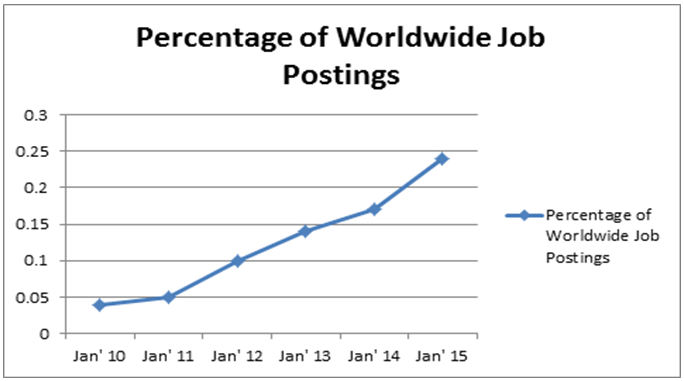
 Source: Indeed.com
Better Salaries
Looking at the market forecast, the prospects seem promising in the field.
Source: Indeed.com
Better Salaries
Looking at the market forecast, the prospects seem promising in the field.  Source: LinkedIn
With the Hadoop online Training, it has become quite easy to join the race of the Big data Analytics. This tremendously rising expertise space in the Big Data can be passed through comprehensive learning about the working architecture of the Hadoop concepts which enables the professionals to append the Big Data skills to their career profile. Multisoft Virtual Academy is one such name which has garnered enough repute in delivering trainings to the professionals globally. Get started with Hadoop Online Training at Multisoft Virtual Academy to gain expert mentorship and a desirable push to your career.
Source: LinkedIn
With the Hadoop online Training, it has become quite easy to join the race of the Big data Analytics. This tremendously rising expertise space in the Big Data can be passed through comprehensive learning about the working architecture of the Hadoop concepts which enables the professionals to append the Big Data skills to their career profile. Multisoft Virtual Academy is one such name which has garnered enough repute in delivering trainings to the professionals globally. Get started with Hadoop Online Training at Multisoft Virtual Academy to gain expert mentorship and a desirable push to your career. 
 Growth Prospects
With ever expanding job markets, quickly developing project oriented roles in ten countries are expected to increase by over 13.4 million between 2010 and 2020, to over 41.5 million. As per the numbers revealed by PMI, China and India are leading the pack generating approximately 8.1 million and 4 million
Growth Prospects
With ever expanding job markets, quickly developing project oriented roles in ten countries are expected to increase by over 13.4 million between 2010 and 2020, to over 41.5 million. As per the numbers revealed by PMI, China and India are leading the pack generating approximately 8.1 million and 4 million  Growing affinity for Credentials
The growing affinity of the Hiring managers for the certified talent on board has hiked the importance of PMPs globally. The certified professionals are reportedly earning 20 percent more than their counterparts along with several challenging positions at work. Apart from validating the professional’s expertise in the related domain, the credential is believed to have a direct impact on the candidature of the professional.
Greater Success at work
As reported by PMI’s Pulse of Profession, projects having certified PMPs have 26% more success rate than the other ones. The fact is that the PMPs bring their expertise and knowledge to the work place which in turn helps in smooth operations and effective management.
Get Ready
To have a big shot at the emerging opportunities, it is highly required to grab the certification. To ace the PMP certification exam efficiently, a training classroom is highly recommended which provides knowledge and insights about the processes and concepts that goes underneath.
Multisoft Virtual Academy with its
Growing affinity for Credentials
The growing affinity of the Hiring managers for the certified talent on board has hiked the importance of PMPs globally. The certified professionals are reportedly earning 20 percent more than their counterparts along with several challenging positions at work. Apart from validating the professional’s expertise in the related domain, the credential is believed to have a direct impact on the candidature of the professional.
Greater Success at work
As reported by PMI’s Pulse of Profession, projects having certified PMPs have 26% more success rate than the other ones. The fact is that the PMPs bring their expertise and knowledge to the work place which in turn helps in smooth operations and effective management.
Get Ready
To have a big shot at the emerging opportunities, it is highly required to grab the certification. To ace the PMP certification exam efficiently, a training classroom is highly recommended which provides knowledge and insights about the processes and concepts that goes underneath.
Multisoft Virtual Academy with its 
 Managing the Project
A project is divided into various tasks and managing tasks is one of the most important functions. Defining the tasks, assigning to the person, creating a deadline, evaluating the performance and development as per the charted route map- have become the most ubiquitous feature in the new age Project Management Tool.
Time Scheduling
Time is precious and hence scheduling it as per the needs of project. A lot of Project Management tools let you to keep a tap on the time duration and the allocated time as per the process.
Managing the Project
A project is divided into various tasks and managing tasks is one of the most important functions. Defining the tasks, assigning to the person, creating a deadline, evaluating the performance and development as per the charted route map- have become the most ubiquitous feature in the new age Project Management Tool.
Time Scheduling
Time is precious and hence scheduling it as per the needs of project. A lot of Project Management tools let you to keep a tap on the time duration and the allocated time as per the process. 
 Join our Live Instructor-Led online classes delivered by industry experts
 Let's Get Started
