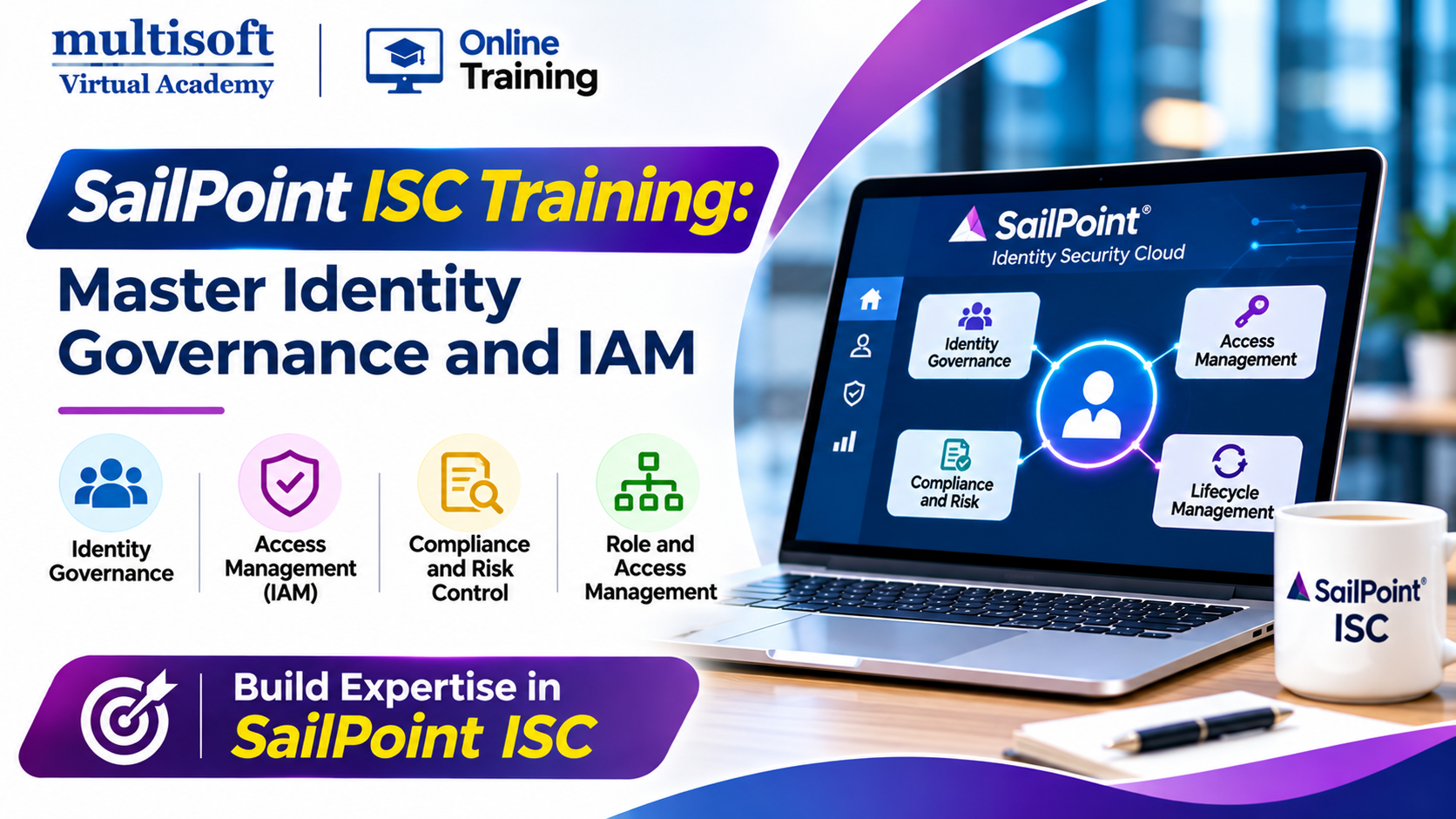
As organizations expand their digital infrastructure, protecting user identities and managing application access have become essential parts of information security. Employees, vendors, contractors, and business partners regularly access multiple enterprise applications. Without proper identity governance, organizations may face unauthorized access, excessive permissions, security vulnerabilities, and compliance challenges.
SailPoint Identity Security Cloud (ISC) provides a cloud-based approach to identity governance and administration. It helps businesses manage digital identities, automate access-related processes, and maintain visibility into user permissions across connected systems.
SailPoint ISC Training helps IT professionals understand the platform and develop practical skills in identity lifecycle management, access provisioning, application integration, and governance automation. It is a valuable learning option for individuals interested in building expertise in Identity and Access Management (IAM) and enterprise cybersecurity.
SailPoint Identity Security Cloud is designed to help organizations understand and manage access across their technology environments. It supports identity governance processes that allow businesses to manage user accounts, monitor permissions, and establish consistent access controls.
Instead of handling every access-related activity manually, organizations can use identity governance workflows to automate routine operations and improve administrative visibility.
Its major capabilities include:
These capabilities are useful for organizations managing complex IT environments with different applications, user groups, and access requirements.
Identity governance is becoming an important area of enterprise security. Businesses need professionals who can manage identity-related processes while ensuring that access permissions remain aligned with organizational requirements.
SailPoint ISC training introduces learners to the technical and functional aspects of identity governance.
Professionals learn how user identities are created, maintained, updated, and removed across connected systems. This understanding is useful for managing employees throughout their relationship with an organization.
Provisioning helps assign appropriate access when users join a company or receive new responsibilities. Training explains how provisioning workflows support account creation, access updates, and deprovisioning.
Organizations need to review user permissions regularly. SailPoint ISC provides capabilities for access requests, certifications, and governance processes that help businesses maintain control over application access.
As companies adopt cloud platforms and SaaS applications, identity management requirements continue to evolve. Learning SailPoint ISC can help professionals understand cloud-based identity governance and application connectivity.
A complete SailPoint Identity Security Cloud Course should provide a combination of platform fundamentals, configuration concepts, practical exercises, and implementation knowledge.
Learners begin by understanding the platform's purpose, architecture, and role in enterprise identity governance.
Topics generally include:
This foundation helps participants understand how the different platform capabilities work together.
Identity sources provide information about users and accounts from connected applications and enterprise systems.
Training introduces the configuration and management of identity sources, including identity attributes, aggregation, and correlation.
Learners may explore:
For example, an organization may connect its HR system to SailPoint ISC so employee information can support identity creation and lifecycle processes.
Identity lifecycle management is one of the important areas of enterprise IAM. It ensures that access changes are handled when employees join, change roles, or leave an organization.
Training may cover the Joiner-Mover-Leaver process and its practical application.
Important topics include:
These processes help organizations reduce manual administration and maintain more consistent access controls.
Employees may require additional permissions to perform their responsibilities. Access request management provides a structured way to request and approve those permissions.
Learners understand how access requests are created, reviewed, approved, and processed.
Training may include request configuration, approval workflows, access profiles, entitlement assignments, and request monitoring.
It also introduces the importance of approval policies and business ownership in access management.
Organizations use different access models to assign permissions according to job responsibilities.
SailPoint ISC training introduces the concepts of roles, access profiles, and entitlements and explains how they support identity governance.
Learners can understand how access is organized, assigned, and reviewed. This knowledge is useful when developing access models for large organizations.
Connecting enterprise applications with identity governance platforms is an important part of IAM implementation.
SailPoint ISC supports integration with different systems through supported connectors and integration methods.
Relevant learning areas include:
Understanding application connectivity helps professionals work with identity data across different technology environments.
Access certification allows managers, application owners, and designated reviewers to examine user permissions.
During a certification campaign, reviewers determine whether access should be retained, modified, or removed according to business requirements.
Training may cover campaign configuration, reviewer assignment, certification decisions, campaign monitoring, and reporting.
These activities help organizations maintain visibility into permissions and support periodic access governance reviews.
Automation helps organizations manage repetitive identity processes more efficiently.
Advanced SailPoint ISC training may introduce workflow configuration, event triggers, workflow actions, REST APIs, JSON, transforms, and troubleshooting.
Professionals who understand these areas can develop stronger technical knowledge for integration and customization-related activities.
Learning SailPoint ISC features is important, but implementation knowledge also requires an understanding of business requirements and project execution.
SailPoint ISC Implementation Training should introduce learners to the major stages involved in deploying identity governance capabilities.
The project team identifies existing identity sources, application access requirements, user categories, approval responsibilities, and security policies.
The identity governance architecture is planned according to business needs. This includes defining integration requirements, identity data flows, and access management processes.
Enterprise applications are connected through supported integration methods. Account information and entitlement data are configured for the required governance processes.
Identity profiles, access models, provisioning processes, and workflows are configured according to the approved design.
Implementation teams validate identity aggregation, account provisioning, access requests, certification campaigns, and deprovisioning scenarios.
After deployment, teams monitor identity processes, troubleshoot integration issues, review access changes, and update configurations when requirements change.
Practical exposure to these activities helps learners understand the responsibilities of an IAM implementation professional.
SailPoint Identity Security Cloud can support identity governance requirements across different business sectors.
Financial services: Banks and financial institutions manage access to financial applications, customer information, and internal business systems.
Healthcare: Healthcare organizations need controlled access to patient information and operational applications.
Information technology: IT companies manage identities and permissions across cloud environments, databases, development tools, and enterprise platforms.
Telecommunications: Telecom companies operate complex application environments and require consistent identity administration.
Manufacturing: Manufacturing organizations manage access across business applications, operational systems, and distributed facilities.
Retail and e-commerce: Retail businesses coordinate access for employees, vendors, contractors, and business partners.
The course can benefit individuals who want to develop technical knowledge in identity security and enterprise access governance.
Basic knowledge of IT infrastructure, user administration, and access management can make learning easier.
Organizations need skilled professionals who can support identity governance platforms and manage enterprise access requirements.
After developing relevant technical skills and practical experience, learners may explore opportunities such as:
Career opportunities depend on technical expertise, practical experience, project exposure, and employer expectations. Training can establish a foundation, while hands-on practice helps professionals develop job-related capabilities.
Choosing the right course is important for developing a strong understanding of the platform.
Evaluate the syllabus: Look for coverage of identity sources, provisioning, access requests, application onboarding, certification campaigns, workflows, and APIs.
Prefer practical sessions: Hands-on activities can help learners understand platform operations and common implementation scenarios.
Check trainer knowledge: Instructors should be able to explain both technical functions and business applications.
Confirm practice access: Ask whether a training environment or demonstration tenant is available for exercises.
Select the right learning level: Beginners should start with fundamentals, while experienced IAM professionals may choose advanced administration or implementation topics.
Review certification details: Confirm whether the program prepares learners for an official certification pathway or offers a separate course-completion certificate.
It generally covers identity governance, identity lifecycle management, user provisioning, application integration, access requests, certification campaigns, and workflow automation.
Yes. SailPoint Identity Security Cloud is a cloud-based identity security platform designed to support identity governance and access management processes.
Coding is not essential for understanding basic administration and governance concepts. However, REST APIs, JSON, and scripting knowledge can be helpful for advanced integrations and workflows.
IdentityNow is the previous product name associated with SailPoint's cloud identity governance platform. Identity Security Cloud is the newer product terminology.
Yes. Beginners can start with IAM fundamentals and platform basics before progressing to identity source configuration, provisioning, workflows, and implementation.
Training can help develop relevant technical knowledge for IAM-related roles. Career opportunities also depend on practical skills, previous experience, and industry requirements.
Identity governance is an important part of protecting modern enterprise environments. SailPoint Identity Security Cloud helps organizations manage user identities, control application permissions, automate provisioning, and support compliance-related access reviews. Learning identity lifecycle management, application integration, access certifications, workflow automation, and REST API concepts can help professionals build valuable IAM capabilities. A practical training approach also provides a better understanding of how these functions are used in enterprise environments. Multisoft Virtual Academy offers SailPoint ISC Training for aspiring and experienced IT professionals who want to strengthen their identity governance knowledge through structured instruction, practical learning, and industry-oriented training.
| Start Date | Time (IST) | Day | |||
|---|---|---|---|---|---|
| 28 Nov 2026 | 06:00 PM - 10:00 AM | Sat, Sun | |||
| 29 Nov 2026 | 06:00 PM - 10:00 AM | Sat, Sun | |||
| 05 Dec 2026 | 06:00 PM - 10:00 AM | Sat, Sun | |||
| 06 Dec 2026 | 06:00 PM - 10:00 AM | Sat, Sun | |||
|
Schedule does not suit you, Schedule Now! | Want to take one-on-one training, Enquiry Now! |
|||||




 Join our Live Instructor-Led online classes delivered by industry experts
 Let's Get Started
