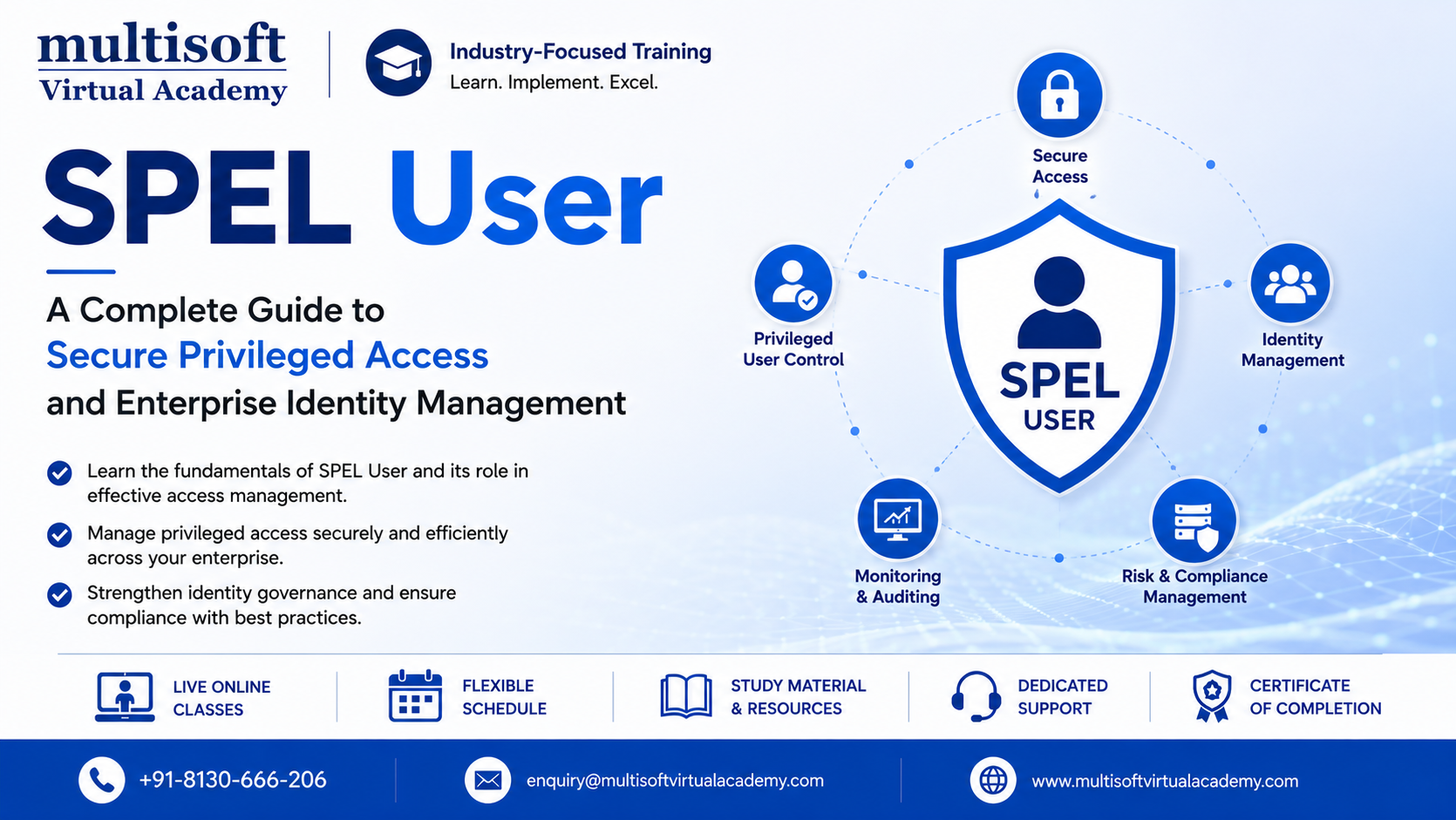
In today's digital-first business environment, organizations rely on hundreds of applications, cloud platforms and enterprise systems to run critical operations. As businesses expand, managing privileged user access securely becomes increasingly complex. This is where the role of a SPEL User becomes essential.
Whether your organization operates in banking, healthcare, manufacturing, government or IT services, understanding privileged access management helps protect sensitive information, reduce cyber risks and ensure regulatory compliance.
This comprehensive guide explains everything about SPEL User, its business importance, implementation process, best practices, benefits and future trends. You'll also discover related enterprise security concepts that organizations frequently adopt alongside privileged identity management.
A SPEL User refers to a privileged enterprise user who has authorized access to critical applications, administrative functions, secure databases or infrastructure resources. These users typically possess elevated permissions that enable them to perform sensitive operations within enterprise environments.
Unlike standard users, privileged users can:
Because of their extensive permissions, organizations must closely monitor and protect these accounts.
Every privileged account represents both an operational necessity and a potential security risk.
Organizations implement strict privileged access strategies to:
A single compromised privileged account can expose an entire enterprise network.
A privileged enterprise user typically performs responsibilities such as:
Managing enterprise servers, databases and applications.
Applying security policies and access permissions.
Creating, updating and removing enterprise user accounts.
Maintaining cloud platforms, virtualization and storage systems.
Managing ERP, CRM, HRMS and enterprise software.
Helping organizations satisfy security regulations and internal governance policies.
Organizations implement multiple security controls for privileged users.
Users receive permissions based on job responsibilities rather than individual requests.
Additional authentication layers protect privileged accounts.
Every administrative activity is monitored and recorded.
Privileged credentials remain securely encrypted.
Users receive temporary elevated permissions only when necessary.
Every administrative action is recorded for future investigations.
Access rights are continuously reviewed and validated.
Reduces unauthorized access and cyber threats.
Supports standards such as:
Administrators gain complete visibility into privileged activities.
Access is limited according to business requirements.
Automated workflows simplify user provisioning and deprovisioning.
Continuous monitoring minimizes operational risks.
Almost every enterprise sector relies on privileged identity management.
Protecting financial transactions and customer records.
Securing patient information and medical systems.
Managing industrial automation and production systems.
Protecting payment systems and customer databases.
Safeguarding classified information.
Managing network infrastructure securely.
Protecting critical operational technology.
Managing cloud infrastructure and enterprise applications.
A typical workflow includes:
User access request.
Manager approval.
Security validation.
Role assignment.
Credential generation.
Access monitoring.
Periodic review.
Access revocation when no longer required.
Organizations often encounter several challenges.
Users may receive more access than required.
Shared administrator accounts reduce accountability.
Weak password practices increase security risks.
Unmonitored privileged sessions create vulnerabilities.
Manual provisioning increases administrative overhead.
Hybrid cloud environments introduce additional security considerations.
Grant only the minimum permissions required.
Strengthen account protection.
Record all privileged activities.
Prevent credential misuse.
Remove unnecessary permissions promptly.
Automated workflows improve efficiency and accuracy.
Regular audits identify security gaps.
Privileged user management is a critical component of enterprise identity governance.
It works alongside:
Together, these technologies provide comprehensive enterprise security.
| Standard User | SPEL User |
| Limited permissions | Administrative permissions |
| Access to daily applications | Access to critical systems |
| Minimal security risk | High-value security target |
| Basic authentication | Enhanced authentication |
| Limited monitoring | Continuous monitoring |
| Standard workflows | Privileged workflows |
Technology continues to evolve rapidly.
Emerging trends include:
AI detects suspicious privileged activities.
Behavior analytics identify anomalies.
Continuous verification replaces traditional perimeter security.
Biometrics and hardware security keys reduce password dependency.
Modern enterprises increasingly secure multi-cloud environments.
Advanced reporting enhances risk detection.
Many businesses unknowingly introduce security risks through poor privileged access practices. Avoid these common mistakes:
Addressing these issues helps create a stronger security posture and minimizes the likelihood of unauthorized access.
A SPEL User is an authorized enterprise user with elevated permissions to manage critical applications, systems, databases or infrastructure resources.
It protects sensitive enterprise systems, reduces cybersecurity risks, supports compliance and improves visibility into administrative activities.
Organizations should implement least privilege access, multi-factor authentication, password vaulting, session monitoring, audit logging and regular access reviews.
Banking, healthcare, manufacturing, retail, telecommunications, government, energy, education and information technology organizations all benefit from secure privileged user management.
Best practice recommends conducting periodic reviews based on organizational policies, regulatory requirements and changes in employee roles.
Effective SPEL User management is fundamental to protecting modern enterprise environments from evolving cyber threats. By implementing robust identity governance, least-privilege access, continuous monitoring and strong authentication mechanisms, organizations can significantly reduce security risks while improving operational efficiency and regulatory compliance.
Multisoft Virtual Academy supports organizations with professional enterprise technology services and expertise to help implement secure identity management practices, privileged access strategies and enterprise security solutions tailored to modern business requirements. Through industry-focused consulting and implementation services, Multisoft Virtual Academy enables businesses to strengthen cybersecurity, optimize user access governance and build a resilient digital infrastructure for long-term success.
| Start Date | Time (IST) | Day | |||
|---|---|---|---|---|---|
| 19 Sep 2026 | 06:00 PM - 10:00 AM | Sat, Sun | |||
| 13 Sep 2026 | 06:00 PM - 10:00 AM | Sat, Sun | |||
| 26 Sep 2026 | 06:00 PM - 10:00 AM | Sat, Sun | |||
| 20 Sep 2026 | 06:00 PM - 10:00 AM | Sat, Sun | |||
|
Schedule does not suit you, Schedule Now! | Want to take one-on-one training, Enquiry Now! |
|||||





 Join our Live Instructor-Led online classes delivered by industry experts
 Let's Get Started