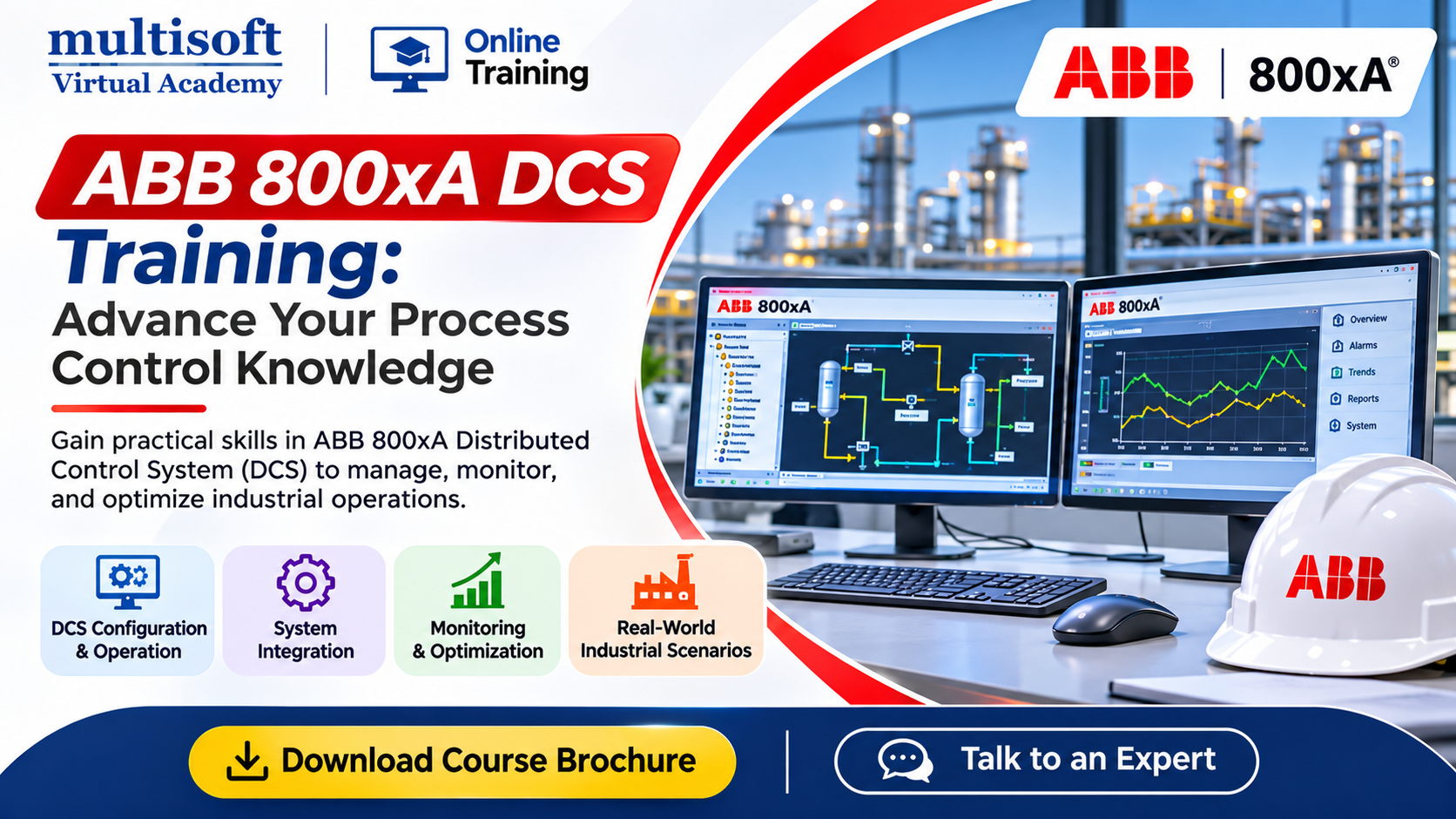
Industrial automation is transforming the way manufacturing facilities, power plants, refineries, and processing industries manage their operations. Modern plants require advanced control technologies to monitor equipment, regulate process variables, improve operational efficiency, and maintain consistent production. Distributed Control Systems (DCS) provide the foundation for managing these complex industrial activities.
ABB Ability System 800xA is an integrated automation platform used to support process control, engineering, and plant operations. Understanding this technology can be valuable for professionals working in instrumentation, electrical engineering, automation, and industrial maintenance.
ABB 800xA DCS Training introduces participants to the platform's engineering and operational capabilities. It helps learners understand controller configuration, control application development, process visualization, alarm management, communication, and system troubleshooting. Through structured learning and practical exercises, professionals can develop knowledge relevant to industrial automation projects.
ABB System 800xA is designed to bring different industrial automation functions into a common environment. It supports process control and integrates relevant engineering and operational information to help organizations manage industrial facilities.
A DCS consists of controllers, input and output modules, communication networks, operator workstations, engineering stations, and other connected components. These elements work together to collect field information, execute control strategies, and provide process information to operators.
System 800xA provides an environment for configuring control applications and monitoring plant activities. Its integrated approach helps engineering teams work with system objects, equipment information, and process-related data.
For professionals involved in industrial projects, understanding the platform can improve their familiarity with modern control system architecture and engineering workflows.
Industrial facilities depend on skilled professionals who can understand automation technologies and support reliable plant operations. Learning ABB System 800xA can help build a foundation for several technical responsibilities.
Knowledge of system architecture helps engineers understand the relationship between controllers, workstations, servers, networks, and field devices. It also provides a clearer picture of how information travels through an industrial control environment.
Control applications manage industrial processes through defined logic and control strategies. Training introduces learners to programming concepts, application structures, and function blocks used in relevant controller environments.
Plant operators need to observe process conditions and respond to changes. Learning the operator workplace and graphical interface helps participants understand how equipment status, process values, and alarms are presented.
Maintenance professionals need to recognize system abnormalities and investigate possible causes. Training can introduce diagnostic information, communication checks, controller status, and hardware-related troubleshooting.
Professionals involved in system installation, engineering, commissioning, and upgrades can benefit from understanding the platform's configuration and operational features.
A complete ABB 800xA DCS Course should provide a structured introduction to system fundamentals and gradually move toward engineering and maintenance activities.
Learners begin with the fundamentals of industrial automation and distributed control. This module explains how a DCS supports process monitoring and control across an industrial facility.
Topics may include:
This knowledge helps learners understand the overall purpose and structure of the platform.
Understanding system architecture is essential before performing engineering activities. Participants explore how system components are arranged and how different elements communicate.
The module may cover system structures, configuration principles, object organization, servers, clients, and connected devices.
It also introduces the engineering environment used to manage project information and system objects.
AC 800M controllers execute control applications and interact with associated input and output systems.
Training may cover controller hardware, configuration concepts, application organization, communication, and controller-related maintenance.
Learners develop an understanding of how controller resources are used within an industrial automation project.
Control Builder is used to develop and configure control applications in supported System 800xA environments.
This learning area may include:
These skills help professionals understand how control strategies are represented and organized within the system.
Plant Explorer provides access to system structures and objects within the engineering environment.
Learners may explore how to navigate project structures, access object information, review properties, and work with engineering data.
Understanding these functions helps professionals become more familiar with the System 800xA environment.
The operator workplace gives plant personnel access to process information through graphical displays and operational interfaces.
Training may include:
A clear understanding of process visualization helps participants recognize how engineering configurations are presented to plant operators.
Alarms help operators identify abnormal process conditions, equipment issues, and other events that require attention.
Training may introduce alarm configuration, event displays, acknowledgment procedures, and alarm-related information management.
Participants learn how alarm and event functions support operational monitoring and troubleshooting.
Historical information helps engineering teams understand how a process has behaved over a particular period.
Training may cover trend displays, historical data collection, process value analysis, and related configuration concepts.
These capabilities can assist in investigating process variations and reviewing operating performance.
Industrial control systems exchange data between controllers, workstations, servers, and external applications.
This module may introduce communication configuration, network concepts, OPC connectivity, and related integration activities.
Understanding communication is useful when working with interconnected automation components.
System maintenance involves monitoring equipment status, identifying faults, and following approved procedures to restore normal operation.
Training may introduce hardware diagnostics, controller status checks, signal tracing, communication troubleshooting, and backup concepts.
Practical exercises can help learners understand how to investigate common system issues systematically.
ABB System 800xA is associated with industrial environments where process control, equipment monitoring, and operational coordination are important.
Oil and Gas: Automation systems support the monitoring and control of production facilities, refineries, and gas processing operations.
Power Plants: DCS technology helps manage plant equipment, monitor operating parameters, and coordinate process activities.
Chemical Processing: Automated control supports process monitoring and the management of interconnected production operations.
Pharmaceutical Manufacturing: Control systems help monitor production conditions and support consistent manufacturing procedures.
Pulp and Paper: Automation helps coordinate production equipment and maintain process conditions across different manufacturing stages.
Metals and Mining: Industrial control technologies support equipment monitoring and process automation in demanding production environments.
The actual use of System 800xA depends on project requirements, system configuration, and the automation architecture selected by the organization.
This training can be relevant to professionals looking to develop knowledge of industrial control systems.
Basic knowledge of instrumentation, electrical systems, or process control can be useful when starting the course.
Knowledge of specialized DCS platforms can complement the technical background of professionals working in industrial automation.
Depending on qualifications and experience, relevant career paths may include:
Employers generally consider practical experience, engineering fundamentals, software knowledge, troubleshooting ability, and familiarity with industrial standards when evaluating candidates.
Training can strengthen technical understanding, but career outcomes depend on individual qualifications and professional experience.
Before enrolling, evaluate the course content and practical learning opportunities.
Detailed course curriculum: Select a program that explains architecture, AC 800M controllers, Control Builder, operator workplace, alarms, communication, and maintenance.
Practical system exposure: Check whether the course provides exercises using a suitable software environment. Hands-on learning can make complex engineering concepts easier to understand.
Experienced trainers: Look for instructors who can explain technical concepts through relevant industrial examples.
Software version: Confirm the version and configuration used during training, as software features and workflows can differ between releases.
Flexible learning options: Consider instructor-led online sessions, one-to-one training, or corporate programs based on your requirements.
Clear learning objectives: Review the expected outcomes and confirm whether the program is suitable for beginners or experienced professionals.
It is a technical course that introduces ABB System 800xA and its applications in industrial process automation, including controller configuration, engineering, operation, and maintenance.
AC 800M controllers execute control applications and communicate with associated input and output systems in supported industrial automation configurations.
Depending on the course syllabus, it may cover Control Builder and programming approaches such as Function Block Diagram, Structured Text, and Sequential Function Charts.
Yes. Instrumentation engineers can benefit from understanding controller operations, process signals, field device integration, and control applications.
System 800xA is used in various industrial sectors, including power generation, where automation supports equipment monitoring and process control.
No. Training helps develop technical knowledge, but employment depends on qualifications, practical experience, technical ability, and employer requirements.
Industrial automation requires professionals who can understand control system architecture, develop reliable applications, monitor plant conditions, and support system maintenance. ABB System 800xA provides an integrated environment for managing important process automation functions. Learning its controller configuration, Control Builder, operator workplace, alarm management, and troubleshooting capabilities can help professionals strengthen their technical foundation. A practical learning approach is valuable for understanding how these functions are applied in industrial projects. Multisoft Virtual Academy provides ABB 800xA DCS Training for engineers, technicians, and automation professionals who want to develop their understanding of modern distributed control systems and improve their readiness for industrial automation assignments.
| Start Date | Time (IST) | Day | |||
|---|---|---|---|---|---|
| 28 Nov 2026 | 06:00 PM - 10:00 AM | Sat, Sun | |||
| 29 Nov 2026 | 06:00 PM - 10:00 AM | Sat, Sun | |||
| 05 Dec 2026 | 06:00 PM - 10:00 AM | Sat, Sun | |||
| 06 Dec 2026 | 06:00 PM - 10:00 AM | Sat, Sun | |||
|
Schedule does not suit you, Schedule Now! | Want to take one-on-one training, Enquiry Now! |
|||||




 Join our Live Instructor-Led online classes delivered by industry experts
 Let's Get Started
