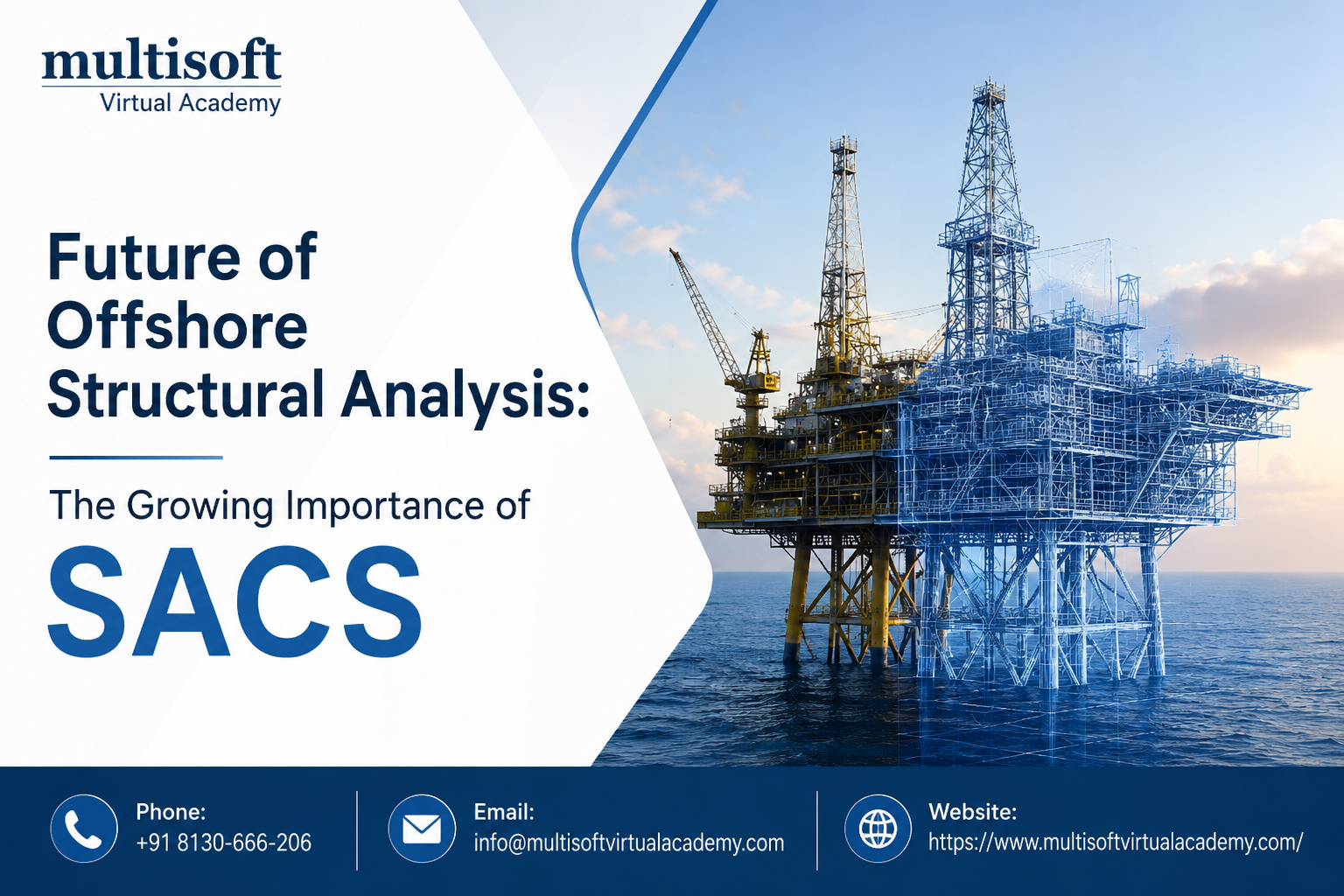
Structural Analysis Computer System (SACS) is one of the most widely used engineering software solutions for the analysis, design, and assessment of offshore structures. Developed specifically for the oil and gas, marine, renewable energy, and offshore infrastructure industries, SACS provides engineers with powerful tools to evaluate structural integrity under various environmental and operational conditions. Offshore structures are constantly exposed to complex loads such as waves, wind, currents, seismic activities, equipment loads, and operational stresses. Ensuring the safety and reliability of these structures requires sophisticated analysis methods that can accurately simulate real-world conditions. SACS was developed to meet these requirements by providing an integrated platform for structural modeling, analysis, code checking, fatigue assessment, and lifecycle management.
Over the years, SACS online training has become an industry-standard solution used by engineering consultants, EPC companies, offshore operators, and structural engineers worldwide. Its ability to handle complex offshore projects while complying with international design codes makes it an essential tool for modern offshore engineering.
Structural Analysis Computer System (SACS) is a specialized engineering software suite used for the structural analysis and design of offshore platforms, jackets, topsides, subsea structures, wind turbine foundations, and marine facilities. The software enables engineers to:
SACS training provides a comprehensive environment where engineers can perform all stages of offshore structural engineering within a single integrated platform.
Evolution of SACS
The offshore industry has evolved significantly over the past few decades. Early offshore structures were relatively simple and located in shallow waters. As exploration expanded into deeper waters and harsher environments, engineering challenges increased dramatically.
Traditional hand calculations became insufficient for analyzing large and complex offshore structures. This created the need for advanced computational tools capable of handling:
SACS emerged as a dedicated solution specifically tailored to offshore engineering requirements. Continuous enhancements have enabled it to support modern offshore projects, including deepwater developments and offshore wind energy installations.
The architecture of Structural Analysis Computer System (SACS) is designed to provide a comprehensive and integrated environment for offshore structural modeling, analysis, design, and asset integrity management. It follows a modular framework where different engineering functions work together seamlessly, enabling engineers to perform complex structural evaluations within a single platform. At the core of SACS is the structural database, which stores all project-related information, including geometry, material properties, member definitions, joint details, load cases, and analysis results. This centralized database ensures consistency across all engineering activities and eliminates data duplication. The modeling layer, commonly accessed through graphical interfaces such as Precede, allows engineers to create and modify offshore structures, including jackets, topsides, offshore wind foundations, and marine facilities. Once the structural model is prepared, it is processed by the analysis engine, which performs various calculations such as static analysis, dynamic analysis, nonlinear analysis, seismic evaluation, and spectral response studies. The loading subsystem manages different environmental and operational loads, including wave forces, wind pressures, current effects, equipment loads, and accidental loading conditions.
Another important architectural component is the code checking and design verification module, which automatically evaluates structural members and joints against industry standards and offshore design codes. The fatigue analysis module is integrated into the architecture to assess long-term structural performance under cyclic loading conditions, helping engineers predict fatigue life and identify critical areas requiring maintenance. SACS certification also includes visualization and reporting tools that transform complex analysis results into graphical representations, utilization plots, stress contours, and detailed engineering reports. Advanced modules such as collapse analysis, pushover analysis, and structural integrity assessment extend the software’s capabilities for evaluating aging offshore assets and extreme loading scenarios. This integrated architecture enables efficient data flow between modeling, analysis, design, and reporting processes, making SACS a powerful solution for offshore engineering projects where safety, reliability, and compliance with international standards are critical requirements.
1. Precede
Precede is the primary graphical modeling interface in SACS, used for creating, editing, and visualizing offshore structural models. It allows engineers to define structural geometry, member properties, joint configurations, boundary conditions, and load cases within an intuitive environment. The module simplifies model development through graphical tools and automated data management. Engineers can efficiently build complex offshore platforms, wind turbine foundations, and marine structures while ensuring model accuracy before analysis. Precede serves as the foundation for all subsequent structural analysis and design activities in SACS.
2. Structural Analysis Module
The Structural Analysis Module is the core computational engine of SACS, responsible for evaluating the behavior of offshore structures under various loading conditions. It performs static, dynamic, nonlinear, and buckling analyses to determine stresses, deflections, reactions, and member utilization. The module considers environmental loads such as waves, wind, currents, and operational loads. Engineers use the results to verify structural stability, identify critical components, and ensure compliance with industry design standards, making it an essential part of offshore structural engineering projects.
3. Fatigue Module
The Fatigue Module is designed to assess the long-term performance of offshore structures subjected to repetitive loading from waves, wind, and operational activities. It calculates stress ranges, fatigue damage accumulation, and estimated service life for structural members and joints. By identifying fatigue-prone areas, engineers can implement preventive maintenance and inspection strategies to avoid unexpected failures. The module plays a critical role in ensuring the reliability and safety of offshore assets throughout their operational lifecycle while supporting asset life-extension initiatives.
4. Collapse Analysis Module
The Collapse Analysis Module evaluates the ultimate strength and failure behavior of offshore structures under extreme loading conditions. It helps engineers understand how a structure responds when subjected to loads beyond its design limits, such as severe storms, accidental impacts, or structural degradation. The module identifies failure mechanisms, load redistribution patterns, and reserve strength capacity. These insights support risk assessments, emergency planning, and integrity evaluations, ensuring that offshore structures maintain acceptable safety levels throughout their operational lifespan.
5. Seismic Analysis Module
The Seismic Analysis Module assesses the structural response of offshore facilities exposed to earthquake forces. It performs advanced calculations such as response spectrum analysis and dynamic seismic evaluation to determine how structures behave during seismic events. Engineers use this module to evaluate stresses, displacements, and overall stability under earthquake loading conditions. The results help ensure compliance with seismic design standards and support the development of safer offshore platforms, particularly in regions where seismic activity poses a significant engineering challenge.
The typical engineering workflow in SACS involves several stages.
Step 1: Structural Modeling
Engineers create a detailed structural model representing the actual offshore asset.
Step 2: Load Definition
Various loads are applied, including:
Step 3: Analysis Execution
The software performs structural calculations using advanced numerical methods.
Step 4: Result Evaluation
Engineers review:
Step 5: Code Verification
Design checks are performed against applicable industry standards.
Step 6: Reporting
Engineering reports and design documentation are generated for project approval and recordkeeping.
Offshore structural analysis involves several challenges due to the harsh and unpredictable marine environment. Engineers must accurately evaluate the impact of waves, wind, currents, seismic activity, and operational loads, which often occur simultaneously and vary over time. Fatigue caused by continuous cyclic loading can gradually weaken structural components, making long-term performance assessment critical. Corrosion from seawater exposure further affects structural integrity and increases maintenance requirements. Deepwater projects introduce additional complexities such as higher environmental forces, longer structural members, and more demanding design criteria. Aging offshore assets also require detailed integrity assessments to determine their remaining service life and suitability for continued operation. Addressing these challenges requires advanced analysis tools, reliable data, and adherence to stringent industry standards.
The future of SACS and offshore engineering is being shaped by digital transformation, automation, and the growing demand for sustainable energy solutions. One of the most significant trends is the adoption of digital twin technology, which enables real-time monitoring and simulation of offshore assets throughout their lifecycle. Artificial Intelligence (AI) and machine learning are increasingly being integrated into engineering workflows to improve predictive maintenance, structural health monitoring, and risk assessment. Cloud-based engineering platforms are also gaining popularity, allowing teams to collaborate more efficiently and perform large-scale analyses with greater computational power. The rapid expansion of offshore wind energy projects is driving the need for advanced structural analysis tools capable of handling complex foundation and support structure designs. Additionally, automated design optimization is helping engineers reduce material costs while maintaining safety and performance standards. Future versions of SACS are expected to offer enhanced interoperability with other engineering systems, improved visualization capabilities, and smarter asset integrity management solutions, enabling safer, more efficient, and more sustainable offshore operations worldwide.
Structural Analysis Computer System (SACS) has established itself as one of the most trusted and powerful software solutions for offshore structural engineering. Its comprehensive capabilities for modeling, analysis, design verification, fatigue assessment, and asset integrity management make it an indispensable tool for engineers working in offshore and marine environments. From offshore oil platforms and wind turbine foundations to marine infrastructure and renewable energy installations, SACS enables organizations to design safer, more reliable, and more cost-effective structures. By providing accurate simulations of real-world conditions and supporting international design standards, the software helps engineers make informed decisions throughout the entire lifecycle of offshore assets.
As the offshore industry embraces digital transformation, renewable energy growth, and advanced asset management practices, SACS training will continue to play a critical role in ensuring structural safety, operational efficiency, and long-term sustainability. Enroll in Multisoft Virtual Academy now!
| Start Date | Time (IST) | Day | |||
|---|---|---|---|---|---|
| 24 Oct 2026 | 06:00 PM - 10:00 AM | Sat, Sun | |||
| 25 Oct 2026 | 06:00 PM - 10:00 AM | Sat, Sun | |||
| 31 Oct 2026 | 06:00 PM - 10:00 AM | Sat, Sun | |||
| 01 Nov 2026 | 06:00 PM - 10:00 AM | Sat, Sun | |||
|
Schedule does not suit you, Schedule Now! | Want to take one-on-one training, Enquiry Now! |
|||||






 Join our Live Instructor-Led online classes delivered by industry experts
 Let's Get Started