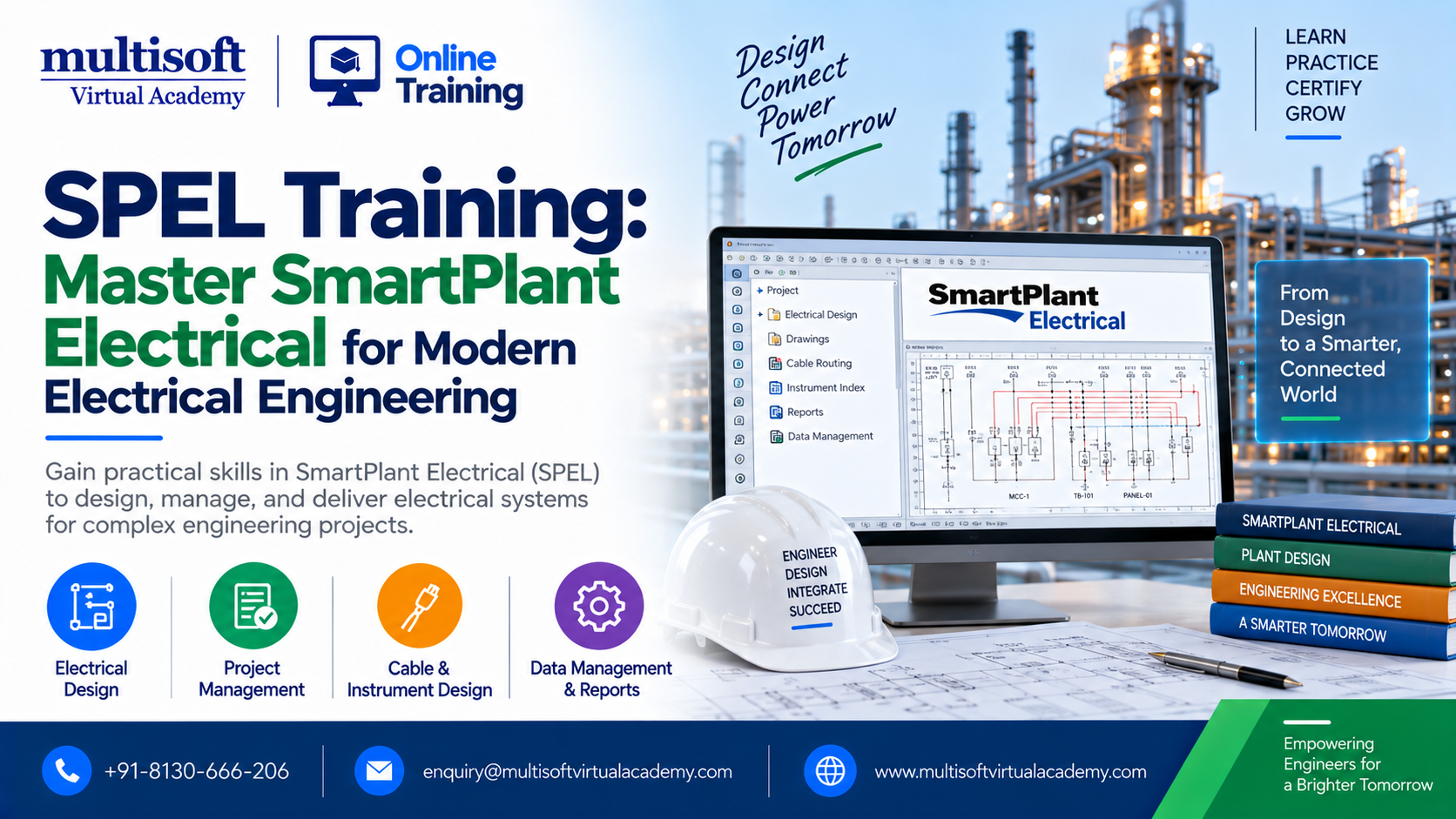
The demand for efficient digital engineering tools is increasing as industrial projects become more complex, data-driven and highly coordinated. Electrical engineers, designers and project professionals need specialized software skills to manage electrical systems, equipment data, documentation and project deliverables accurately. This is where SPEL Training can provide valuable professional development.
SmartPlant Electrical, commonly known as SPEL, is used to support electrical engineering and design activities in industrial and infrastructure projects. It helps professionals work with electrical equipment, loads, wiring, cables, reports, schematics and project data within an integrated engineering environment. A structured SPEL Course can therefore help learners understand the software workflow while developing practical skills applicable to real project scenarios.
SPEL Training is a specialized learning program designed to help professionals understand and use SmartPlant Electrical effectively. The training generally introduces learners to the software environment, reference data, electrical equipment, loads, cables, wiring, reporting and other important workflows.
A well-structured SPEL Online Training program combines conceptual learning with practical exercises. Instead of learning only the software interface, participants can understand how electrical design information is created, organized, modified and managed throughout an engineering workflow.
This makes SPEL training relevant for electrical designers, engineers, draftsmen and other professionals involved in plant engineering and electrical documentation.
Modern engineering projects generate large amounts of electrical and equipment information. Managing this information manually can become difficult, particularly when multiple teams work on the same project.
SmartPlant Electrical provides an environment for organizing electrical design information and supporting engineering workflows. Its capabilities include working with reference data, plant items, loads, wiring equipment, cable connections, equipment information and reports.
Professionals who understand these capabilities can work more efficiently and maintain better consistency across project deliverables.
Choosing the right SPEL Training Course can provide several professional benefits.
A practical course allows learners to work with actual software functions rather than depending entirely on theoretical explanations. Hands-on activities can include creating plant items, managing loads, configuring reference data and generating project reports.
SPEL skills can help professionals organize electrical engineering information more systematically. Understanding the relationship between equipment, loads, cables, wiring and reports can improve workflow efficiency.
Engineering projects depend heavily on accurate documentation. Training can introduce learners to reporting, tabular editing, Excel report customization and revision management. These capabilities are particularly useful when projects involve frequent design updates.
Professionals with specialized engineering software skills can strengthen their technical profiles. SPEL Certification Training can also provide evidence of course completion when certification is included in the program.
Project-based learning helps bridge the gap between classroom knowledge and workplace requirements. Practical exercises can expose learners to common electrical design situations and encourage problem-solving skills.
A comprehensive SPEL Course should cover the core functions required to work confidently with SmartPlant Electrical.
Typical topics may include:
These areas reflect commonly published SPEL user-level training topics and provide a practical foundation for professionals working with SmartPlant Electrical.
One of the biggest advantages of SPEL Online Training is flexibility. Working professionals may not be able to attend traditional classroom sessions because of project responsibilities, travel or changing work schedules.
Instructor-led online learning can provide real-time interaction with trainers while allowing participants to learn remotely. Some programs also provide recorded sessions and digital learning resources for post-class revision.
Online learning can be particularly useful for professionals who want to upgrade their SmartPlant Electrical skills without taking an extended career break.
A SPEL Training Course can be useful for professionals working in electrical engineering and plant design environments.
The potential audience includes:
Previous exposure to electrical engineering concepts can make the learning process easier, although the exact prerequisites depend on the course level and training provider.
Electrical designers can benefit significantly from learning SmartPlant Electrical. Their work often involves managing equipment information, electrical loads, wiring, cables, schematics and design documentation.
With appropriate SPEL Software Training, designers can become familiar with structured workflows for handling these activities. This can help them work more confidently on engineering projects where data accuracy and documentation consistency are important.
A certificate alone does not replace practical knowledge. However, SPEL Certification Training combined with hands-on experience can strengthen a professional profile.
The most valuable training programs focus on practical application rather than simply preparing learners for an assessment. Participants should look for programs that include exercises, project scenarios, trainer interaction and opportunities to practice important software workflows.
A completion certificate can then serve as supporting evidence of structured learning and professional development.
There are several factors to consider before selecting a SPEL Training Course.
The curriculum should cover important SmartPlant Electrical functions rather than only providing a basic software introduction.
Hands-on assignments and project-oriented exercises can make the learning experience more useful for professionals.
Experienced instructors can explain not only how a feature works but also when and why it should be used in an engineering workflow.
For working professionals, weekday and weekend schedules can make training easier to manage alongside professional responsibilities.
Digital materials, recorded sessions, assessments, doubt-clearing sessions and post-training support can improve the overall learning experience.
Engineering organizations are increasingly adopting digital workflows to improve project coordination, data management and operational efficiency. As this transformation continues, professionals need to understand specialized engineering applications alongside their core technical knowledge.
SPEL fits into this broader movement by providing structured capabilities for managing electrical engineering information. Training therefore becomes more than learning a software interface. It can help professionals understand how digital electrical design workflows operate within modern project environments.
This is especially relevant for EPC companies, engineering consultants, industrial organizations and infrastructure projects where multiple disciplines must coordinate their technical information.
Learners should select a training level based on their current experience.
SPEL User Training is generally suitable for professionals who need to understand the software interface and core electrical design workflows. It can cover reference data, equipment, loads, cables, reports and other user-level activities.
Professionals responsible for broader configuration, administration or project-level management may require more advanced learning. The right progression depends on job responsibilities and existing SmartPlant experience.
Starting with the appropriate level can make learning more efficient and prevent professionals from spending time on topics that do not match their current responsibilities.
Completing SPEL Online Training can help professionals strengthen their technical capabilities for roles associated with electrical design and plant engineering.
Potential career paths may include:
Career outcomes depend on experience, qualifications, technical knowledge and employer requirements. However, specialized software expertise can complement a professional's existing electrical engineering background.
Learners can maximize the value of their training by following a practical learning strategy.
First, understand fundamental electrical engineering concepts. Next, become familiar with the SPEL interface and project structure. After that, practice individual workflows such as creating equipment, managing loads, connecting cables and generating reports.
Regular practice is important because engineering software proficiency develops through repetition. Learners should also work on realistic project scenarios instead of relying solely on demonstrations.
Maintaining personal notes, reviewing recorded sessions and completing practical assignments can further improve retention.
Professionals searching for SPEL education may use different terms depending on their location, experience level and learning requirements. Relevant search-intent phrases include:
These related terms can be used naturally across course pages, educational articles and supporting content while maintaining clear search intent. They should not be unnecessarily repeated because keyword stuffing can reduce readability and weaken the overall quality of a page.
SPEL Training teaches professionals how to use SmartPlant Electrical for electrical engineering and design workflows, including equipment, loads, wiring, cables, schematics and reporting.
Yes. Instructor-led online SmartPlant Electrical programs are available, including user-level training formats with practical learning and digital resources.
Electrical engineers, designers, draftsmen, plant engineering professionals and other users involved in electrical design workflows can benefit from SmartPlant Electrical training.
Many structured training programs provide a course completion certificate after learners complete the required training. The exact certification format depends on the provider and program.
Yes. Practical exercises are valuable because SmartPlant Electrical proficiency depends on understanding how different software functions work together in real engineering workflows.
SmartPlant Electrical skills can be a valuable addition to the professional toolkit of electrical engineers, designers and plant engineering specialists. A carefully structured SPEL Training program can help learners understand electrical design workflows, manage project information, work with equipment and loads, handle cables and wiring and create accurate engineering documentation.
For professionals looking for flexible learning, practical exercises, experienced trainers and structured SPEL Online Training, choosing the right learning partner is an important step toward developing job-relevant skills. Multisoft Virtual Academy provides SPEL training designed around practical learning, industry-oriented workflows and professional development, helping learners strengthen their SmartPlant Electrical capabilities and apply their knowledge more confidently in engineering environments.
| Start Date | Time (IST) | Day | |||
|---|---|---|---|---|---|
| 24 Oct 2026 | 06:00 PM - 10:00 AM | Sat, Sun | |||
| 25 Oct 2026 | 06:00 PM - 10:00 AM | Sat, Sun | |||
| 31 Oct 2026 | 06:00 PM - 10:00 AM | Sat, Sun | |||
| 01 Nov 2026 | 06:00 PM - 10:00 AM | Sat, Sun | |||
|
Schedule does not suit you, Schedule Now! | Want to take one-on-one training, Enquiry Now! |
|||||






 Join our Live Instructor-Led online classes delivered by industry experts
 Let's Get Started