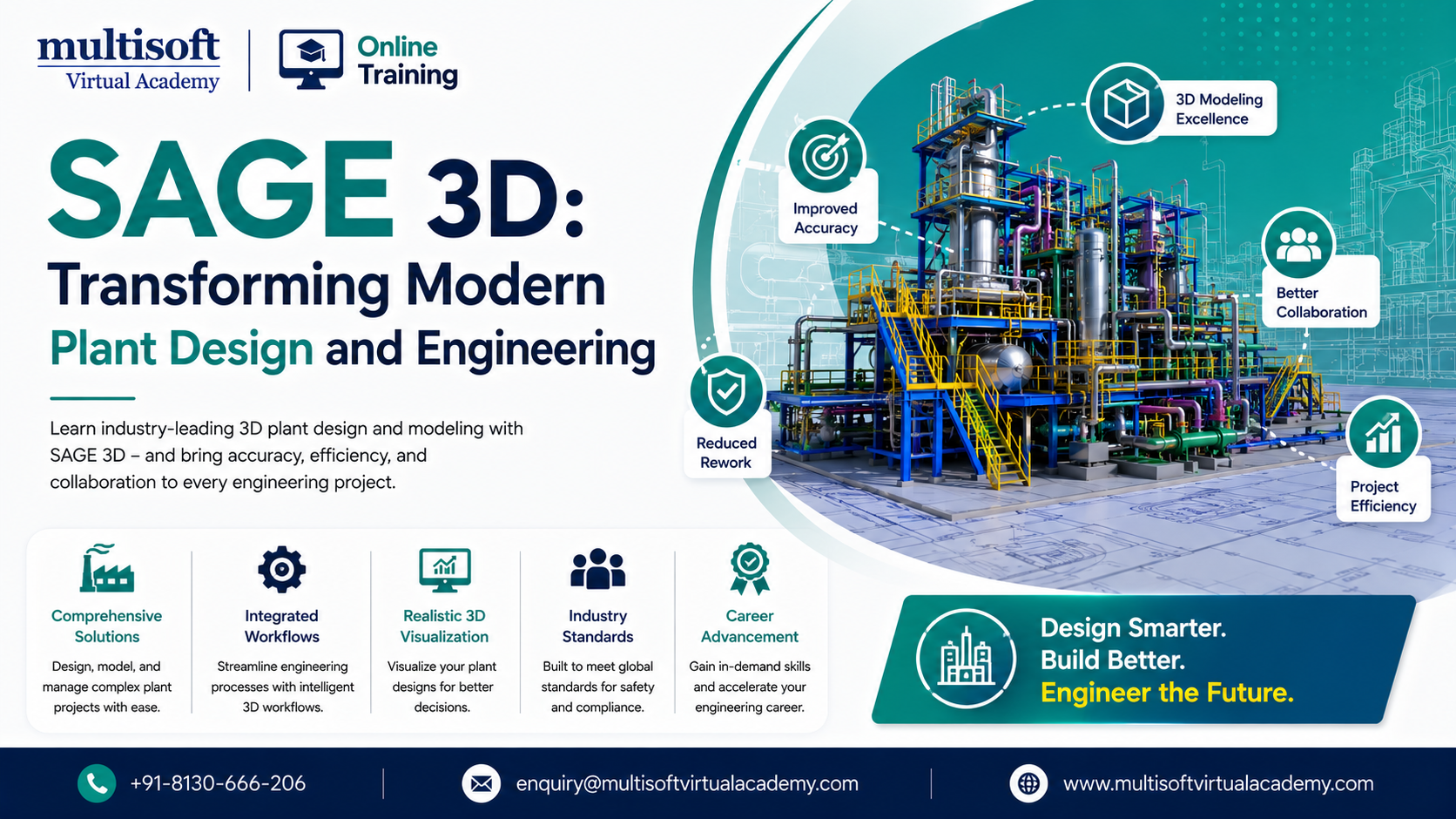
Modern engineering projects demand more than conventional drawings and isolated design tools. As industrial facilities become increasingly complex, engineering teams need accurate 3D models, coordinated workflows and reliable project information to improve design quality and reduce costly errors. This is where SAGE 3D can play an important role in modern plant design and engineering.
For professionals working in piping, mechanical, structural, process engineering and EPC projects, 3D plant design provides a more connected way to visualize equipment, pipelines, structures and supporting components. By bringing multiple engineering disciplines into a coordinated environment, teams can identify potential issues earlier and make better-informed design decisions.
SAGE 3D training is associated with intelligent 3D plant design and engineering workflows that support the development and coordination of industrial plant models. Its application can involve areas such as equipment placement, piping design, structural modeling, drawing extraction, project data management and multidisciplinary coordination.
Unlike traditional 2D workflows that may require engineers to interpret numerous separate drawings, a 3D plant model provides a more comprehensive representation of the proposed facility. Engineers can visualize spatial relationships between components and review the design before physical construction begins.
This approach is particularly valuable for complex projects in industries such as oil and gas, power generation, manufacturing, chemical processing and infrastructure development.
Industrial engineering projects involve thousands of components and multiple technical disciplines. A minor design conflict between piping, equipment and structural elements can potentially create delays during fabrication or construction.
Modern 3D plant design helps engineering teams understand these relationships earlier in the project lifecycle.
A coordinated model can help professionals:
The objective is not simply to create attractive 3D visuals. The real value lies in creating useful engineering information that can support project planning, design validation and execution.
One of the fundamental requirements of modern plant engineering is accurate 3D modeling. Engineers and designers can develop digital representations of equipment, piping, structures and other plant components.
A well-organized model can make it easier to review the overall facility and understand how individual components interact with one another.
For engineering teams, this can provide a stronger foundation for design reviews and project coordination.
Equipment such as tanks, vessels, pumps and other process components must be positioned carefully within an industrial facility.
SAGE 3D workflows can support equipment modeling and placement while allowing engineers to evaluate spatial requirements, accessibility and relationships with surrounding piping and structures.
Accurate equipment placement is especially important because it influences downstream piping and structural design.
Piping is one of the most important components of a process plant. Engineers need to consider routing, fittings, valves, connections, accessibility and relationships with equipment and structures.
A SAGE 3D piping design workflow can help professionals visualize pipe runs within the broader plant environment.
Instead of evaluating piping independently, engineers can review it in relation to equipment, structural supports and other disciplines. This integrated approach can make design reviews more effective and help identify potential conflicts earlier.
Plant structures provide essential support for equipment, piping and operational areas. Structural elements may include beams, columns, platforms, ladders, pipe racks and supports.
Integrating structural elements into a 3D plant model allows engineering teams to examine how structural components interact with piping and equipment.
This multidisciplinary perspective is valuable when developing practical and constructible plant layouts.
One of the major advantages of coordinated 3D modeling is the ability to identify potential design conflicts before construction.
A clash may occur when two components occupy the same physical space or when an element creates an accessibility or maintenance issue.
For example, a pipe route could interfere with a structural beam or equipment access area. Identifying such an issue during construction can result in redesign, fabrication changes and schedule disruption.
With a coordinated digital model, engineering teams can review potential conflicts earlier.
Early identification does not eliminate every project risk, but it can significantly improve design review and coordination.
Engineering, procurement and construction projects require close collaboration among different teams. Designers, engineers, project managers, contractors and other stakeholders may work on different aspects of the same facility.
A centralized 3D engineering model can provide a common visual reference for project discussions.
For EPC organizations, this can support:
When everyone can understand the same digital representation of a facility, technical discussions can become more precise and easier to communicate.
A plant model is valuable not only for visualization. Engineering projects also require documentation that can support fabrication, construction and project execution.
Modern plant design workflows can include the generation of drawings such as piping isometrics, orthographic views, plans and sections.
These documents can provide important information for engineering and construction teams.
A coordinated model can therefore serve as a foundation from which different forms of project documentation are developed.
Material information is another important aspect of plant engineering.
A structured 3D model can support the generation of information related to pipes, fittings, equipment and other components. Material take-off workflows can help project teams understand quantities and organize engineering information.
Accurate material information can contribute to better procurement planning and project coordination.
For large industrial projects, even small improvements in data accuracy can have significant operational value.
As engineering organizations continue adopting digital design workflows, professionals with practical 3D plant design skills can strengthen their technical capabilities.
SAGE 3D training can be particularly useful for professionals who want to understand intelligent plant modeling, piping workflows and multidisciplinary engineering coordination.
Potential benefits include:
Professionals from mechanical engineering, piping engineering, structural engineering, process engineering and CAD design backgrounds may find these skills relevant to their career development.
A SAGE 3D course can be relevant to a wide range of engineering and design professionals.
The training can be useful for:
Candidates with basic engineering knowledge or familiarity with CAD and 3D design concepts may find it easier to understand the workflows. However, the appropriate learning path depends on an individual's existing technical background and career objectives.
Working professionals often need flexible learning options because of project schedules and workplace responsibilities.
SAGE 3D online training can provide an accessible way to learn plant-design concepts without requiring professionals to attend traditional classroom sessions.
An effective online learning program should go beyond theoretical presentations. Practical demonstrations, project-based exercises, real-world examples and instructor interaction can help learners understand how 3D plant engineering concepts are applied in professional environments.
The most valuable learning experience is one that connects software functionality with actual engineering workflows.
Selecting a suitable SAGE 3D course requires more than comparing course duration or price. Professionals should evaluate the practical value of the program.
Before enrolling, consider whether the course includes:
A comprehensive curriculum should help learners understand not only individual software functions but also how those functions contribute to complete plant engineering workflows.
The engineering industry is moving toward increasingly connected digital workflows. 3D modeling, engineering data, automation and collaborative project environments are becoming important components of modern design practices.
As projects become larger and more multidisciplinary, the ability to visualize and coordinate engineering information will continue to matter.
Technologies supporting 3D plant design can help organizations move from disconnected drawings toward more integrated digital engineering processes.
Professionals who develop these skills can position themselves to participate more effectively in modern engineering projects where accuracy, collaboration and data-driven decision-making are essential.
SAGE 3D represents an important approach to modern plant design by bringing 3D modeling, piping, equipment, structures, documentation and project coordination into a more connected engineering workflow. For professionals and organizations looking to strengthen their capabilities in digital plant engineering, practical knowledge and project-oriented learning can make a meaningful difference.
Multisoft Virtual Academy provides professional training solutions designed to help learners develop practical knowledge across modern engineering and technology domains. Its SAGE 3D learning approach focuses on relevant plant-design concepts, hands-on understanding and industry-oriented skills, making it a suitable option for professionals seeking to expand their expertise in 3D plant engineering and advance their technical capabilities.
| Start Date | Time (IST) | Day | |||
|---|---|---|---|---|---|
| 17 Oct 2026 | 06:00 PM - 10:00 AM | Sat, Sun | |||
| 18 Oct 2026 | 06:00 PM - 10:00 AM | Sat, Sun | |||
| 24 Oct 2026 | 06:00 PM - 10:00 AM | Sat, Sun | |||
| 25 Oct 2026 | 06:00 PM - 10:00 AM | Sat, Sun | |||
|
Schedule does not suit you, Schedule Now! | Want to take one-on-one training, Enquiry Now! |
|||||






 Join our Live Instructor-Led online classes delivered by industry experts
 Let's Get Started