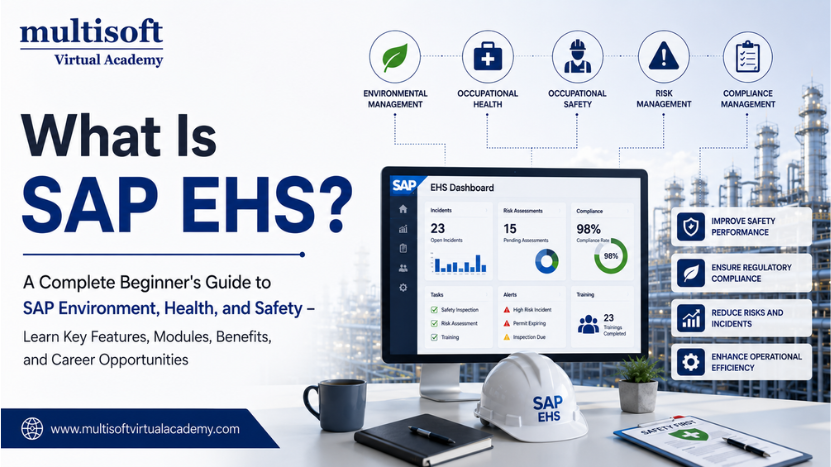
Maintaining a safe workplace and protecting the environment have become top priorities for organizations across industries. Companies are expected to comply with strict health, safety, and environmental regulations while ensuring the well-being of employees and minimizing operational risks. To achieve these goals, many organizations rely on SAP Environment, Health, and Safety (SAP EHS), a comprehensive solution that helps manage workplace safety, environmental compliance, occupational health, and product safety within a single integrated system. SAP EHS enables businesses to automate safety processes, monitor regulatory requirements, manage hazardous substances, record workplace incidents, and improve overall compliance. By integrating seamlessly with SAP S/4HANA and other SAP modules, it provides organizations with real-time information that supports better decision-making and operational efficiency.
As more companies adopt digital solutions for health, safety, and environmental management, the demand for SAP EHS professionals continues to grow. Whether you are an SAP consultant, safety officer, environmental specialist, engineer, compliance manager, or a beginner planning to build a career in SAP, learning SAP EHS can open the door to rewarding career opportunities. This beginner guide explains the fundamentals of SAP EHS, its key features, benefits, and why it has become an important solution for modern businesses.
SAP Environment, Health, and Safety (SAP EHS) is a specialized SAP solution designed to help organizations manage environmental compliance, workplace health, occupational safety, product safety, and regulatory requirements through a single integrated platform. It enables businesses to identify workplace hazards, manage hazardous substances, monitor employee health, record incidents, conduct risk assessments, and ensure compliance with local and international safety regulations. SAP EHS integrates with core SAP modules such as SAP S/4HANA, SAP Materials Management (MM), Plant Maintenance (PM), Production Planning (PP), and Human Capital Management (HCM), allowing organizations to improve collaboration across departments. By automating safety-related processes and providing real-time reporting, SAP EHS helps reduce operational risks, improve employee safety, enhance environmental performance, and support sustainable business operations.
Learning SAP EHS Training is an excellent career choice for professionals who want to build expertise in workplace safety, environmental management, and regulatory compliance using SAP technologies. As organizations place greater emphasis on employee well-being, environmental sustainability, and legal compliance, the demand for SAP EHS professionals continues to increase across industries such as manufacturing, pharmaceuticals, chemicals, oil and gas, energy, healthcare, and construction. SAP EHS helps companies automate safety processes, manage incidents, monitor hazardous materials, and ensure compliance with national and international regulations. By mastering SAP EHS, professionals can contribute to digital transformation initiatives while developing valuable skills in enterprise safety management. Whether you are an SAP consultant, engineer, safety officer, or environmental professional, learning SAP EHS enhances your career prospects and prepares you for opportunities in implementation, consulting, compliance, and support projects.
SAP Environment, Health, and Safety (SAP EHS) is made up of several integrated modules that help organizations manage workplace safety, environmental protection, employee health, and regulatory compliance. Each module focuses on a specific area of EHS management while working together to create a safe and compliant work environment.
The Product Safety module helps organizations manage the safety information of products throughout their lifecycle. It stores and maintains data related to hazardous substances, chemical properties, product classifications, labeling requirements, and Safety Data Sheets (SDS). This module ensures that products comply with national and international regulations before they are manufactured, transported, or sold. It also helps businesses communicate product hazards clearly to employees, suppliers, customers, and regulatory authorities. By automating product safety documentation and compliance processes, organizations can reduce risks and improve product quality.
The Dangerous Goods Management module supports the safe transportation, storage, and handling of hazardous materials. It helps organizations comply with international transportation regulations for road, rail, air, and sea shipments. The module automatically checks whether dangerous goods are packaged, labeled, documented, and transported according to legal requirements. It also generates transport documents, shipping labels, and compliance reports, reducing manual work and minimizing the risk of regulatory violations. This module is especially valuable for industries such as chemicals, pharmaceuticals, oil and gas, and manufacturing.
The Industrial Hygiene and Safety module helps organizations identify workplace hazards and create safer working environments. It supports risk assessments, workplace inspections, accident investigations, hazard identification, and corrective action management. Safety managers can monitor workplace conditions, record incidents, analyze safety trends, and implement preventive measures to reduce accidents. The module also assists organizations in complying with occupational health and safety regulations while improving employee well-being and operational safety.
The Occupational Health module focuses on protecting employee health by managing medical examinations, health surveillance, vaccination records, workplace exposure monitoring, and fitness-for-duty assessments. It enables organizations to schedule regular health check-ups, maintain confidential employee medical records, and monitor workers exposed to hazardous environments. This module helps businesses detect health risks early, ensure employee well-being, reduce absenteeism, and comply with occupational health regulations. It is particularly useful in industries where employees work with chemicals, heavy machinery, or hazardous materials.
The Environmental Management module helps organizations monitor and improve their environmental performance. It tracks emissions, waste generation, energy consumption, water usage, and environmental impact while ensuring compliance with environmental regulations. Companies can generate environmental reports, monitor sustainability goals, and identify opportunities to reduce pollution and resource consumption. By improving environmental performance and supporting sustainability initiatives, this module helps organizations protect natural resources while meeting government and industry compliance standards.
The Incident Management module enables organizations to record, investigate, and analyze workplace incidents such as accidents, injuries, near misses, equipment failures, and environmental events. It provides a structured process for documenting incidents, identifying root causes, assigning corrective actions, and tracking improvements. By analyzing incident trends, organizations can prevent similar events in the future, improve workplace safety, and strengthen their overall risk management strategy. Accurate incident reporting also supports legal compliance and internal audits.
The Risk Assessment module helps organizations identify, evaluate, and control workplace risks before they become serious problems. Safety professionals can assess potential hazards, determine their impact, calculate risk levels, and recommend preventive measures. The module supports ongoing monitoring of identified risks and helps organizations prioritize safety improvements based on risk severity. By conducting regular risk assessments, businesses can reduce workplace accidents, protect employees, improve operational reliability, and ensure compliance with health and safety regulations.
The Compliance Management module helps organizations ensure that all health, safety, environmental, and product-related activities comply with local, national, and international regulations. It centralizes regulatory requirements, company policies, audit records, inspection reports, permits, and compliance documentation in one system. The module automatically tracks compliance deadlines, monitors regulatory changes, generates reports, and alerts users about pending actions. This reduces the risk of legal penalties, improves audit readiness, and helps organizations maintain consistent compliance across multiple business locations. By automating compliance processes, businesses can focus more on operational excellence while meeting industry standards and government regulations.
By completing SAP EHS Online Training, you will develop practical skills required to manage enterprise health, safety, and environmental processes.
Learning SAP Environment, Health, and Safety (SAP EHS) provides professionals with specialized skills that are highly valued across industries where workplace safety and regulatory compliance are critical. The solution enables organizations to manage environmental regulations, employee health, product safety, hazardous substances, and workplace incidents through a single integrated platform. As more businesses adopt SAP S/4HANA and strengthen their compliance frameworks, the demand for SAP EHS professionals continues to increase. By learning SAP EHS, you gain practical knowledge of safety management, environmental compliance, and risk assessment while improving your understanding of enterprise business processes. These skills enhance your career prospects, increase your employability, and prepare you to work on SAP implementation, consulting, support, and digital transformation projects across global organizations.
Professionals with SAP EHS expertise can pursue a wide range of rewarding career opportunities across industries.
The future of SAP Environment, Health, and Safety (SAP EHS) is highly promising as organizations continue to prioritize employee safety, environmental sustainability, and regulatory compliance. Businesses are increasingly investing in intelligent ERP solutions to automate health and safety processes, reduce workplace risks, and improve environmental performance. The integration of SAP EHS with SAP S/4HANA, cloud technologies, Artificial Intelligence (AI), predictive analytics, and real-time reporting is enabling organizations to make faster and more informed decisions. As global regulations become more stringent and companies focus on sustainable business practices, the need for skilled SAP EHS professionals will continue to grow. Professionals with expertise in SAP EHS can expect strong career opportunities in consulting, implementation, compliance management, and enterprise digital transformation projects across a wide range of industries.
Multisoft Virtual Academy is a trusted provider of professional SAP training, offering industry-focused courses designed to help learners develop practical and job-ready skills. The SAP EHS Online Training is delivered by experienced SAP professionals through live instructor-led sessions, hands-on demonstrations, real-world case studies, and practical assignments. The course curriculum is regularly updated to reflect the latest SAP technologies, SAP S/4HANA integration, and current industry best practices. Learners also receive flexible batch timings, recorded sessions for revision, certification guidance, interview preparation, and dedicated learner support. Whether you are a beginner or an experienced professional, Multisoft Virtual Academy provides the knowledge, practical exposure, and expert mentorship needed to build a successful career in SAP Environment, Health, and Safety.
SAP Environment, Health, and Safety (SAP EHS) is an essential solution for organizations that want to create safer workplaces, ensure environmental compliance, and manage health and safety processes more efficiently. As businesses continue to adopt SAP S/4HANA and strengthen their sustainability initiatives, the demand for skilled SAP EHS professionals is growing across industries. Learning SAP EHS provides practical knowledge of workplace safety, risk management, regulatory compliance, and enterprise process automation, making it a valuable skill for both beginners and experienced professionals. Whether you are planning to start a career in SAP or enhance your existing expertise, SAP EHS offers excellent opportunities for long-term professional growth.
Enroll in Multisoft Virtual Academy to gain hands-on experience through live online training, real-world projects, expert guidance, and comprehensive certification support, and take the first step toward building a successful career in SAP Environment, Health, and Safety.
| Start Date | Time (IST) | Day | |||
|---|---|---|---|---|---|
| 17 Oct 2026 | 06:00 PM - 10:00 AM | Sat, Sun | |||
| 18 Oct 2026 | 06:00 PM - 10:00 AM | Sat, Sun | |||
| 24 Oct 2026 | 06:00 PM - 10:00 AM | Sat, Sun | |||
| 25 Oct 2026 | 06:00 PM - 10:00 AM | Sat, Sun | |||
|
Schedule does not suit you, Schedule Now! | Want to take one-on-one training, Enquiry Now! |
|||||






 Join our Live Instructor-Led online classes delivered by industry experts
 Let's Get Started