


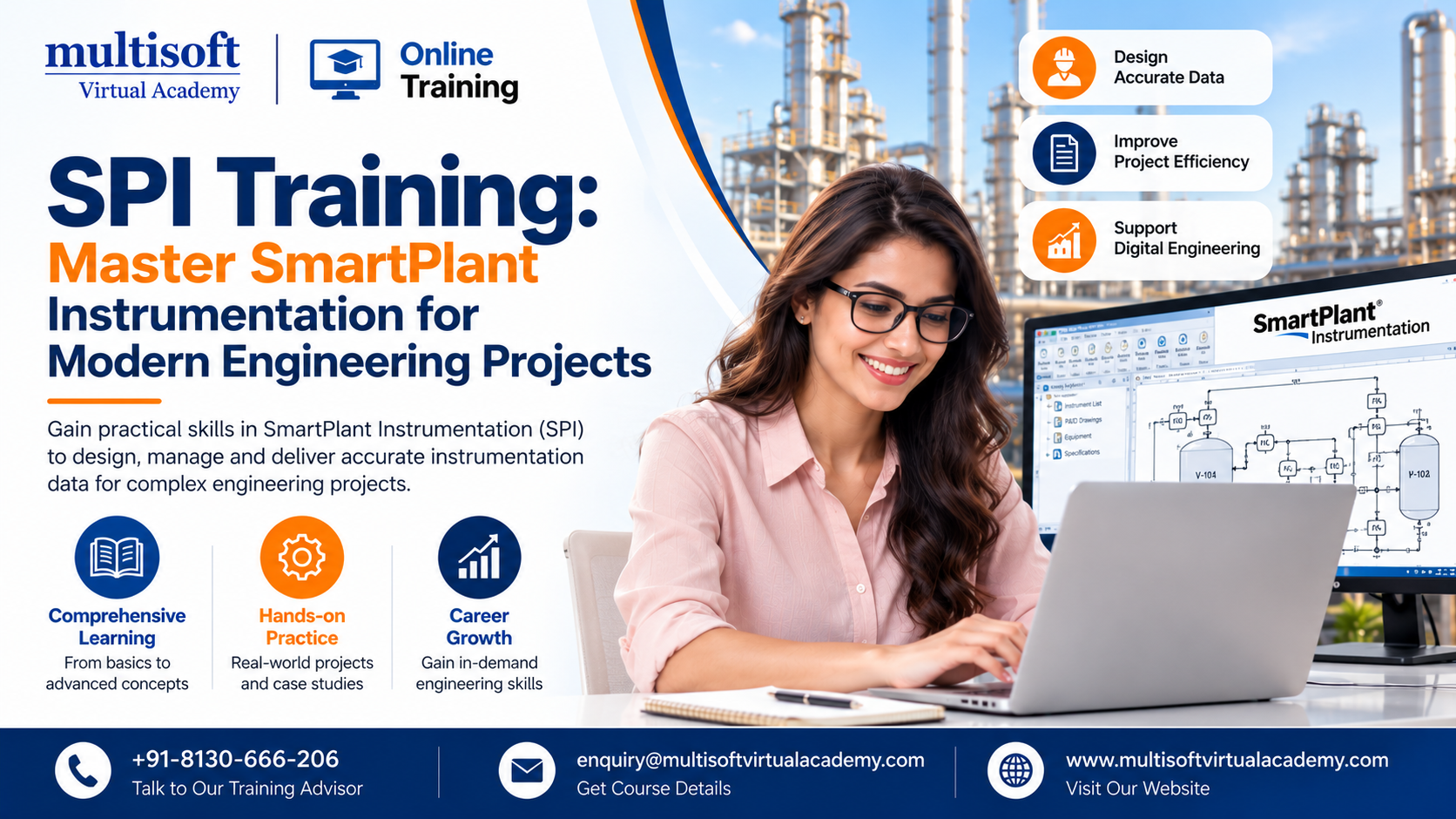
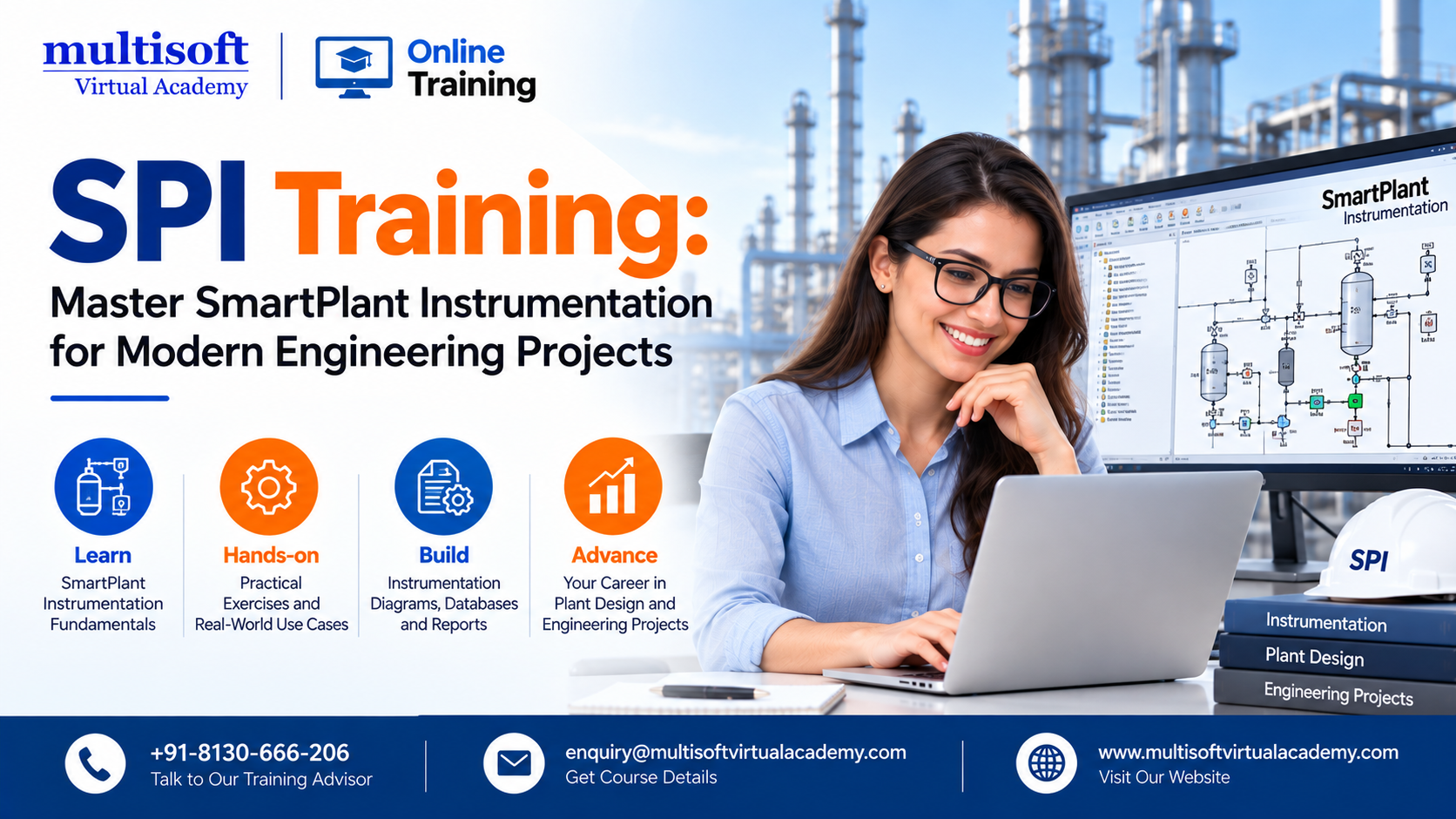
SPI Training: Master SmartPlant Instrumentation for Modern Engineering Projects
Instrumentation plays a vital role in the design, control, monitoring, and safe operation of industrial facilities. As engineering projects become more complex, organizations need professionals who can manage large volumes of instrumentation data accurately and efficiently. This is where SPI Training becomes highly valuable.
SPI Training, commonly known as SPI or INtools, is a specialized engineering application used to manage instrumentation and control-system information throughout industrial projects. It supports important activities such as instrument definition, specifications, process data, calculations, wiring, loop diagrams, hook-ups, documentation, and engineering data management. Official training material also highlights workflows involving instruments, control loops, specification sheets, wiring, and loop drawings.
For instrumentation engineers, designers, project professionals, and technical specialists, learning SPI can provide practical skills that align with the requirements of modern EPC and process-industry projects.
What Is SPI and Why Does It Matter?
SPI stands for SmartPlant Instrumentation. It was originally associated with the INtools platform and is now part of Hexagon's engineering software ecosystem.
The platform provides a structured environment for creating and managing instrumentation information. Instead of depending heavily on disconnected spreadsheets and manually maintained documents, engineers can work with centralized engineering information.
A typical SmartPlant Instrumentation environment can support:
- Instrument indexes
- Instrument specifications
- Process data
- Control loops
- Engineering calculations
- Wiring information
- Hook-up information
- Loop drawings
- I/O-related information
- Reports and engineering documentation
- Instrumentation databases
This makes SmartPlant Instrumentation Training particularly relevant to professionals working on large engineering projects where data accuracy and consistency are essential.
The software's specification workflow, for example, can use information from areas such as the Instrument Index, Process Data, and Calculation modules to generate specifications according to configured instrument profiles.
Why Is SPI Training Important for Instrumentation Professionals?
Modern engineering projects involve thousands of instruments and associated engineering records. Managing this information manually can become time-consuming and increase the possibility of errors.
A structured SPI Training Course helps professionals understand how instrumentation information is created, organized, reviewed, modified, and documented within an engineering environment.
Instead of learning isolated software commands, effective training should connect the software with real engineering workflows.
Professionals can learn how different activities relate to one another. For example, an instrument may require process information, a specification, calculations, wiring information, and documentation. Understanding these relationships allows engineers to work more efficiently.
SPI training can therefore help professionals improve:
- Instrument data management
- Engineering documentation
- Design consistency
- Project coordination
- Data accuracy
- Workflow efficiency
- Technical reporting
- Instrumentation documentation
What Do You Learn in an SPI Training Course?
A comprehensive SmartPlant Instrumentation Course should cover both fundamental concepts and practical workflows.
1. Introduction to SmartPlant Instrumentation
The training generally begins with the SPI environment, terminology, project structure, and basic navigation.
Learners become familiar with the software interface and understand how instrumentation information is organized.
This foundation is important because advanced activities depend on understanding the underlying project structure.
2. Instrument Index Management
The instrument index is an important part of instrumentation engineering.
During SPI INtools Training, professionals can learn how instrument information is created, organized, searched, reviewed, and maintained.
Understanding instrument tags and associated engineering information helps maintain consistency throughout a project.
3. Process Data Management
Process data provides important information required for instrumentation design and engineering.
Training can introduce professionals to the process information associated with instruments and explain how this information supports downstream engineering activities.
This knowledge becomes especially useful when working on large-scale process plants.
4. Instrument Specifications
Instrument specifications are essential engineering deliverables.
SPI provides structured workflows for managing specification information. Professionals can learn how specification forms, instrument types, and associated data work together.
This part of an SPI Certification Training program can help learners understand how standardized engineering information can be managed more efficiently.
5. Control Loops and Loop Diagrams
Control loops connect instruments and control-system components into functional systems.
SPI training can introduce learners to the creation and management of control loops and associated documentation.
Loop diagrams are also important deliverables for instrumentation teams. Learning how these documents are generated and maintained can help engineers reduce repetitive manual work.
6. Wiring and Connectivity
Instrumentation projects involve extensive wiring information.
A structured SPI environment allows professionals to manage wiring-related engineering information in a systematic way.
Training can cover wiring concepts, connections, related components, and documentation workflows.
7. Hook-Ups and Engineering Documentation
Instrumentation hook-ups provide important installation-related information.
A practical SmartPlant Instrumentation Training program should explain how hook-up information is created and managed and how it connects with other instrumentation deliverables.
Professionals can also learn how to manage engineering documents and generate project-related outputs.
SPI Admin Training: Why Administration Skills Matter
Not every SPI professional works only as a designer or engineer. Large projects also require administrators who understand project configuration, databases, security, and system maintenance.
SPI Admin Training is therefore an important specialization for professionals responsible for managing the SPI environment.
Administrative topics may include:
- Project and domain setup
- Database configuration
- User management
- Access control
- System configuration
- Data maintenance
- Backup and recovery concepts
- Project administration
- Database structure
- Customization concepts
Some SPI administrator programs specifically focus on installation, database configuration, domain creation, database maintenance, and customization.
These skills can be particularly valuable for professionals supporting engineering teams and maintaining project environments.
Who Should Take SPI Training?
SPI Training Online can benefit a wide range of professionals involved in instrumentation and plant engineering.
The course may be suitable for:
- Instrumentation engineers
- Instrumentation designers
- Control engineers
- Process control professionals
- Engineering consultants
- EPC professionals
- Project engineers
- Instrumentation technicians
- Engineering graduates
- Professionals moving into instrumentation design
- SPI administrators
- Plant engineering professionals
Beginners can use foundational training to understand the software, while experienced engineers can use advanced training to improve their existing workflows.
A structured training program can also help professionals understand how instrumentation data connects across different stages of a project.
Industries That Use SmartPlant Instrumentation Skills
Instrumentation engineering is essential across multiple process and industrial sectors.
Professionals with SmartPlant Instrumentation Software Training can find relevant applications in industries such as:
Oil and Gas
Oil and gas facilities contain extensive instrumentation systems for monitoring pressure, temperature, flow, level, and other process parameters.
Petrochemical and Chemical Plants
Chemical facilities require accurate instrumentation for process control, safety, and operational monitoring.
Power Generation
Power plants depend on instrumentation and control systems to monitor and manage complex processes.
Pharmaceutical Manufacturing
Pharmaceutical facilities require controlled processes, accurate measurement, and well-maintained engineering documentation.
Water and Wastewater
Water treatment and wastewater facilities use instrumentation to monitor and control important operational parameters.
Manufacturing
Industrial manufacturing environments increasingly depend on automation, instrumentation, and control systems.
Because of this broad application, Instrumentation Engineering Training combined with SPI knowledge can be a valuable professional-development pathway.
Benefits of Learning SPI Online
Online learning has made specialized engineering software training more accessible to working professionals.
With SPI Training Online, learners can study without necessarily leaving their current jobs or projects.
Some key advantages include:
Flexible Learning
Professionals can schedule learning around their existing responsibilities.
Practical Software Knowledge
A well-designed course can focus on actual software workflows instead of only theoretical concepts.
Career Development
Adding specialized instrumentation software skills can strengthen a technical professional's profile.
Project Readiness
Practical knowledge can help learners become more comfortable with project-based engineering activities.
Continuous Skill Development
Experienced professionals can use online training to refresh their knowledge when moving between projects or software environments.
Official virtual training documentation for SmartPlant Instrumentation has also described instructor-led sessions, demonstrations, tutorials, and self-paced learning approaches.
How to Choose the Right SPI Certification Training
Not every SPI Certification Training program provides the same depth of learning. Before selecting a course, professionals should evaluate several factors.
Look for Practical Training
Choose a course that explains real engineering workflows rather than focusing only on theoretical software features.
Check the Course Curriculum
The curriculum should ideally cover important areas such as instruments, specifications, process data, loops, wiring, hook-ups, documentation, and reporting.
Consider Your Experience Level
Beginners may require foundational training, while experienced professionals may benefit more from advanced user or administrator training.
Evaluate Instructor Expertise
Trainers with practical engineering knowledge can provide better context around software workflows.
Look for Project-Oriented Learning
Project-based exercises can make it easier to understand how different SPI modules work together.
Consider Version Relevance
SmartPlant Instrumentation environments can differ by version and project configuration. Therefore, learners should confirm that the course content matches the software environment relevant to their work.
SPI Training and Career Development
Learning specialized engineering software is increasingly important for professionals who want to remain competitive in technical industries.
However, software knowledge alone is not enough. Professionals should combine SPI skills with fundamental instrumentation and control engineering knowledge.
A strong learning path may include:
- Instrumentation fundamentals
- Process control concepts
- Engineering documentation
- SmartPlant Instrumentation fundamentals
- Advanced SPI workflows
- Project-based exercises
- SPI administration, where relevant
- Related plant-design software knowledge
This combination can help professionals develop a broader understanding of engineering project requirements.
What Makes Effective SPI Training Different?
The best learning experience does not simply teach where to click inside the software.
Instead, it explains why a particular workflow is required and how one engineering activity affects another.
For example, creating an instrument is only one part of the process. Professionals also need to understand specifications, process information, calculations, loops, wiring, documentation, and project deliverables.
This workflow-oriented approach makes SmartPlant Instrumentation Training more useful for professionals who want to apply their knowledge in real engineering environments.
It also supports better understanding of data relationships and reduces the gap between software training and practical project requirements.
Frequently Asked Questions About SPI Training
What is SPI Training?
SPI Training teaches professionals how to use SmartPlant Instrumentation for instrumentation engineering, design, documentation, data management, and related project workflows.
Is SPI the same as INtools?
SPI is commonly associated with the earlier INtools branding. SmartPlant Instrumentation is the current terminology used for the software within the broader SmartPlant ecosystem.
Who can learn SmartPlant Instrumentation?
Instrumentation engineers, designers, control professionals, EPC professionals, engineering graduates, and other technical professionals can learn SmartPlant Instrumentation.
Is SPI useful for oil and gas projects?
Yes. Instrumentation and control engineering are important parts of oil and gas and other process-industry projects, making SPI skills relevant to many EPC workflows.
What is SPI Admin Training?
SPI Admin Training focuses on administering the SPI environment, including areas such as configuration, databases, users, domains, maintenance, and system management.
Can I learn SPI online?
Yes. Online training can provide flexible access to instructor-led or self-paced learning depending on the training format.
Final Thought
As industrial projects become increasingly data-driven, professionals need more than traditional instrumentation knowledge. They also need the ability to manage engineering information accurately, efficiently, and consistently. SPI Training can help instrumentation engineers, designers, administrators, and other technical professionals develop practical skills for working with SmartPlant Instrumentation across modern engineering workflows. From instrument indexes and specifications to control loops, wiring, hook-ups, and documentation, the right learning approach can create a strong foundation for professional growth. For learners seeking structured, practical, and career-focused SmartPlant Instrumentation Training, Multisoft Virtual Academy acts as a best service provider, helping professionals build relevant technical capabilities and strengthen their readiness for instrumentation and plant-engineering projects.




 Join our Live Instructor-Led online classes delivered by industry experts
 Let's Get Started
