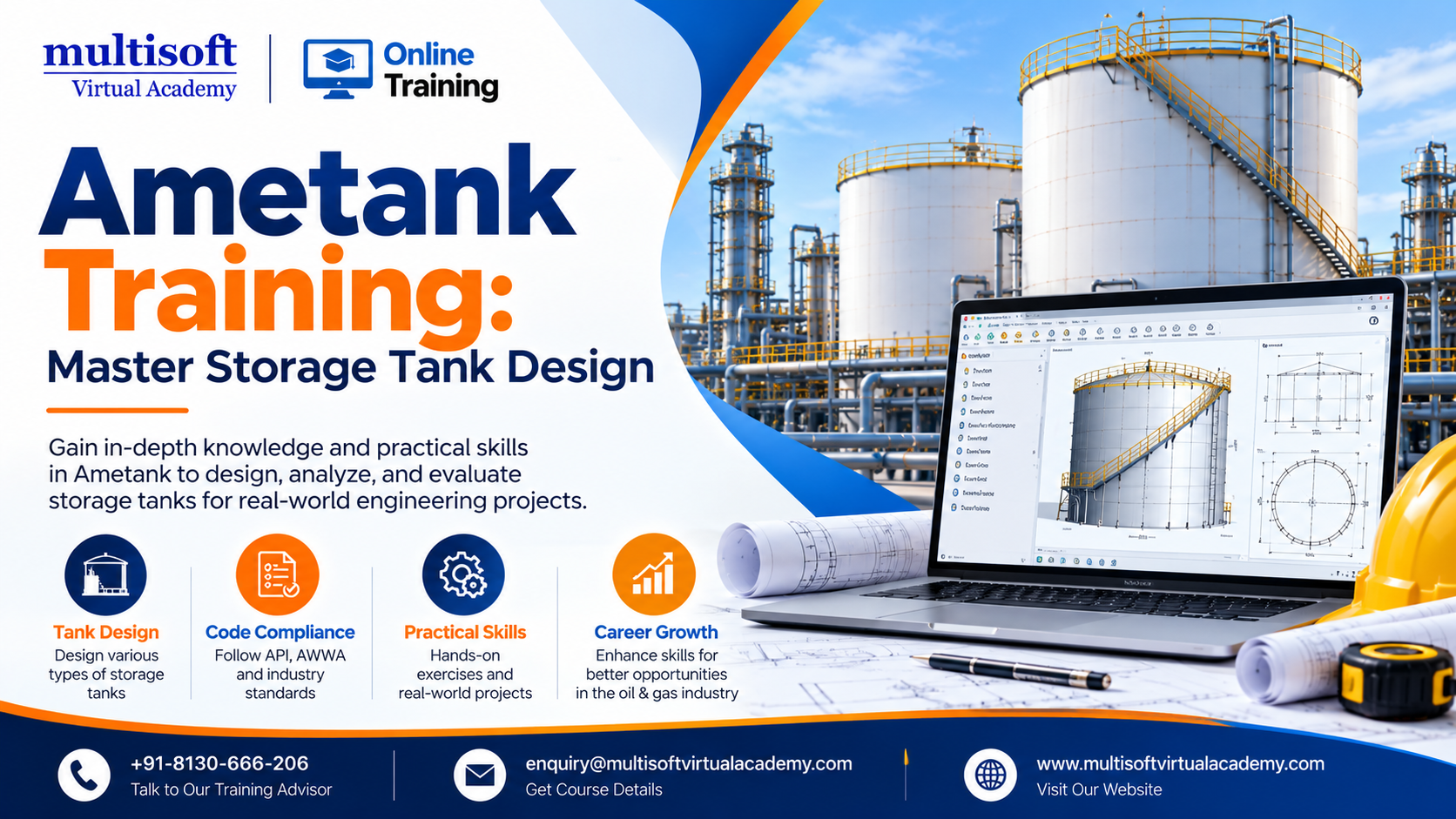
Storage tank engineering plays a vital role in industries that handle petroleum products, chemicals, water, and other industrial materials. Designing reliable storage tanks requires a strong understanding of engineering principles, design calculations, international standards, and structural safety. As industrial projects become increasingly complex, professionals need practical knowledge of modern tank design software to improve accuracy, efficiency, and documentation.
Ametank Training helps engineers develop the technical knowledge required to design, model, analyze, and detail aboveground storage tanks using AMETank software. By combining software skills with fundamental engineering concepts, learners can better understand the complete storage tank design process and its application in real-world engineering projects.
AMETank is specialized engineering software used for designing and detailing aboveground storage tanks. It supports engineering workflows that include tank configuration, design calculations, three-dimensional modeling, material information, and fabrication drawings. Its capabilities help engineers organize important design information and prepare technical deliverables more efficiently.
The software is particularly relevant to professionals working in oil and gas, petrochemicals, industrial manufacturing, water treatment, engineering consultancy, and engineering, procurement, and construction (EPC) projects.
With structured training, professionals can learn how to configure tank geometry, define engineering parameters, evaluate relevant loads, and review design outputs. However, software results must always be checked against project specifications, applicable codes, and qualified engineering judgment.
Modern engineering projects demand accuracy, efficiency, and consistent documentation. Manual calculations and disconnected design workflows can make revisions difficult, especially when a project involves multiple tank configurations and demanding technical requirements.
Ametank Training introduces learners to an organized approach to storage tank engineering. Participants can develop an understanding of how design inputs influence calculations, modeling decisions, and final engineering deliverables.
Key benefits include:
The objective is not simply to learn software commands. It is to understand the engineering decisions behind each design activity and how those decisions influence safety, constructability, and project quality.
A well-structured AMETank course should progress from fundamental concepts to practical design exercises. The exact curriculum may vary according to the training provider, software version, and learner requirements.
The first step is understanding the purpose, configuration, and operating conditions of industrial storage tanks.
Learners explore common tank types, their applications, major components, and the engineering considerations involved in designing aboveground storage facilities.
Topics may include:
These fundamentals provide the foundation for understanding subsequent modeling and calculation activities.
International engineering standards provide essential guidance for storage tank design. API 650 addresses welded tanks for oil storage within its defined scope, while API 620 addresses large, welded, low-pressure storage tanks.
During training, learners can develop an understanding of how applicable standards influence design requirements, material considerations, loading conditions, and engineering verification.
Important learning areas include:
The applicable standard must be selected according to the tank's design conditions and project requirements. Software-generated results do not replace independent engineering verification.
Accurate modeling is an essential part of the storage tank design process. Incorrect geometry or incomplete input data can affect subsequent calculations and drawings.
AMETank modeling exercises can help learners understand how to define the primary characteristics of a tank before proceeding with detailed design activities.
These exercises may cover:
Through practical exercises, participants can learn to identify inconsistencies in design inputs and understand why careful model configuration is important.
The shell, roof, and bottom are fundamental elements of a storage tank. Each component has specific design considerations related to loading, structural behavior, materials, and fabrication.
A practical tank design course can introduce learners to these components and explain their roles in the overall engineering model.
Shell design involves understanding plate arrangements, thickness requirements, corrosion allowances, and applicable loading conditions.
Roof design introduces common roof configurations and the associated structural considerations. Depending on the project, these may include cone roofs, dome roofs, and floating roof arrangements.
Bottom design covers plate configuration, bottom layout, and relevant foundation-interface considerations.
Learning these subjects together helps engineers understand how individual components contribute to the performance and integrity of the complete tank.
Storage tanks may experience environmental and operational loads that influence their structural requirements. Wind and seismic conditions are particularly important when evaluating tanks in locations exposed to strong winds or earthquake activity.
Ametank Training can introduce professionals to the role of these loads in storage tank design.
Relevant learning areas may include:
Engineers should understand the source and significance of each input rather than relying exclusively on automated calculations. Actual project requirements, applicable codes, and site-specific conditions must guide the final design.
Industrial storage tanks include numerous attachments and accessories that support operation, inspection, maintenance, and safe access.
Depending on the course scope and software capabilities, training may introduce nozzle positioning, reinforcement considerations, manways, access platforms, stairways, ladders, and other tank appurtenances.
Participants can learn why the location and configuration of these components matter when developing an engineering model.
They can also explore how design modifications affect clearances, fabrication requirements, and drawing consistency. Reviewing these details early helps reduce avoidable coordination issues during subsequent project stages.
Storage tank projects require accurate documentation for engineering review, procurement, fabrication, and construction.
AMETank workflows may support the preparation of general arrangement drawings, component details, material lists, and other project deliverables, depending on the selected configuration and software functionality.
Training can help learners understand how to review these outputs and check them against the approved design basis.
Important activities include:
The final objective is to develop a consistent engineering workflow in which calculations, model information, and documentation are properly coordinated.
Ametank Training is relevant to professionals who want to strengthen their knowledge of storage tank design and engineering software.
Mechanical engineers can expand their understanding of static equipment and industrial tank design.
Piping and plant design engineers can improve their familiarity with storage facilities and the equipment used in process industries.
CAD designers and engineering draftspeople can learn how tank models relate to technical drawings and fabrication documentation.
EPC professionals and project engineers can gain a clearer understanding of tank design deliverables, technical coordination, and project requirements.
Engineering graduates and early-career professionals can build foundational knowledge that supports further specialization in mechanical and industrial engineering.
Prior knowledge of mechanical engineering, engineering drawings, and basic structural concepts can be helpful. Beginners should select a course that explains the underlying principles before introducing advanced software workflows.
Specialized storage tank design knowledge can complement the skills required for several engineering roles. Career opportunities depend on professional qualifications, relevant experience, practical competence, and employer requirements.
Potentially relevant roles include:
Professionals may find these skills useful in oil and gas projects, refineries, chemical plants, industrial storage terminals, water treatment facilities, and engineering design organizations.
Ametank Training alone does not guarantee employment or promotion. Building a portfolio of practice projects, understanding applicable design standards, and developing broader engineering skills can strengthen professional readiness.
Selecting an appropriate course is important for achieving meaningful learning outcomes. Before enrolling, professionals should evaluate the curriculum, instructional approach, software access, and opportunities for practical application.
Consider the following factors:
1. Practical learning opportunities: Look for exercises involving tank configuration, design calculations, modeling, and documentation.
2. Experienced instructors: Choose trainers who can explain engineering principles alongside software procedures.
3. Relevant design standards: Check whether the curriculum covers the standards and requirements relevant to your work.
4. Comprehensive course coverage: Review whether the course includes geometry, shell and roof design, loading considerations, and drawing outputs appropriate to your objectives.
5. Flexible delivery: Compare live online sessions, instructor-led classes, and other available learning formats.
6. Learning support: Ask about practice materials, doubt-clearing sessions, recorded classes, and post-training assistance where offered.
A course that combines theoretical understanding with practical exercises can help learners develop a more complete view of storage tank engineering.
Consistent practice is essential for developing confidence with engineering software. Learners should follow a structured approach instead of attempting advanced modeling activities before understanding the basics.
Start by studying tank components and applicable design standards. Next, learn the software interface and create a simple practice model using clearly defined assumptions.
Progress to shell, roof, and bottom design, followed by relevant loading conditions and component detailing. As confidence improves, practice reviewing calculation reports and checking the consistency of engineering drawings.
It is also useful to maintain a record of design assumptions, input values, and verification steps. This habit encourages traceability and helps learners identify the reasons behind unexpected results.
Whenever possible, practice with realistic engineering scenarios under appropriate supervision. Compare software outputs with independent calculations or established engineering references, and investigate discrepancies before accepting the results.
These habits help transform software familiarity into practical engineering understanding.
The engineering sector continues to place importance on digital design, coordinated documentation, and efficient project execution. Storage tank professionals can benefit from combining specialized tank design knowledge with complementary technical skills.
Relevant areas for further development include 3D modeling, engineering documentation, CAD tools, material estimation, design verification, and project coordination.
Professionals may also explore broader subjects such as mechanical equipment design, piping engineering, pressure vessel fundamentals, and plant design workflows where these align with their career goals.
Rather than pursuing every available tool, engineers should prioritize skills that match their responsibilities and the requirements of their target industry. A strong understanding of engineering fundamentals remains essential regardless of how design technology evolves.
Developing expertise in storage tank engineering requires a combination of technical knowledge, practical software experience, and a commitment to design quality. Ametank Training can help professionals understand tank modeling, engineering calculations, applicable design standards, and technical documentation while building a foundation for further specialization. For learners and organizations seeking structured, instructor-led technical education, Multisoft Virtual Academy offers Ametank Training designed to support practical learning and professional skill development. By choosing a course aligned with individual learning goals and applying the knowledge through consistent practice, engineers can strengthen their capabilities and prepare for the technical demands of modern storage tank projects.
| Start Date | End Date | No. of Hrs | Time (IST) | Day | |
|---|---|---|---|---|---|
| 10 Oct 2026 | 01 Nov 2026 | 24 | 06:00 PM - 09:00 PM | Sat, Sun | |
| 11 Oct 2026 | 02 Nov 2026 | 24 | 06:00 PM - 09:00 PM | Sat, Sun | |
Schedule does not suit you, Schedule Now! | Want to take one-on-one training, Enquiry Now! |
|||||






 Join our Live Instructor-Led online classes delivered by industry experts
 Let's Get Started