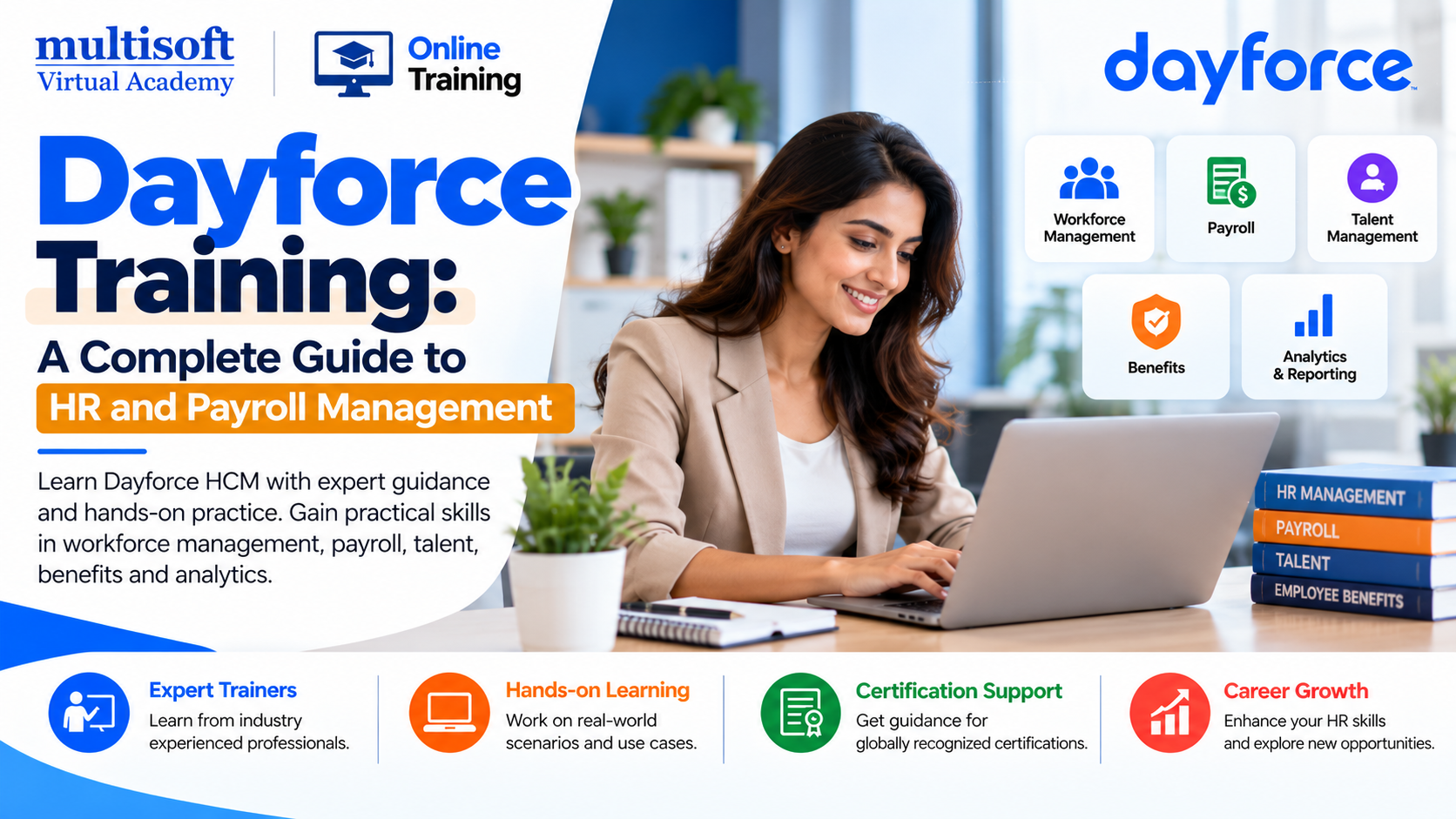
Organizations need reliable systems to manage employee records, payroll, working hours, benefits, and workforce planning. As HR departments move toward digital operations, human capital management platforms help connect workforce information and streamline everyday administrative activities. Dayforce is one such platform, supporting organizations with a range of workforce management and HR processes.
Dayforce Training helps professionals understand the platform's capabilities and how they can be applied to business requirements. Depending on the course, learners may explore human resources management, payroll processing, time and attendance, workforce scheduling, talent management, reporting, and system administration.
For HR professionals, payroll specialists, business analysts, and HCM consultants, learning Dayforce Training can provide useful knowledge of technology-enabled workforce operations. A structured training program also helps learners understand how different functions interact and why accurate data and consistent processes matter.
Dayforce is a human capital management platform that brings together workforce-related functions within a connected environment. Organizations can use its capabilities to support activities involving employee information, payroll, workforce management, talent processes, and reporting.
The platform's relevance extends beyond HR administration. Workforce data can influence payroll calculations, scheduling decisions, employee records, and operational reporting. Managing these activities effectively requires users to understand both the technology and the business rules governing their work.
For example, a change in an employee's employment details may affect payroll or scheduling information. Similarly, approved working hours may contribute to payroll processing, depending on the organization's configuration.
Dayforce training introduces learners to these relationships and helps them understand how to work within the processes established by their organization.
As organizations adopt integrated HCM systems, employees need the skills to manage information accurately and use technology effectively. Dayforce training can help professionals build relevant knowledge in several areas.
HR teams handle employee information, organizational assignments, employment changes, and other administrative activities. Training helps learners understand how these records are maintained and how HR workflows support consistent data management.
Payroll requires accurate employee information and careful handling of earnings, deductions, working hours, and applicable rules. Training can help users understand payroll-related workflows and the importance of reviewing information before processing.
Organizations with multiple locations, departments, or shifts need effective scheduling and time management. Learning Dayforce workforce management features can help professionals understand how schedules, employee availability, and attendance information support operational planning.
Users often need to navigate the platform, locate relevant information, review records, and follow established workflows. Practical training can help them become more confident when performing these tasks.
Professionals working in HR technology, application support, or business analysis may benefit from understanding how HCM systems support business operations. Dayforce training can provide a foundation for further specialization.
The content of a Dayforce course varies according to its purpose. Some programs focus on everyday system usage, while others concentrate on payroll, workforce management, administration, or implementation.
Learners begin by understanding the platform's interface and major functional areas. This foundation helps them locate relevant information and become familiar with common HCM terminology.
Topics may include:
Understanding these concepts makes it easier to progress to role-specific functions.
HR administration involves maintaining employee information and supporting employment-related processes. Training may cover employee records, job details, organizational assignments, and selected employment changes.
Learners can explore how HR information is organized and how changes should be recorded according to internal procedures.
This knowledge is useful for HR administrators, HR operations teams, and professionals responsible for maintaining employee data.
Payroll is a specialized area that requires attention to detail and an understanding of the organization's payroll policies.
Dayforce Payroll Training may cover payroll inputs, employee pay information, earnings, deductions, processing workflows, and payroll review activities. Depending on the course, learners may also study reconciliation concepts and the relationship between time records and payroll results.
Practical exercises can help users understand how different inputs affect payroll outcomes. However, payroll rules differ across jurisdictions, so learners should confirm that their training addresses the relevant country and business requirements.
Time and attendance functions help organizations manage working hours, attendance records, timesheets, and related approvals.
A training program may introduce time entry, timesheet review, attendance exceptions, corrections, and approval workflows.
These processes are particularly important for organizations with shift-based employees, variable working hours, or multiple operational locations.
Learners should understand how time records are reviewed and how corrections are handled under the organization's procedures.
Workforce management helps organizations coordinate employee availability with operational requirements. Scheduling is especially relevant to businesses that need to maintain staffing levels across shifts, departments, or locations.
Training may include:
Understanding these workflows helps users recognize how workforce data supports day-to-day operational decisions.
Benefits administration can involve enrollment, eligibility information, employee selections, and other employer-provided programs. The available features and workflows depend on the organization's configuration and location.
Training may introduce the relevant records and processes, helping HR teams understand how benefits information is managed within the wider HCM environment.
Talent-related functions support activities such as performance management, learning, and employee development, depending on the products implemented by the organization.
Dayforce Learning supports learning-related activities. Relevant training may cover course assignments, learning records, employee development workflows, and completion tracking.
These capabilities can be useful to HR teams responsible for organizing employee development initiatives.
Reports help organizations review workforce information and monitor operational activities. Depending on permissions and course scope, learners may explore standard reports, filtering options, data review, and reporting concepts.
Effective reporting requires users to understand what the data represents, whether the information is complete, and how the results relate to the question being investigated.
Advanced training may introduce administrative responsibilities, selected configuration activities, user access, and workflow management.
These topics are particularly relevant to professionals who support the platform or participate in HCM projects. Configuration should always follow approved procedures, and changes should be tested before being introduced into a production environment.
A Dayforce implementation project aims to configure and deploy the platform to meet an organization's business requirements. The scope may include HR processes, payroll, workforce management, data migration, integrations, reporting, and employee training.
Professionals interested in implementation-related roles should understand several key activities.
Business analysis: Teams gather requirements and document existing processes, operational needs, and expected system outcomes.
Solution planning: Project specialists determine how the platform should support the agreed requirements and identify dependencies between functional areas.
Data preparation: Employee records and other relevant information are reviewed, mapped, and validated before migration or loading.
Configuration: Authorized specialists configure the applicable features according to the solution design.
Testing: Teams validate business scenarios, review results, and investigate problems before deployment.
User adoption: Employees, managers, HR teams, and administrators receive guidance on using the configured system.
Post-deployment support: Support teams help users resolve issues and maintain consistent system usage.
Training can introduce these activities, but actual implementation responsibilities often require additional project experience and product-specific knowledge.
Dayforce training may be suitable for professionals who work with HR technology or want to develop skills in workforce systems.
Prior experience in HR, payroll, workforce operations, or enterprise software can be helpful. Beginners should choose a course that explains fundamental concepts before moving into advanced topics.
Dayforce knowledge can complement professional experience in HR operations, payroll, workforce management, and enterprise applications.
Depending on experience and role requirements, relevant career paths may include:
The responsibilities of these positions vary. Some focus on daily system usage, while others involve configuration, reporting, testing, business analysis, or implementation support.
Completing a course does not guarantee employment. Candidates should combine their training with relevant experience, practical knowledge, communication skills, and an understanding of the business processes associated with their target role.
Choosing a suitable training program can help you concentrate on the skills most relevant to your career goals.
Review the course outline and confirm whether it covers your preferred area, such as HR administration, payroll, workforce management, reporting, or system administration.
Look for guided demonstrations, realistic scenarios, and exercises that help you understand common workflows. Practical learning can make it easier to connect theoretical concepts with day-to-day responsibilities.
A trainer who understands both the software and its business applications can explain the reasoning behind different processes and help learners understand common challenges.
Ask whether software access or a practice environment is included. Confirm which features, modules, and administrative functions are available during training.
Instructor-led online sessions provide opportunities to ask questions, while self-paced learning may offer greater flexibility. Choose the format that fits your schedule and preferred learning approach.
Confirm whether the program provides a course-completion certificate or prepares learners for a separate official certification pathway. Review any applicable eligibility requirements before enrolling.
Dayforce training helps users understand how to work with the Dayforce HCM platform. Depending on the syllabus, it may cover HR administration, payroll, scheduling, time and attendance, reporting, and other workforce-related functions.
Yes. Introductory training can help beginners understand the platform and its basic workflows. Familiarity with HR or payroll processes can be useful but is not necessarily required for every course.
Payroll-focused training may cover employee pay information, earnings, deductions, payroll workflows, and review activities. Exact coverage depends on the course and the relevant payroll jurisdiction.
Training can provide foundational knowledge of the platform and its processes. Implementation work may also require practical experience in requirements gathering, configuration, integration, data migration, and testing.
No. Training can help develop relevant skills, but employment depends on qualifications, experience, practical ability, employer requirements, and the availability of suitable positions.
Dayforce provides a connected environment for managing important workforce processes, including HR administration, payroll, time and attendance, scheduling, and talent-related activities. Developing practical knowledge of these functions can help professionals work more confidently with HCM technology and prepare for relevant operational or consulting responsibilities. A well-designed course should offer role-specific content, practical exercises, and clear learning objectives aligned with business needs. Multisoft Virtual Academy offers Dayforce Training for professionals seeking to strengthen their understanding of HCM systems, payroll workflows, and workforce management through structured learning.
| Start Date | End Date | No. of Hrs | Time (IST) | Day | |
|---|---|---|---|---|---|
| No schedule available ! | |||||
Schedule does not suit you, Schedule Now! | Want to take one-on-one training, Enquiry Now! |
|||||




 Join our Live Instructor-Led online classes delivered by industry experts
 Let's Get Started
