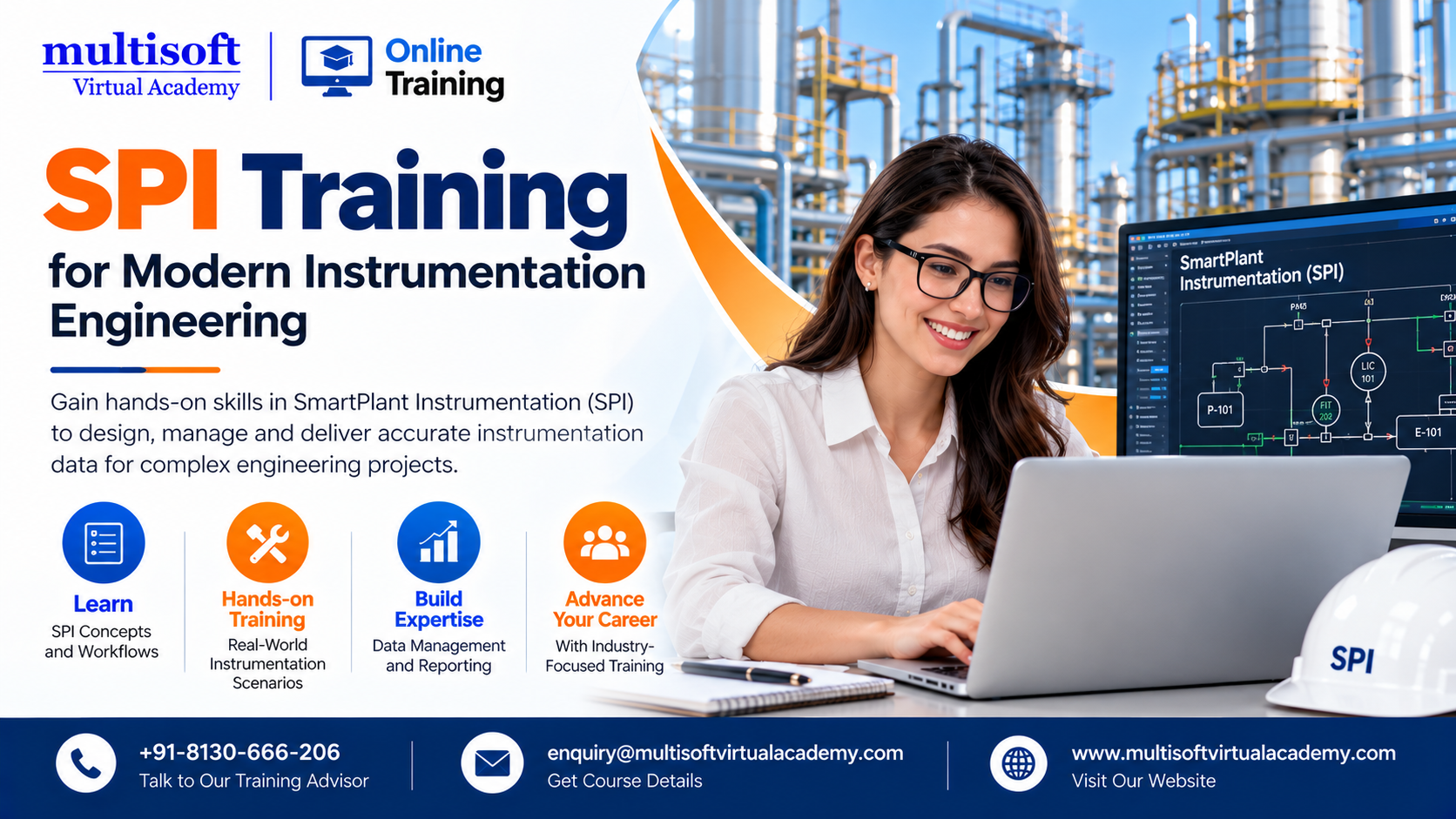
Instrumentation engineering is becoming increasingly dependent on accurate digital data, standardized workflows, and integrated engineering platforms. In large-scale oil and gas, petrochemical, power, chemical, and manufacturing projects, professionals need more than basic instrumentation knowledge. They must understand how engineering information is created, organized, maintained, documented, and delivered throughout a project lifecycle.
This is where SPI Training becomes valuable for instrumentation and control professionals. SmartPlant Instrumentation (SPI), also associated with the earlier INtools terminology, is used for managing instrumentation engineering information, including instrument indexes, specifications, process data, loops, wiring, documentation, and reporting.
A well-designed SmartPlant Instrumentation Training program can help professionals develop practical software skills while strengthening their understanding of instrumentation workflows. Instead of learning individual commands in isolation, learners can understand how different SPI modules connect with engineering activities and project deliverables.
SPI Training is a specialized learning program designed to teach professionals how to use SmartPlant Instrumentation for instrumentation engineering and project data management.
SPI is a database-driven engineering environment that supports the creation, management, modification, and documentation of instrumentation information. Its applications can extend across instrument data, specifications, loops, wiring, reports, and project documentation.
A comprehensive SPI INtools Training program generally introduces learners to areas such as:
The objective is not simply to learn software navigation. The real value lies in understanding how SPI supports practical instrumentation engineering activities.
Modern engineering projects generate large volumes of technical information. Instrument tags, specifications, process conditions, wiring information, datasheets, loop documentation, and reports must remain consistent throughout the project.
Managing these details manually can create unnecessary duplication and increase the possibility of data inconsistencies. SPI provides a structured environment where instrumentation information can be organized and managed more systematically.
For EPC organizations and engineering teams, this approach can support better coordination between disciplines and improve the management of instrumentation deliverables.
Professionals who understand both instrumentation fundamentals and digital engineering workflows can therefore bring greater value to projects.
A practical SmartPlant Instrumentation Course should cover the areas that professionals are likely to encounter in real engineering environments.
The instrument index is an important source of project information. Training typically introduces learners to creating, maintaining, and modifying instrument records and understanding how instrument information connects with other project data.
Learners can become familiar with tag creation, properties, associations, and data management processes.
Instrumentation specifications contain important technical information required for engineering, procurement, review, and documentation.
Through SPI Training, learners can understand how specifications are created, configured, assigned, modified, and managed. Practical exercises can help them understand the relationship between instrument information and specification documents.
Process information is essential for selecting and specifying instruments correctly.
Training can introduce professionals to process data associated with instruments and lines, including methods for entering, modifying, transferring, and reporting relevant information.
This creates a stronger connection between process engineering information and instrumentation design.
Loop documentation is an important part of instrumentation engineering.
A quality SPI INtools Course should explain how loops are created and maintained and how instruments, tags, and related information are associated with loops.
Understanding these relationships helps professionals manage instrumentation data more effectively during detailed engineering activities.
Wiring is another important component of instrumentation projects.
SPI workflows can include information related to junction boxes, cables, marshaling, system cabinets, conventional wiring, and fieldbus-related configurations.
Hands-on learning in this area can help participants understand how wiring information is organized and connected within the broader instrumentation database.
Engineering projects depend heavily on accurate reports and deliverables.
SmartPlant Instrumentation Training can help professionals understand different reporting capabilities, including generating project information in useful formats and managing reports in bulk.
This skill becomes particularly useful when teams need to review large quantities of engineering information.
SPI is particularly relevant to professionals involved in instrumentation, control, plant engineering, and EPC projects.
The training can be useful for:
Beginners can use structured training to establish a foundation, while experienced professionals can use advanced learning to improve their existing workflows.
Choosing SPI Training Online can provide several professional advantages when the program is designed around practical application.
Professionals learn how different types of instrumentation information are organized and maintained within a structured environment.
SPI is closely connected with engineering documentation. Training helps professionals understand how information can be transformed into useful project deliverables.
The ability to use engineering software confidently can complement theoretical instrumentation knowledge and make professionals more effective in project environments.
Instrumentation does not operate independently. It interacts with process, piping, electrical, control, and other engineering disciplines. SPI training can help learners understand the data relationships that support multidisciplinary project execution.
Knowledge of specialized engineering platforms can strengthen the technical profile of instrumentation professionals, particularly those targeting EPC, oil and gas, petrochemical, power, and industrial engineering opportunities.
Online learning has made specialized engineering education more accessible to professionals across different locations and time zones.
However, not every online course provides the same level of practical value.
Before selecting an SPI Online Training program, consider the following factors.
The trainer should understand both the software and the engineering processes in which it is used.
Software training becomes considerably more useful when learners work through realistic examples instead of only watching demonstrations.
The course should cover important areas such as instrument data, specifications, process information, loops, wiring, documentation, and reporting.
Working professionals may benefit from weekday, weekend, live online, or customized learning options.
Case studies and practical assignments can help learners understand how SPI knowledge is applied in actual engineering workflows.
Access to learning resources and guidance after sessions can make it easier for participants to reinforce their skills.
Current SPI course offerings in the market commonly emphasize instructor-led learning, hands-on exercises, project-based practice, and modules covering instrumentation data, specifications, wiring, and reports.
Many professionals search for SPI Certification Training because they want to demonstrate their technical knowledge.
It is important to distinguish between learning the software and demonstrating practical competency. A certificate can document course completion, but real professional value comes from being able to apply the skills effectively.
Candidates should therefore look for training that combines:
Building a portfolio of practical exercises can also help professionals explain their capabilities during interviews or technical discussions.
Engineering, procurement, and construction companies manage complex projects where accurate instrumentation information is critical.
In sectors such as oil and gas, petrochemicals, chemical processing, power generation, and manufacturing, instrumentation teams may work with thousands of tags and associated technical records.
An organized engineering information system can help teams manage this complexity more effectively.
SPI Training for EPC professionals should therefore go beyond software menus. Learners should understand how the application fits into engineering activities such as design development, data management, documentation, review, and project delivery.
This workflow-based perspective can make training more meaningful for experienced professionals.
One of the most common search questions is whether SPI and INtools refer to the same technology.
SmartPlant Instrumentation is commonly associated with the earlier INtools terminology. As a result, training providers and professionals may use phrases such as SPI Training, INtools Training, SmartPlant Instrumentation Training, and SPI INtools Training when referring to related learning requirements.
This also explains why professionals searching for an SPI course may encounter the term INtools in older project documentation, resumes, job descriptions, or training materials.
Understanding both terms can make it easier for professionals to identify relevant learning resources.
Enrolling in a course is only the first step. Consistent practice is essential for developing confidence.
Start by understanding the engineering purpose behind each function rather than memorizing software commands.
For example, instead of learning only how to create a loop, understand why loop information is required, how instruments relate to that loop, and how the resulting information contributes to engineering documentation.
Learners should also practice:
This approach turns software training into practical professional development.
Beginners often face several challenges when learning instrumentation engineering software.
One common problem is trying to learn every module simultaneously. A better approach is to establish fundamentals first and gradually move toward advanced workflows.
Another challenge is focusing too heavily on software commands without understanding instrumentation concepts. Software skills become much more useful when combined with engineering knowledge.
Data relationships can also be challenging for new users. Understanding how instruments, loops, specifications, process information, wiring, and reports connect can take time.
Regular practice and instructor guidance can make this learning curve easier to manage.
Engineering organizations are increasingly focused on digital workflows, connected data, standardized documentation, and improved collaboration.
This means professionals who can combine engineering expertise with specialized digital tools can remain relevant as project environments become more technology-driven.
SPI knowledge can be particularly valuable for professionals working with instrumentation data and documentation in complex plant engineering environments.
Rather than viewing SPI Training as simply software education, professionals can consider it part of a broader digital engineering skill set.
SPI Training teaches professionals how to work with SmartPlant Instrumentation for instrumentation engineering, data management, specifications, loops, wiring, documentation, and reporting.
SPI is commonly associated with the earlier INtools terminology, which is why both terms frequently appear in training programs and professional discussions.
Instrumentation engineers, designers, control professionals, E&I professionals, EPC engineers, engineering graduates, and other technical professionals can consider learning SPI.
Yes. SPI is relevant to instrumentation workflows involving instrument data, specifications, loops, wiring, documentation, and engineering deliverables.
Yes. Beginners can start with fundamental instrumentation and SPI concepts before progressing toward more advanced project workflows.
A comprehensive course should ideally include instrument index management, specifications, process data, loops, wiring, reports, documentation, practical exercises, and project-based learning.
Developing expertise in SPI Training can be a valuable step for professionals who want to strengthen their instrumentation engineering and digital project skills. The right learning approach should combine software knowledge with practical engineering workflows, real-world exercises, structured guidance, and an understanding of how instrumentation data contributes to successful project execution. For professionals seeking structured SmartPlant Instrumentation Training, SPI INtools Training, or practical online learning designed around industry requirements, Multisoft Virtual Academy acts as a trusted service provider focused on helping learners develop relevant technical capabilities and advance their professional journey.
| Start Date | End Date | No. of Hrs | Time (IST) | Day | |
|---|---|---|---|---|---|
| 10 Oct 2026 | 01 Nov 2026 | 24 | 06:00 PM - 09:00 PM | Sat, Sun | |
| 11 Oct 2026 | 02 Nov 2026 | 24 | 06:00 PM - 09:00 PM | Sat, Sun | |
Schedule does not suit you, Schedule Now! | Want to take one-on-one training, Enquiry Now! |
|||||






 Join our Live Instructor-Led online classes delivered by industry experts
 Let's Get Started