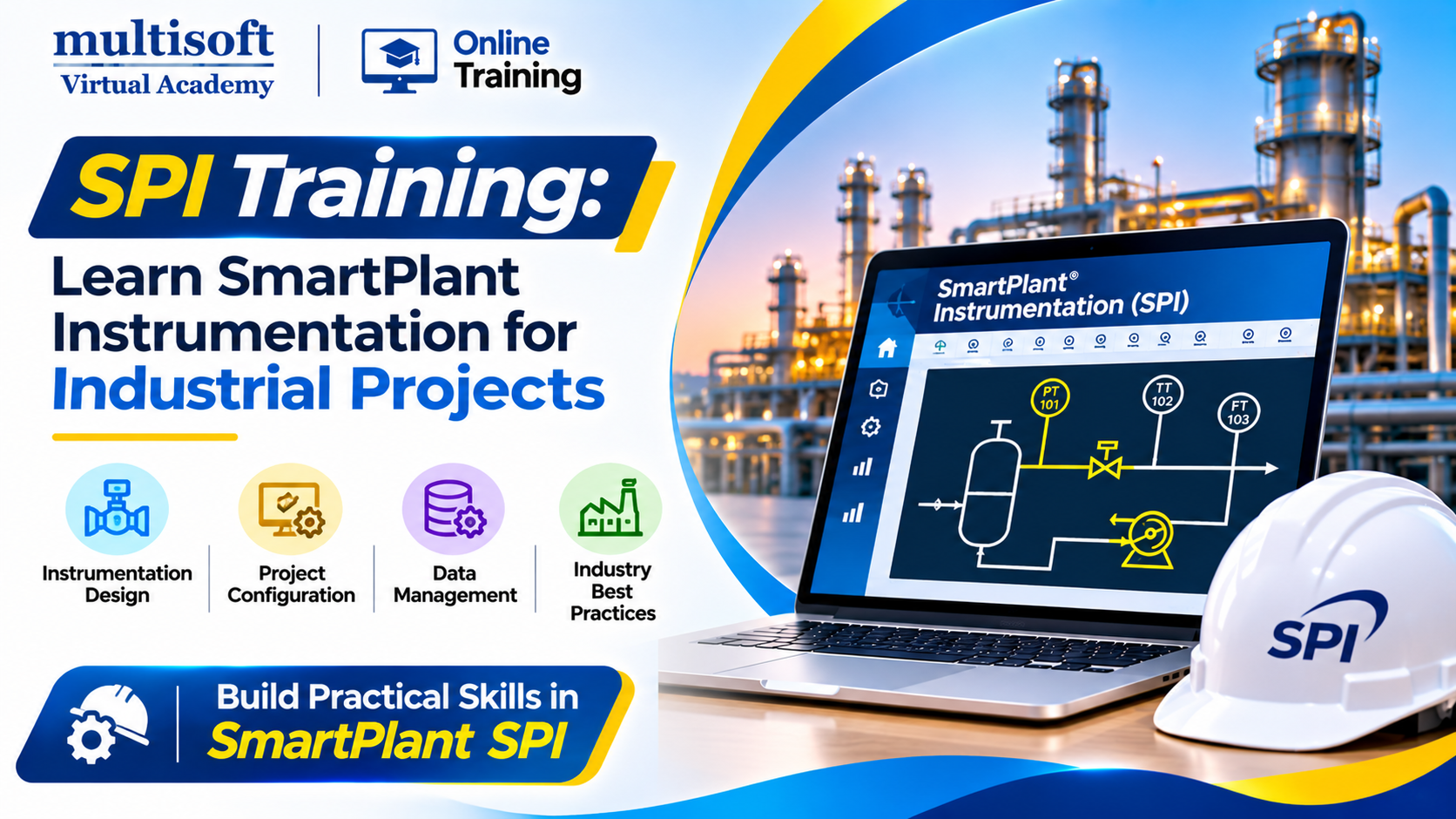
Instrumentation plays a major role in maintaining accuracy, safety, and operational control across industrial facilities. From monitoring pressure and temperature to controlling flow and measuring process variables, instrumentation systems support several important industrial operations. Managing the technical information associated with these systems requires organized engineering processes and specialized software.
SmartPlant Instrumentation (SPI), previously known as INtools, is an engineering application used to manage instrumentation data and related project documentation. It helps engineering teams organize instrument information, prepare specifications, maintain loop details, and manage wiring records within a structured project environment.
SPI Training provides professionals with an opportunity to understand this application and its role in modern instrumentation engineering. Through structured learning and practical exercises, participants can develop knowledge of instrument data management, engineering documentation, and software-based design workflows.
For instrumentation engineers, E&I designers, control system professionals, and engineering graduates, learning SmartPlant Instrumentation can help build specialized technical capabilities relevant to industrial projects.
Industrial facilities contain a large number of instruments and control components. Each instrument has specific technical information, identification details, operating requirements, and connections with other devices.
Maintaining this information manually can become difficult when project requirements change or engineering teams work with extensive documentation.
SmartPlant Instrumentation provides a database-oriented environment for organizing this information. It helps users manage related engineering records and supports the preparation of different instrumentation deliverables.
The software is commonly associated with activities such as:
Learning these functions helps professionals understand how instrumentation information is organized throughout an industrial engineering project.
The demand for accurate engineering information makes software knowledge an important part of instrumentation design. Professionals who understand both engineering fundamentals and specialized applications can contribute to different project activities.
SPI training introduces learners to the application's interface, database structure, modules, and common engineering activities.
Instead of relying only on theoretical knowledge, participants can learn how instrumentation records are created, updated, reviewed, and maintained.
Instrumentation engineering involves several connected activities. Instrument indexing, specification development, loop management, and wiring documentation are not isolated tasks.
A structured course helps learners understand how these activities relate to one another and how information moves through the engineering process.
Accurate documentation is essential during engineering reviews, procurement, construction, and project handover.
SPI supports organized information management and helps users prepare relevant engineering documents using project data.
Learning a specialized engineering application can complement existing technical experience. It may be particularly useful for professionals interested in instrumentation design, E&I engineering, and EPC project environments.
A good SmartPlant Instrumentation Training Course should cover essential software functions along with their practical applications. The following areas provide a useful foundation for learners.
The introductory module explains the software's purpose and its use in industrial instrumentation projects.
Participants become familiar with the interface, navigation, project structure, database concepts, and major application modules.
They also learn basic terminology used throughout the software environment. This foundation makes it easier to understand more detailed instrumentation activities.
The instrument index is one of the central records in an instrumentation project. It identifies individual instruments and maintains important information associated with them.
Training may cover:
These skills help learners understand how instrument information is maintained within the project database.
Every instrument has specific technical requirements based on its application and operating conditions. These requirements are documented through specifications and datasheets.
During SPI training, participants may learn how to create specification records, manage templates, assign specifications, and generate datasheets.
The learning process may also include updating technical parameters, reviewing specification details, and maintaining document consistency.
Understanding this module is valuable for professionals involved in instrumentation design and technical documentation.
Process information provides important inputs for instrumentation engineering. Parameters such as pressure, temperature, flow, and operating conditions influence instrument selection and specification requirements.
Training may introduce learners to process data entry, record associations, parameter management, and the relationship between process information and instrument records.
This knowledge helps participants understand how process requirements are represented in an instrumentation database.
Control loops connect instruments and other components to support measurement and process control.
SPI provides functionality for organizing loop-related information and maintaining associations between different instrumentation records.
A practical course may include loop identification, loop creation, instrument associations, loop properties, and drawing-related information.
Learners can develop a better understanding of how individual instruments work together within a control system.
Instrumentation systems require proper electrical connections between field devices, junction boxes, panels, and control system equipment.
Managing this information is important for installation and project documentation.
SPI training may cover cable records, cable cores, termination details, junction box information, panel configuration, and wiring relationships.
Participants can also explore how wiring information is maintained and used in relevant engineering deliverables.
Loop drawings provide detailed information about the instruments and connections associated with a control loop.
Training may introduce drawing generation, document layouts, macros, component positioning, and drawing-related data management.
Understanding these functions helps professionals connect database information with instrumentation documentation.
Instrumentation engineering sometimes requires calculations to determine suitable equipment according to process conditions and technical specifications.
Depending on the software version and course coverage, learners may be introduced to calculation workflows involving flow instruments, control valves, pressure instruments, and thermowells.
The purpose of this learning area is to understand the software-supported engineering process. Final calculations and equipment selection must follow applicable engineering standards and project specifications.
The Engineering Data Editor supports working with structured instrumentation information. It helps users review, filter, and manage project records.
Training may include data queries, information views, record editing, bulk updates, and report generation.
These capabilities are useful when working with extensive instrumentation databases and preparing project-related information for review.
SmartPlant Instrumentation is relevant to industries that depend on detailed instrumentation engineering and structured project documentation.
Oil and gas projects: Instrumentation systems are essential in production facilities, refineries, pipelines, and processing plants. Engineering teams use instrumentation information to support process monitoring and control.
Petrochemical facilities: These projects involve complex process operations and require detailed instrument specifications, loop information, and engineering records.
Power plants: Instrumentation supports monitoring and control across power generation systems. Accurate technical information is important for engineering and operational activities.
Chemical industries: Chemical processing facilities depend on instrumentation to measure and control important process variables.
Pharmaceutical manufacturing: Instrumentation helps monitor production conditions and supports process documentation requirements.
EPC organizations: Engineering, procurement, and construction companies coordinate large volumes of technical information across multiple disciplines. Organized instrumentation records support project execution and documentation.
SPI training can be useful for individuals who want to develop software knowledge related to instrumentation engineering.
Basic knowledge of instrumentation symbols, process diagrams, and engineering terminology can help learners follow the course more effectively.
Developing SmartPlant Instrumentation skills can complement an engineering background and support professional growth in industrial project environments.
Depending on experience and qualifications, professionals may explore opportunities such as:
Employers may expect knowledge of instrument specifications, datasheets, loop drawings, wiring documentation, and engineering data management.
Training provides a learning foundation, while practical project experience and engineering knowledge remain important for career progression.
The quality of a training program depends on its curriculum, practical coverage, instructor expertise, and learning environment.
Review the syllabus to ensure that it covers the modules you want to learn. Important topics include instrument indexing, specifications, process data, loop management, wiring, and reporting.
Practical assignments help learners understand how the software works. Ask whether the program includes exercises based on realistic instrumentation engineering scenarios.
The instructor should understand the software as well as its engineering applications. Relevant project experience can make technical explanations more useful.
Confirm the software version covered by the course and whether learners receive access to a practice environment.
Live online sessions, one-to-one learning, and self-paced programs have different advantages. Choose a format that provides enough opportunity for practice and discussion.
Before enrolling, understand whether the course includes a completion certificate or preparation for a separate certification examination. Check the details and eligibility requirements carefully.
Industrial engineering is becoming increasingly dependent on structured data and digital documentation. Engineering teams must maintain reliable information while coordinating design activities across different disciplines.
Knowledge of SmartPlant Instrumentation can help professionals understand how instrument records, technical specifications, wiring information, and loop documentation are managed within a software environment.
However, software proficiency should be supported by strong engineering fundamentals. Professionals should continue improving their knowledge of P&IDs, instrument symbols, control loops, process parameters, electrical connections, and technical documentation.
Combining these skills can help learners become more effective when working with instrumentation engineering information.
SPI stands for SmartPlant Instrumentation. It is an engineering application used to manage instrumentation design information and related project documentation.
Yes. INtools is the earlier name commonly associated with SmartPlant Instrumentation. Both terms are frequently used in training and engineering discussions.
A course may cover software navigation, instrument indexing, specifications, datasheets, process data, loop management, wiring, calculations, and engineering reports.
Yes. Freshers with basic instrumentation engineering knowledge can learn the software through structured introductory training and practical exercises.
SPI training can complement knowledge required for instrumentation design, E&I engineering, engineering documentation, and EPC project roles. Employment opportunities depend on qualifications and experience.
Practical experience is highly useful because it helps learners understand how engineering information is created, updated, reviewed, and managed in the application.
SmartPlant Instrumentation provides a structured approach to managing instrument data and supporting engineering documentation across industrial projects. Learning instrument indexing, technical specifications, process information, loop development, wiring, and reporting can help professionals improve their understanding of instrumentation design workflows. A suitable training program should combine software fundamentals with practical exercises and guidance from knowledgeable instructors. Multisoft Virtual Academy offers SPI Training for instrumentation engineers, designers, and technical professionals who want to develop SmartPlant Instrumentation knowledge and strengthen their capabilities for industrial engineering projects.
| Start Date | End Date | No. of Hrs | Time (IST) | Day | |
|---|---|---|---|---|---|
| No schedule available ! | |||||
Schedule does not suit you, Schedule Now! | Want to take one-on-one training, Enquiry Now! |
|||||




 Join our Live Instructor-Led online classes delivered by industry experts
 Let's Get Started
