Business analytics refers to the practice of examining data to make informed decisions, improve processes, and gain insights that drive business growth. It combines statistical analysis, data visualization, and business intelligence to help organizations make data-driven decisions. There are several types of business analytics, each catering to different user groups and purposes. Here's a closer look:

Descriptive Analytics: Descriptive analytics focuses on summarizing and explaining historical data to understand past trends and patterns. It uses data aggregation and data mining techniques to provide insights into what has happened. User groups for descriptive analytics include business analysts, data analysts, and managers who need to understand past performance to make better decisions.
Diagnostic Analytics: Diagnostic analytics aims to identify the root causes of specific events or trends by analyzing past data. It uses techniques like data discovery, data mining, and drill-down analysis to determine why something happened. User groups for diagnostic analytics are typically analysts and decision-makers who want to understand the causes behind past events to prevent future issues or replicate successes.
Predictive Analytics: Predictive analytics leverages historical data, statistical algorithms, and machine learning techniques to forecast future trends, events, or behaviors. It helps organizations anticipate and prepare for potential scenarios. User groups for predictive analytics include data scientists, analysts, and strategic decision-makers who want to make proactive decisions based on future predictions.
Prescriptive Analytics: Prescriptive analytics goes beyond predicting future outcomes by providing recommendations on the best course of action. It uses optimization and simulation algorithms to suggest optimal solutions for specific business problems. User groups for prescriptive analytics include decision-makers, executives, and strategists who want to identify the most effective strategies to achieve their objectives.
Real-time Analytics: Real-time analytics involves analyzing data as it is generated, allowing organizations to respond quickly to emerging trends or issues. This type of analytics is particularly useful in industries where real-time decision-making is crucial, such as finance, healthcare, and e-commerce. User groups for real-time analytics include operations managers, IT teams, and business analysts who need to monitor and respond to events as they happen.
Business analytics tools and techniques can be utilized by SAP Business Technology Platform (SAP BTP) Online Training various user groups, including executives, managers, analysts, and data scientists, depending on their specific needs and objectives. By leveraging the appropriate type of business analytics, organizations can gain valuable insights, make better decisions, and drive growth.
The system is designed to help HR department in managing payroll and other essentials. However, it is important to have knowledge about using this tool. With PeopleSoft HRMS Training, the user can really learn its benefits and how well the functions can be handled. Presently, all the product line of PeopleSoft is marketed by Oracle.
This software consists of Administer Workforce; self-reliance modules for eRecruit, employee, managers and recruiters. Some of the benefits of using HRMS in organisation:
Many IT companies are now using CRM product to manage data and development of app. With Salesforce training, the aspirants will get basic cloud computing knowledge and go confidently ahead in the IT sector job. Moreover, the user can also learn Salesforce online development using Force.com tools.
Aspirants undergoing Salesforce certification training will get both theoretical and practical aspects of ADM 201 and DEV 401 level. These features contain:
This software tool supports multiple stages of product development including CAD, CAE and CAM. CATIA offers users to design shapes and reach high levels of surface sophistication with 3D sketching, visualization features. Â This designing can be learned by undergoing CATIA V5 course.
Aspirants opting for CATIA V5 Training certificate can learn about world's leading parametric solid modelling packages. The online courses emphasize more on modelling techniques to enhance the efficiency of the user. By completing the CATIA V5 online training, the aspirant can complete the objective of:
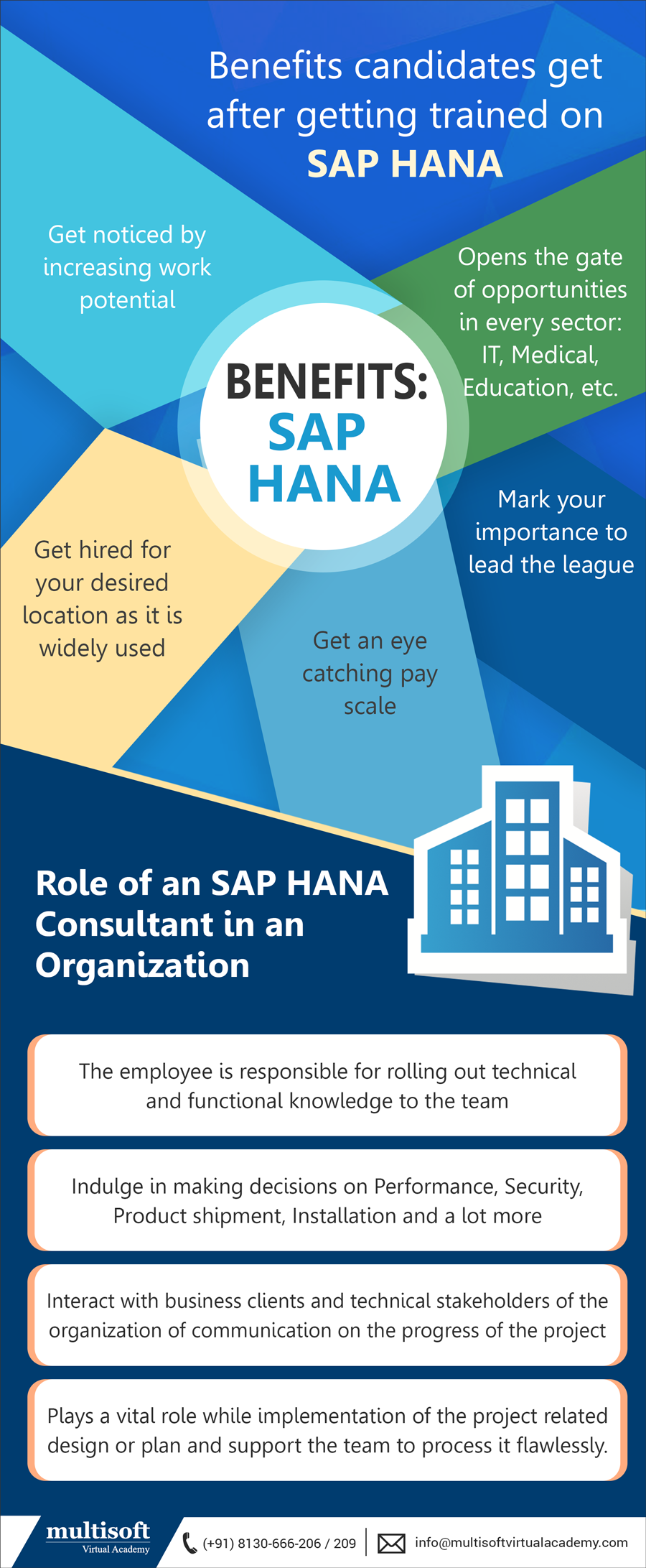
Why SAP HANA® is a game changer?
SAP HANA® is considered to be a game changer for numerous organizations. Let’s take an insight to the reasons that helps to contribute in changing the business insights:
SAP HANA® accelerates the tasks: One of the best features of it is, that it gives the users a search experience similar to Google in all the existing solutions. These consist of solutions that include mobile, applications and analytics; located in the cloud and on-premise. It assists in answering the questions that the users have, despite of any system or data location, as it provides a faster reply to the queries with lesser wait-time.
SAP HANA® simplifies IT and saves cost: It has been observed that the organizations that make use of the software in their business; they get simplified IT solutions. This has also led the IT costs to come down and help the organizations in an economic manner in terms of software, hardware, and labor costs.
SAP HANA® innovates new ideas and remove barriers: The removal of cost barriers and technical issues has helped the users to innovate with never before breakthroughs of business. Numerous organizations are getting enormous benefits by simply implementing SAP HANA® in their work arena.
Reasons that make SAP HANA® an innovative platform
SAP HANA® has marked itself as one of the innovative platforms chosen by the Enterprises. Below mentioned are the reasons that contribute to making it an innovative Platform:
CAM: CAM i.e. Computer Aided Manufacturing involves the use of the computer system for planning, managing, and controlling the manufacturing related operations. CAM can work either directly or indirectly on the computer interface related to plant’s resources used in production. It also refers to the use of numerical code for creating an elaborate instruction set called G-Code. It also helps in developing the high-quality parts.
Why to use CAD/CAM?
| Design Phase | CAD Tools Used |
| Design Conceptualization | Geometric modeling tools, Graphics aid, manipulation and visualization |
| Design Modeling and Simulation | The above mentioned software along with animation and special modeling packages. |
| Design Analysis | Analysis Packages, Customized programs and packages |
| Design Optimization | Customized Applications, Structural Optimization |
| Design Evaluation | BOM, Tolerances and Dimensioning |
| Design Communication and Documentation | Drafting and Detailing |
| Manufacturing Phase | CAM Tools Used |
| Process Planning | Cost Analysis, Material and tooling  Specification, Capp Techniques |
| Part Programming | NC Programming |
| Inspection | CAQ, Inspection software |
| Assembly | Robotics Simulation and Programming |
Nowadays, with creation and exchange of large volume of data or Big Data, majority of the organisations around the globe are on the lookout for professionals who are good at Data Science (can also be referred as Data Mining). Such professionals are called Data Scientists.
Roles of Data Scientist
Data Scientists are Big Data crunchers who wrangle with big volumes of unstructured and structured data to discard irrelevant data and organize the required data. For the same, they should also be good at contextual understanding and analytics, and should possess a decent understanding about the concepts in statistics, mathematics, computer programming, and about their associated industry. Typically, following are some roles and tasks undertaken by Data Scientists:
Plant Design Management Software (PDMS) is designed by AVEVA to learn about creating equipment application, piping application and civil & steel structure application. Undergoing PDMS software training helps candidates to know more about the piping design and other essentials of designing. The software delivers maximum productivity and capability for all plant projects. Be it the small upgrade to new build projects or complex piping project, with the use of software, the engineer can design the product as per the requirement.

The PDMS training online is offered to mechanical, chemical and production engineers. This training program is designed to meet the requirement of latest technologies used in piping engineering. After completing the course, aspirants can get into the career options like- energy, pharma, fertilizer, engineering, design, process plant and others. Along with piping engineering designing, aspirants are also being given introduction to PDMS Administrative Training online, Equipment modelling and Pipe Routing and other areas.
Backed by certified trainers, aspirants are also offered training on PDMS 3D designing software which is the best tool for small and multinational process. The software combines word and program design for creating a model that can be used for plant piping design.
Advantages of PDMS:
Online Design Course:
If you're looking forward to get into piping designing field, then applying for PDMS design course online is the best way. With online, you can simultaneously work and apply the basics on the job. The certificate course certainly helps in getting wider scope in designing. Trained under certified trainers, online PDMS training courses provides state-of-the-art learning experience and getting trained under certified professionals.
By undergoing the digital marketing training, aspirants will learn about various online marketing strategies, tools and benefits for a company. With many people going online to shop, learn and browse, online marketing ensures to get vital attention towards product. The courseware includes-
Powerful:
Enterprise Resource Management (ERP) hasn't moved beyond administrative management for tracking general ledger, payroll and HR. By using Microsoft Dynamics AX 2012 is rich and industry-operational functional. This set up gives more value and is faster to establish strong Independent Software Vendors (ISVs) for efficient delivery. Microsoft Dynamics AX 2012 is a global solution helping business to a new scale. Moreover, it helps in solving unique requirements of business in more than 36 countries.
Agile:
This module helps to set up unified solution, and lets you to see, measure and change the business pattern. The best part of MS Dynamic 2012 is it makes the business model faster and flexible. Moreover, the process of installing is simple and to change because it reflects the real world in natural way.
Simple:
One of the reasons why business uses this Dynamics AX 2012 is to make intentional commitment simple and focuses majorly on every aspect of the system. Moreover, the familiar interface makes the application simple to learn and execute in business models. The tool automates application lifecycle management to make the system simple to deploy and use.
By undergoing MS Dynamics AX 2012 training, aspirant will learn about different business solutions. Presently, this business model is considered as the leader in terms of both vision and execution in ERP. Getting trained from certified professional is the best way how aspirant can learn the use of future product version. Â With MS Dynamics AX 2012 Certification aspirant can lead ahead in business process.
Every Business these days needs to implement Business Intelligence solution to rise among the competitors. Let’s take a look at the reasons that ensures why every Business needs to implement Business Intelligence Solution:
Kinds of Software Testing
The software testing is of two kinds; namely, Static Testing and Dynamic Testing. During Static Testing, each code line is scrutinised and evaluated to ensure that the whole code is in sync with the organization’s requirements whereas Dynamic Testing is conducted to find bugs or errors in the software product.
Software Testing Certification Training Programs
Individuals who are interested in learning or enhancing their software testing skills can enrol for software testing training programs. Some of the common software testing courses are:
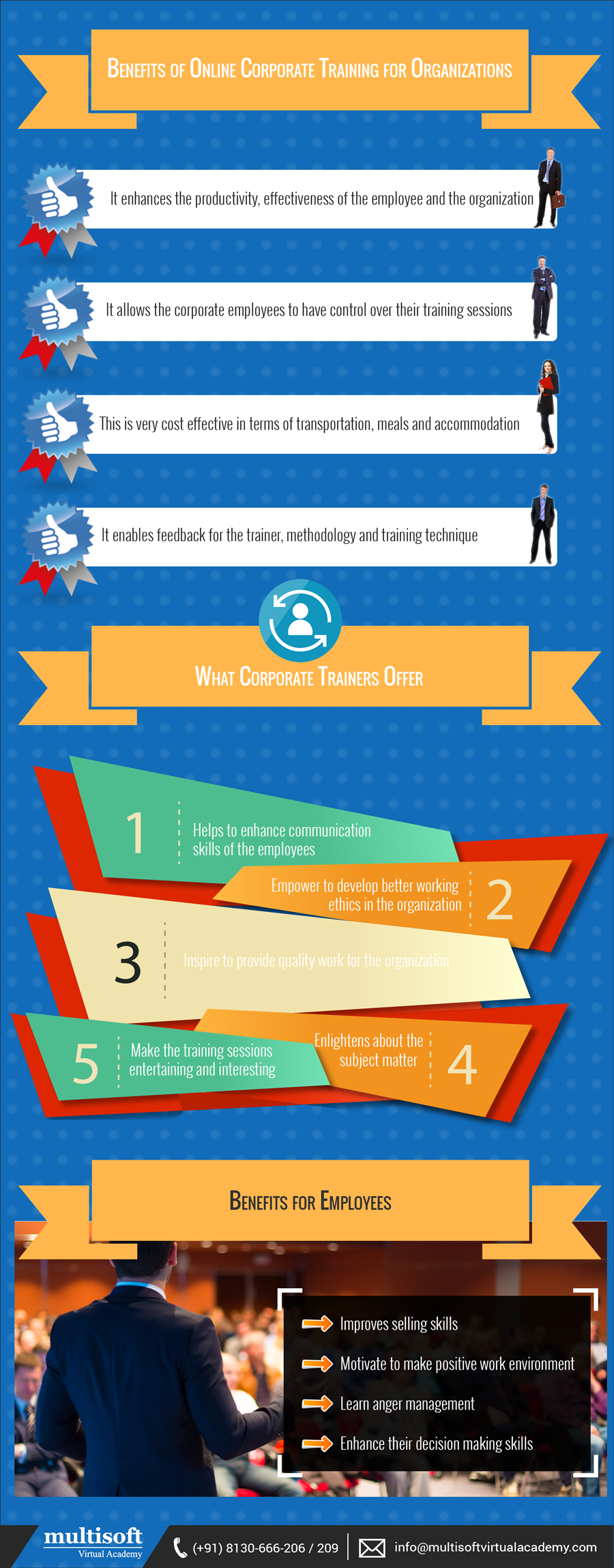
Why to opt for Corporate Training?
Training is one of the primary parts for the employees, as it imparts the knowledge that ensures their growth along with the organizational advancement. In addition, it also boosts up the confidence meter in employees that make them take faster decisions, take up challenges and meeting the targets.
An organization hires professionals that are from various backgrounds; hence, everyone has their own process to work. An apt Corporate training can help to bring the people from varied backgrounds, on the same page and work together.
Top 3 Trends of Corporate Training